

'Blinded by Satan': Former US Diplomat Claims That Mike Huckabee's Iran War Comments Implicate JD Vance
Stephen Sestanovich questions whether Huckabee's remarks about Iran war critics could also apply to Vice-President Vance
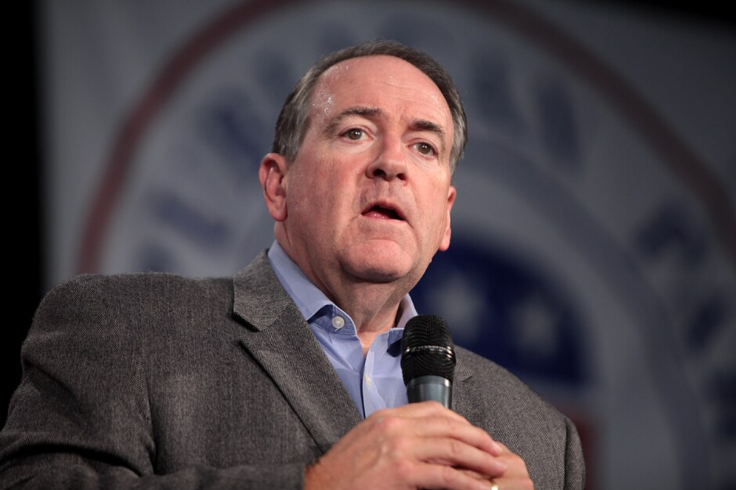
Former US diplomat Stephen Sestanovich has questioned whether Mike Huckabee's claim that opponents of the Iran war had been 'blinded by Satan' could also apply to Vice-President JD Vance.
He raised the issue on X after comments by the US ambassador to Israel resurfaced. On Sunday, 8 November, Huckabee made the remarks during a podcast discussion about European resistance to American military action against Iran.
Sestanovich's response came days after Vance blamed the war for Republican defeats in the 3 November midterm elections.
Mike Huckabee Calls Iran War Opposition a 'Spiritual Issue'
Huckabee, a Baptist minister and former Arkansas governor, appeared on The Anchor Podcast with Israeli commentator Amir Tsarfati in an episode published on 23 October.
Asked whether European opposition to the war reflected a mental or spiritual problem, Huckabee said people arguing that America should not have intervened were confronting 'a spiritual issue'.
'I know it sounds a little funny for an ambassador to be talking like this,' Huckabee said. He described the opposition as 'spiritual darkness, spiritual blindness'.
'Satan has blinded the minds of those and has captured their thinking,' he continued. 'I really do believe that there is something deeper than just the obvious geopolitical issues at bay.'
The exchange concerned European governments, not disagreements inside the Trump administration. Huckabee did not mention Vance, and there is no evidence in those remarks that he intended to criticise him.
Why Mike Huckabee's Remarks Raised Questions About JD Vance
Sestanovich nevertheless questioned how far Huckabee's characterisation might extend. 'So Mike Huckabee says JD Vance has been blinded by Satan. (Any other way to interpret his comments?)' he wrote on X.
The former diplomat served as the State Department's ambassador-at-large for the former Soviet republics from 1997 to 2001. He also held a senior policy role on the National Security Council.
His post drew a connection between Huckabee's language and Vance's reservations about military intervention. It was Sestanovich's interpretation, not a direct accusation from the ambassador.
Two days before US and Israeli strikes began on 28 February, Vance told The Washington Post he remained a 'sceptic of foreign military interventions'. He added, 'I think we all prefer the diplomatic option,' while acknowledging that strikes were possible.
In March, President Donald Trump acknowledged that Vance had been 'philosophically a little bit different' about attacking Iran. Trump played down any serious disagreement, and Vance subsequently defended the administration's military action.
Mike Huckabee Challenges Vance's Assessment of Republican Losses
The political costs of the conflict returned to the forefront after Democrats won control of both the House and Senate in last week's elections.
'The reason we lost is the war,' Vance wrote on X on 4 November. He also cited inflation, living costs and dissatisfaction with America's relationship with Israel among reasons some Trump voters switched to Democrats.
Huckabee challenged that last point during a 5 November interview with Israel's Channel 12. 'I don't agree with that because I don't think that's where voters are,' he said, disputing Vance's assessment of discontent over US support for Israel.
That was a documented difference over the election results. It did not establish that Huckabee's earlier religious criticism was aimed at Vance, whose comments had addressed both the war and its consequences for Republicans.
© Copyright IBTimes 2026. All rights reserved.