

Bank of America 7-Eleven ATM Settlement — How to Claim Your Share of the $2.25 Million Payout
Find out if you're eligible for compensation and how to file a claim before the deadline.
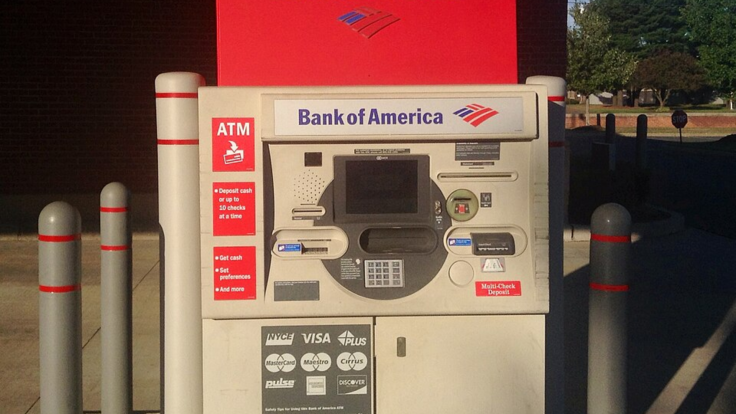
In a major development, Bank of America has agreed to pay $2.25 million to resolve a class action lawsuit. According to the lawsuit, the bank allegedly double-charged customers out-of-network balance inquiry fees at 7-Eleven ATMs. The conduct, attributed to a technical glitch, affected thousands of customers across the United States. But what's important to note here is that former customers have until June 29 to file a claim for compensation.
This is not the first time Bank of America, one of the largest financial institutions in the country, has been at the receiving end of serious accusations of charging customers the same fee twice. The Consumer Financial Protection Bureau (CFPB), the federal agency that supervises banks for consumer compliance, found in a prior enforcement action that the bank had operated what it described as a "double-dipping scheme" for insufficient funds fees. This resulted in penalties exceeding $100 million.
What Lawsuit Alleges Happened at 7-Eleven ATMs
The lawsuit specifically mentions out-of-network ATM transactions at 7-Eleven locations. When a Bank of America customer used a 7-Eleven ATM to check their account balance, the bank allegedly charged the out-of-network fee more than once for what was supposed to be a single transaction visit. According to The Independent, Bank of America attributed the duplicate charges to a technical glitch in its systems.
Out-of-network fees are standard charges that banks levy when their customers use ATMs outside the bank's own network. These fees typically range from $2 to $5 per transaction, without any surcharge the ATM operator itself may impose. For customers who checked their balances frequently at 7-Eleven ATMs over an extended period, the cumulative effect of duplicate charges could have added up to a meaningful sum.
How to Claim, Eligibility and What to Expect in Payouts
Eligibility for the settlement is specific. To qualify, a customer must have been charged multiple out-of-network fees during a single ATM visit at a 7-Eleven location. Customers who already received compensation through a related lawsuit involving FCTI, the company that operates ATMs inside many 7-Eleven stores, are not included in this settlement.
The settlement treats current and former Bank of America customers differently, and that difference determines whether any action is required. Current customers will receive automatic payments, with no claim submission needed. However, former customers must file a claim before the June 29 deadline to receive any compensation.

Individual payouts will not be uniform. Distributions will be calculated on a pro rata basis, which means each eligible claimant's share is proportional to their verified losses relative to the total pool of valid claims submitted. A significant portion of the $2.25 million fund will also be allocated to legal fees and administrative costs before any consumer payments are made, which is standard practice in class action settlements of this type. The precise per-claimant figure will therefore depend on how many valid claims are ultimately filed, and the total number of eligible customers could run into the thousands.
Bank of America has not publicly admitted wrongdoing as part of the settlement agreement.
A Pattern of Fee Enforcement Actions Against Bank of America, Others
The 7-Eleven ATM settlement is the latest in a series of fee-related legal and regulatory actions involving Bank of America. In the "double-dipping scheme" related to insufficient funds fees, in which customers were charged the same fee multiple times on a single transaction, the CFPB ordered Bank of America to pay more than $100 million in penalties and restitution in connection with that action.
The broader ATM fee landscape has also seen significant legal activity in recent years. A separate $197.5 million class action settlement involving Visa and Mastercard received final approval following allegations that the two payment networks conspired to inflate ATM surcharges in violation of federal antitrust laws. That settlement, which addressed alleged market collusion and access fee manipulation across the wider ATM industry, had a claim submission deadline of 22 January 2025, which has already passed. Consumers who missed that window are no longer eligible to file claims in the Visa-Mastercard proceeding.
© Copyright IBTimes 2026. All rights reserved.