

Mass AI Cheating at Brown Raises Shocker Query: Is an Ivy League Degree Worth $90,000 a Year?
The provost stayed silent as Princeton posts exam proctors after 133 years of trust
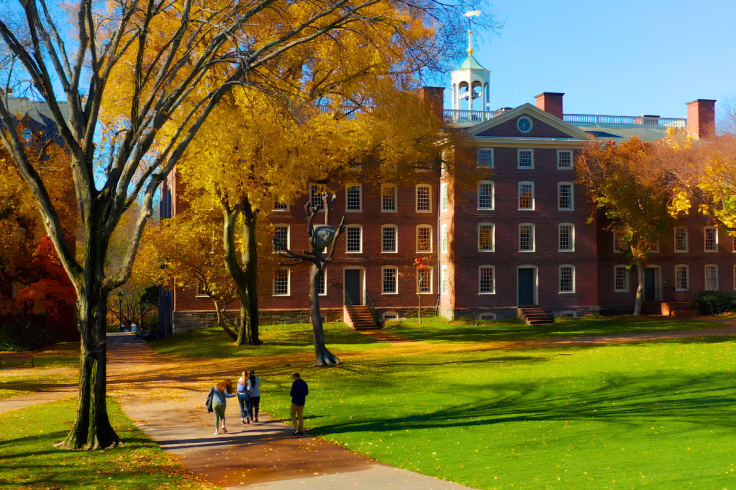
A Brown University professor believes around 50 of his students used artificial intelligence (AI) to cheat their way to perfect midterm scores this spring, and he says the university's top leadership has answered his evidence with silence. For families paying $97,016 (£72,400) a year, the scandal poses an uncomfortable question about what an Ivy League degree actually proves.
The Numbers That Gave the Game Away
Roberto Serrano, an economics professor at Brown for 34 years, offered a take-home midterm in his welfare economics course for the first time this spring. He made the concession because many students feared returning to classrooms after a gunman killed two students and injured nine at Brown in December.
Enrolment nearly tripled to 86 students. The midterm average hit 96%, and 40 students scored a perfect 100, in a course where averages historically ranged from 65 to 80. Suspicious, Serrano and his graders ran the exam through ChatGPT and found its oddly convoluted proofs repeated across dozens of student papers.
He moved the final exam in person. The average collapsed to 48.6%, the lowest in the course's history, he told Inside Higher Ed. Of the 27 students who dropped the course or skipped the final after the format change was announced, 22 had earned a perfect 100 on the midterm.
Silence From the Provost's Office
Serrano put his suspicions in writing to Brown's dean and provost and submitted his grade data to the Standing Committee on the Academic Code in May. The provost never responded, and the committee never acknowledged receiving the case, he told The Chronicle of Higher Education. Movement came only after he went public in late June, when officials asked him to file separate complaints against each suspected student, a demand he dismissed as a delaying tactic.
Brown spokesperson Brian Clark said the university 'treats every allegation of academic integrity with the utmost seriousness' and that Serrano has not yet supplied the details required for formal adjudication. The professor met his dean on Wednesday to press the matter further.
Princeton Abandons 133 Years of Trust
The crisis stretches well beyond Providence. Princeton faculty voted in May, with one dissenting vote, to station proctors in every exam room from 1 July, ending a tradition dating to 1893 where professors left students alone during finals. The 2025 senior survey found 29.9% of students admitted cheating on an exam or assignment, while just 0.4% had reported a peer.
Stanford will introduce university-wide proctoring in September 2026 after ending its long-standing honour code ban, a sign that even the most elite institutions no longer trust their own honour systems.
What Does a $97,000 Degree Prove?
Brown's cost of attendance rises to $97,016 for the 2026-27 year, university figures show, with tuition alone up nearly 50% in a decade. Families take on decades of debt on the assumption that a transcript represents genuine learning. Serrano warns employers will not stay fooled if elite universities produce graduates who outsourced their education. 'The market will notice and react,' he said.
Brown's own committee on generative AI published its first report on Tuesday, revealing that three-quarters of 105 surveyed professors worry about students using AI to cheat. Yet the same report urges faculty to move beyond punishment, guidance Serrano's supporters see as further proof of institutions choosing comfort over accountability.
The question hanging over the Ivy League is no longer whether students cheat. It is whether universities charging almost $100,000 (£74,600) a year still want to find out.
© Copyright IBTimes 2026. All rights reserved.