

Four-Week Fuel Countdown Begins As California Officials Warn Of Imminent Gasoline Shortages After Last Oil Tanker Arrives
California's fuel supply dwindles as the last Middle East oil shipment arrives, highlighting the state's vulnerability amid refinery closures and geopolitical tensions.
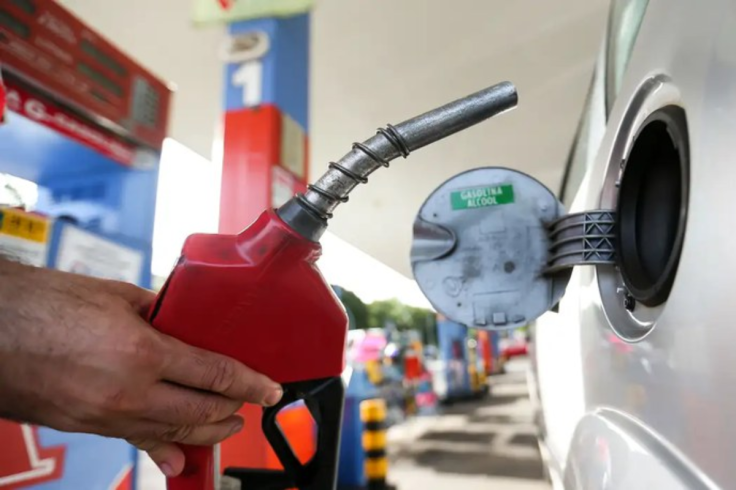
California now has a working countdown on its fuel supply after the last oil tanker from the Strait of Hormuz arrived at the Port of Long Beach, and state officials confirmed the state holds just four to six weeks of petrol and diesel under normal demand conditions.
The Hong Kong-flagged crude oil tanker New Corolla, which loaded two million barrels of Iraqi crude on 24 February 2026 just days before the US and Israel launched strikes on Iran, docked this week at the Marathon Petroleum terminal in Long Beach in what analysts and industry figures are describing as the last buffer between California's current fuel supply and an acute shortage.
The California Energy Commission confirmed it is 'working closely with refiners' and is 'aware they are identifying and using alternate routes and sources of crude,' but also acknowledged that inventories are being drawn down rapidly. No further tankers from the Persian Gulf are currently en route to California, and the Strait of Hormuz, which Iran closed in late February 2026, has remained functionally shut to commercial traffic despite a brief ceasefire in April.
The New Corolla: Two Million Barrels and a Fortnight Left to Offload
The New Corolla is not simply the last tanker to arrive. It is the last in a line of ships that had already left the Persian Gulf before Iran shut the strait, vessels that provided weeks of buffer against what would otherwise have been an immediate supply shock.
As UCLA Professor Michael Ross told ABC7 Los Angeles: 'The war in Iran and the closing of the Strait of Hormuz has actually been buffered by the fact that all of these tankers were at sea at the time that the Strait of Hormuz closed. This is the last shipment of that supply that was keeping prices relatively stable. So that should worry us.'
The last shipment of oil arrived in the U.S. today.
— ThePatrioticBlonde™🇺🇸 (@ImBreckWorsham) May 5, 2026
The LAST shipment of oil, for the foreseeable future, just hit U.S. soil.
WE. ARE. FUCKED.
The tanker carries crude destined to be refined into petrol, diesel, and jet fuel. It will take approximately two weeks to complete offloading at the Marathon terminal, after which it will depart for other waters.
Once that process is complete, California must find a way to replace roughly 200,000 barrels of oil per day that had been arriving from the Persian Gulf, a daily volume with no immediate replacement secured. One additional tanker that left Iraq a month before the war began has been anchored off Long Beach since March, but beyond that, no further vessels from the region are in transit toward California.
California's Refining Capacity Already Shrinking Before the Crisis Hit
The timing of the tanker's arrival compounds a structural problem that predates the Iran conflict by months. Two major California refineries announced closures that are now stripping the state of significant processing capacity. Phillips 66 closed its Wilmington refinery in the Los Angeles area in the fourth quarter of 2025, removing 139,000 barrels per day of capacity.
Valero shut its Benicia refinery near San Francisco by April 2026, eliminating a further 145,000 barrels per day. Together, those closures removed approximately 18% of the state's total refining capacity in under a year.

Chevron, the state's largest remaining refiner, had warned publicly that the combination of regulatory pressure and import dependence left California critically exposed. In a March 2026 statement on its website, the company wrote: 'California lost 18% of its refining capacity in just the past 8 months because the state made those operations uncompetitive.
Now California imports as much as 25% of gasoline and 20% of its jet fuel from overseas refineries that are more leveraged to Mideast crude oil than American refineries are.' The Union of Concerned Scientists has separately described California as 'essentially a fuel island,' noting that the state has no pipeline inflows of refined fuel and depends entirely on tankers that take three to six weeks to arrive.
Prices Already at a Four-Year High as the State Competes in a Global Scramble
Californians are not waiting for a shortage to feel the impact. AAA data shows the average price of a gallon of petrol across the state is now £4.49 ($6.11), some £1.47 ($2.00) higher than the national average and among the highest in the country. Some Los Angeles-area stations have already exceeded £5.88 ($8.00) per gallon.
The state's geography and regulatory framework make it exceptionally difficult to substitute in fuel from elsewhere at short notice, since California petrol must meet unique California Air Resources Board specifications that most Gulf Coast refineries are not optimised to produce.
Kate Gordon, who runs the economic policy nonprofit California Forward and previously served as a climate adviser to the Biden and Newsom administrations, described the pricing pressure as a structural reality extending beyond California's borders.
'Even in Texas, where they obviously have a huge amount of drilling and a lot of supply, prices are going up because the sellers are selling to whoever is paying the most during a moment of restriction,' she told the Los Angeles Times. The state's vulnerability is further amplified by fuel demand from more than 30 military installations within its borders, which require jet fuel and diesel regardless of what happens to civilian pump prices.
The New Corolla's departure will mark the moment California's fuel clock stopped being theoretical and started being real, a countdown measured in weeks and running with no replacement tanker anywhere on the horizon.
© Copyright IBTimes 2026. All rights reserved.