Call of Duty: Modern Warfare 4 Release Date, Features, Gameplay, Campaign and Everything We Know So Far
A new war on the Korean Peninsula drags Call of Duty into its grittiest Modern Warfare yet, forcing players to decide how far they are willing to go to keep up.
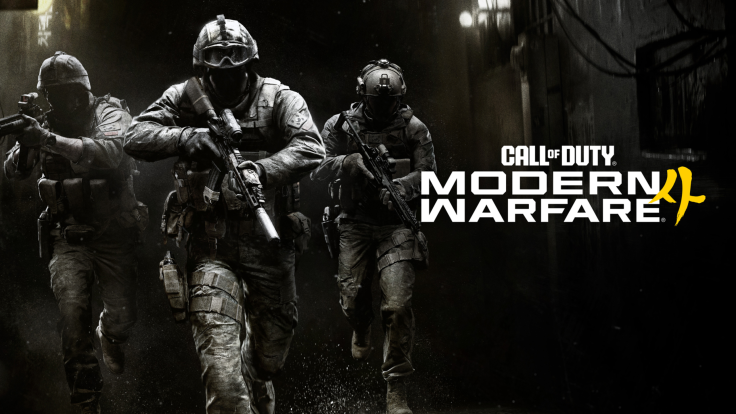
Call of Duty fans will return to the Modern Warfare saga on Friday, 23 October 2026, when Call of Duty: Modern Warfare 4 launches worldwide on PlayStation 5, Xbox Series X|S, PC and Nintendo Switch 2, Activision has confirmed in a detailed reveal of the game's campaign, multiplayer and DMZ extraction mode.
This is the first numbered Modern Warfare sequel since 2011's Modern Warfare 3, and it arrives as the long-running franchise tries to steady itself after years of annual releases and shifting settings. Infinity Ward is once again leading development, but this time it is leaning hard into a near‑future conflict on the Korean Peninsula and a more grounded, tactical style of multiplayer gunplay.
A Darker Call of Duty Campaign On The Korean Front
War in Modern Warfare 4 begins with a nightmare scenario that military analysts have fretted over for years. North Korea launches a full‑scale invasion of the South, triggering a chain of events that quickly spills far beyond the peninsula.
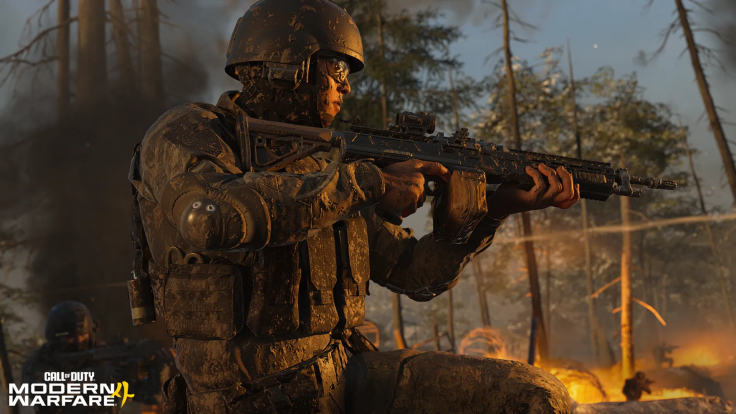
Players initially step into the boots of Private Park, a young South Korean conscript whose 'routine patrol' turns, in Activision's words, into a fight through 'collapsing cities and counteroffensives.' That ground‑level perspective has been missing from recent Call of Duty instalments, and there is an obvious intent here to show the chaos of a conventional land war rather than another globe‑trotting special forces fantasy.
Infinity Ward says it has 'grounded' this Korean setting in real culture, history and regional military detail. Whether it lives up to that promise is impossible to judge yet, but it does at least suggest the studio is aware of the scrutiny that comes with dramatising a live geopolitical flashpoint.
Running parallel to Park's story is the return of Captain Price, no longer the dutiful operator but an outlaw on a personal hunt for revenge. Price is chasing a weapon powerful enough to 'shift the balance of power,' pulling him into uneasy alliances and off‑the‑books operations that eventually collide with the forces behind the invasion. The message is not subtle: local war plus clandestine meddling equals global catastrophe.
Missions stretch from trench warfare in Korea to close‑quarters fighting in New York, high‑speed chases in Paris, SAS night raids in Mumbai and city‑wide assaults to reclaim occupied territory. It sounds like classic Modern Warfare spectacle, but with the studio openly talking about 'darker and more dangerous territory,' expectations on narrative payoff are higher than usual.
Nothing has been independently verified beyond Activision's own briefing, so plot specifics should be treated cautiously until reviewers and players get hands‑on access.
No line holds forever.
— Call of Duty (@CallofDuty) May 28, 2026
Modern Warfare 4 releases on October 23, 2026. pic.twitter.com/QH90rbvToM
Modern Warfare 4 Multiplayer Reinvents Call of Duty Gunplay
If the campaign is about scale, multiplayer is all about control. Infinity Ward is pitching Modern Warfare 4 as the most 'authentic' Call of Duty gunplay yet, built on a new 'weapon‑first' technology stack it calls Ballistic Authority.
In plain terms, that means no random bullet spread. Bloom, the mechanic that made shots veer unpredictably off‑centre in previous titles, has been stripped out. Hipfire is promised to be more honest; recoil and weapon handling have been rebuilt to more directly reflect player input, and visual effects have been tuned so enemies remain visible without turning the game into a flat shooting gallery.
Movement has been reworked to keep things fast without tipping into full arcade chaos. Mantling, climbing, hanging, and jumping have been expanded so players can approach fights from more vertical angles and reposition on the fly, while transitions between traversal and gunplay are designed to maintain momentum rather than punish it. On paper, it sounds like an attempt to reconcile older fans who prefer slower, tactical play with those who live for aggressive rush routes.
At launch, Modern Warfare 4 ships with 12 core maps spread across 'grounded, visually distinct' locations, a set of dedicated Gunfight arenas and larger 'Big War' maps designed for vehicles and combined‑arms combat. The most experimental space is Kill Block, a live‑fire training facility in the Westbridge complex that reconfigures itself between rounds using modular sections. Infinity Ward claims more than 500 possible layouts, so in theory, no two matches share the exact same sightlines.
Kill Block supports expanded Gunfight formats, including 3v3 and 10v10, with more modes to follow during live seasons. It is the sort of systemic design that could thrive or frustrate, depending on how readable those shifting layouts feel under pressure.
The Modern Warfare 4 campaign is a return to form, darker and more dangerous than ever before.
— Infinity Ward (@InfinityWard) May 28, 2026
Play through new perspectives as the squad of South Korean grunts faces war against their will amidst a full-scale invasion. Operator turned outlaw, John Price is forced to face the… pic.twitter.com/N5tcXgsy8r
Progression has also been overhauled. Create‑a‑Class has been unified into a single loadout screen that links Operators, weapons, equipment, and killstreaks. Gunsmith returns with broader attachment sharing across weapon classes, and a new assistant called Gunny can automatically generate close, mid or long‑range builds based on unlocked parts. Whether Gunny becomes a useful guide or an easily ignored button prompt will be up to players.
Fully maxing a weapon now unlocks Apex Attachments, specialised mods that can dramatically change handling, firing behaviour, stealth or tactical utility. Prestige splits into two paths. Classic Prestige wipes Create‑a‑Class progress in exchange for faster XP and exclusive rewards, while Regular Prestige resets your level but lets you keep your unlocks, a nod to players who hated having their arsenals torn up every year.

DMZ, Platforms And What This Means For Warzone
DMZ returns as what Activision is now calling the 'definitive' Call of Duty extraction mode. Players deploy solo or in squads into a shifting combat zone, hunting high‑end military tech, negotiating or betraying other teams and deciding when to cut their losses and extract. Weather, objectives and enemy forces change between runs, and the studio is adamant that 'no two deployments play out the same way.' A deeper DMZ reveal is due on 7 June, with gameplay‑focused coverage to follow.
Technically, Modern Warfare 4 is described as current‑gen only, with native builds on PS5, Xbox Series X|S, PC and Nintendo Switch 2. There is no PS4 or Xbox One version. PC players get the usual spread of toggles and sliders, from multiple upscaling and frame‑generation options to DLSS 4.5 support, expanded ray tracing in all modes and competitive settings tuned for high frame rates.
“Call of Duty: Modern Warfare 4” is launching Oct. 23.
— Variety (@Variety) May 28, 2026
The game will be available across all major platforms plus Nintendo Switch, marking the first #CallOfDuty game releasing on a Nintendo platform in more than a decade.https://t.co/MUidJ0fYMP pic.twitter.com/zEiErB9OQU
Perhaps the most contentious move sits outside the main game. From Season 1, Call of Duty: Warzone will integrate Modern Warfare 4 content and seasonal progression. As part of that shift, Warzone on PS4 and Xbox One will stop being playable once Season 1 launches. New downloads on those platforms end on 4 June, the in‑game store shuts on 25 June, and some items, including Call of Duty Points bundles, will quietly disappear from sale.
For millions still playing on last‑gen hardware, Modern Warfare 4 is being framed as the future of Call of Duty. The question is how many of them are ready, or able, to follow it there.
© Copyright IBTimes 2026. All rights reserved.
- Recommended For You