

Shooting Down UFOs Could Risk Conflict With Extraterrestrials, Durham Professor Warns
Professor Michael Bohlander says UAP should generally be treated as non-aggressive unless they demonstrate hostile intent, while acknowledging there is no evidence they are extraterrestrial
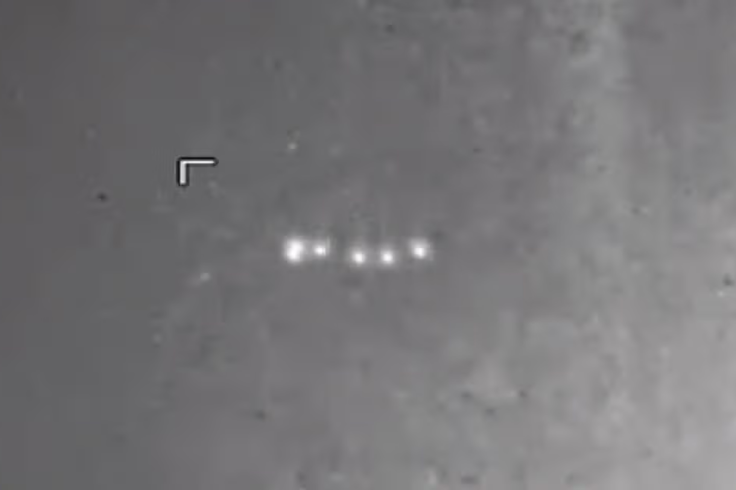
Governments risk triggering a conflict humanity cannot win if they fire on unidentified flying objects that later turn out to be of non-human origin, a Durham University legal academic has warned.
Professor Michael Bohlander, the university's Chair in Global Law and SETI Policy, set out his argument in a commentary titled Should we Shoot Down UFOs?, published by Global Policy Journal on 30 September.
His case rests on a hypothetical. He does not claim that extraterrestrial craft have been shown to exist, and NASA says there is no evidence that unidentified anomalous phenomena (UAP) are extraterrestrial.
Call for Restraint Before Pulling the Trigger
Prof. Bohlander argues that UAP should generally be treated as non-aggressive unless they demonstrate hostile intent. Where an object's nature and intentions cannot be established, he says, the default should be protection rather than destruction. He also argues that the legal basis for attacking such an object is hard to establish.
He wrote that there is 'no guarantee' UAP would remain restrained if attacked, and that some 'may carry weapon systems equally advanced as their overall technology'. He questioned whether humanity should test them without good reason and a 'colourable case' that humans would prevail.
Prof Bohlander joined the German judiciary in 1991 and has served as an international judge at the Kosovo Specialist Chambers and as international co-investigating judge at the Extraordinary Chambers in the Courts of Cambodia.
Real-World Encounters Cited in Warning
UAP is a term used by US government agencies for observations that cannot immediately be attributed to known objects, actors or natural phenomena. The label does not itself indicate extraterrestrial origin.
Prof. Bohlander pointed to events in February 2023, when the US military shot down a Chinese high-altitude surveillance balloon off South Carolina. Three other unidentified objects were subsequently shot down over North American airspace.
Gen. Glen VanHerck, then NORAD commander, initially declined to rule out an extraterrestrial origin for the three objects, although officials later qualified the remark. Prof. Bohlander noted that the objects were reportedly observed without an apparent propulsion system. He said recordings of pilots' conversations during the Lake Huron encounter showed uncertainty over how to classify the object.
He also cited video shown at a 2025 US congressional hearing. Republican Rep. Lauren Boebert presented footage she said was taken on 30 October 2024, showing an MQ-9 drone tracking an object off Yemen while another launched a Hellfire missile. ABC News reported that the video appeared to show the missile bouncing off the object. No one has independently established what the object was.
Questions Over Secrecy and Rules of Engagement
Prof. Bohlander wrote that the US intelligence community has an 'iron grip' on the UAP environment. He argued there is little public transparency about the rules of engagement governing responses to such objects. That does not mean no rules exist, as such guidance can be classified.
Governments have released some UAP footage and records in recent years, but he maintains that important information remains too closed for public scrutiny.
Independent assessment of the precise origin and technical capabilities of the objects cited in his commentary is difficult, particularly where key data remains classified or has not been made publicly available.
© Copyright IBTimes 2026. All rights reserved.