Ebola Spread Rapidly in DR Congo After Early Cases Were Mistaken for Witchcraft
Traditional beliefs and weak health systems hindered early detection of the Ebola outbreak in Congo, leading to widespread transmission.
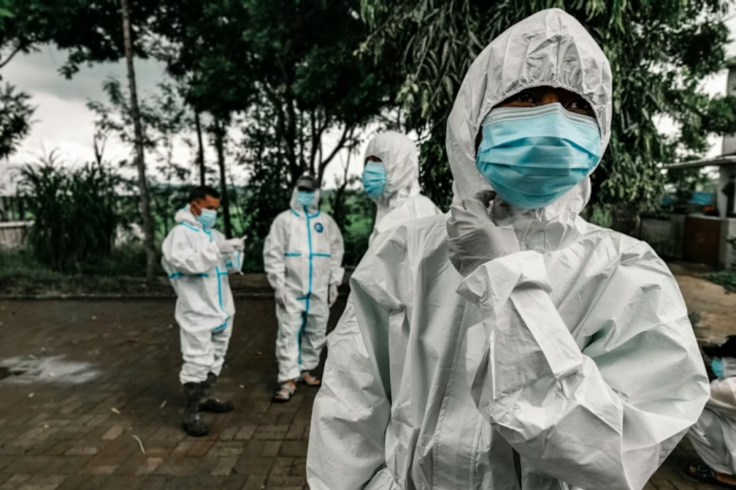
In the northeastern region of the Democratic Republic of the Congo, an Ebola outbreak spread quietly for weeks before authorities recognised its severity – allowing fear, misinformation, and misunderstanding to take root in already vulnerable communities.
Health officials and witnesses say early cases of the disease were reported in mid-April in Mongbwalu, where residents first thought at the time that they were battling a 'mystical illness' rather than a viral disease, said Congolese Health Minister Samuel Roger Kamba.
By the time medical teams identified the outbreak, infections had already spread across nearby mining and trading routes, accelerating transmission in one of the region's most unstable provinces, AFP reported.
Communities First Turned to Tradition, Not Treatment
Residents shared that during the first outbreaks they would repatriate the bodies and hold traditional ceremonies, while others burned coffins or sought spiritual explanations for the unexplained fatalities.
'After that, there were repeated deaths, sometimes between three and five people a day,' John Vatsosi, a resident of Mongbwalu, said.
'People then began to speculate, saying that the traditional leaders had cast a curse that was causing these deaths,' he added.
Another resident, Timothee Bedidjo, said that they even accused someone of being a sorcerer 'who caused people's deaths.' Even hospital staff could not identify the disease. 'Sometimes they spoke of a fever, sometimes of an as-yet unidentified outbreak.'
One hospital official in Rwampara said people thought the deaths were caused by witchcraft, leading to much chaos. 'They brought us patients and we handled them as ordinary hospital admissions. There were no concrete signs that would allow us to associate the illness with Ebola,' the hospital official added.
Desperate for a cure, some patients 'decided to seek treatment from traditional healers, while others turned to servants of God for prayers,' Vatsosi said.
Health System Delays and Limited Diagnostics

The outbreak- later confirmed by the World Health Organization as the 17th Ebola outbreak in the country - was slow to be detected due to weak surveillance systems and limited testing capacity.
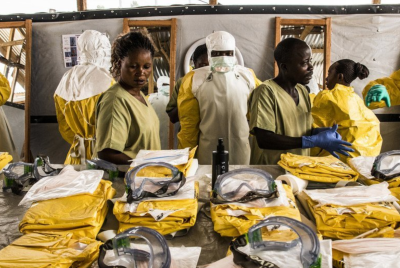
'We face technical limitations when it comes to detecting outbreaks such as Ebola. Some healthcare workers were even infected because they lacked appropriate protective equipment', the hospital official said.
He added that the patients were first treated as routine cases, handling them as ordinary hospital admissions as early cases showed no immediately recognisable pattern.
Some infected people in isolated areas 'die at home,' leaving only their family members to handle their bodies, according to Isaac Nyakulinda, a civil society official in Rwampara health area, adding that no one knew that they were dealing with an epidemic. 'We regret that the government intervened late.'
According to Health Minister Samuel Roger Kamba, samples initially had to be sent from Bunia to the national laboratory in Kinshasa, delaying confirmation. At the time, testing kits were available for other Ebola strains, but not the Bundibugyo strain responsible for this outbreak.
Structural Weaknesses and Repeated Outbreaks
Experts say the crisis reflects deeper challenges in the country's public health system, including underfunded facilities, insecurity, and dependence on external aid. Funding cuts from international partners have also strained response efforts, including reductions in US assistance during the administration of Donald Trump.
According to epidemiologist Jean-Jacques Muyembe, increased contact with wildlife and 'bushmeat' consumption are also contributing to recurring outbreaks. Bats, known carriers of Ebola, remain a potential source of transmission in forest-adjacent communities.
The WHO said it was officially alerted on 5 May, by which time the outbreak had already spread widely, underscoring how quickly Ebola can escalate when early warning systems fail.
© Copyright IBTimes 2026. All rights reserved.
- Recommended For You