WHO Drops Massive Update on Truth About Ebola Outbreak, Provides Realistic Timeframe for Vaccine Availability
Health officials are still trying to pinpoint the exact start of the outbreak

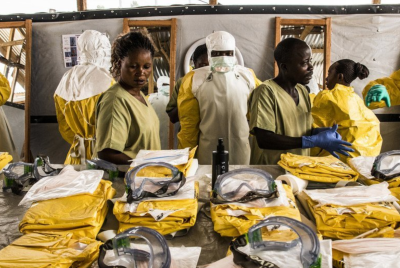
The World Health Organisation (WHO) has enlightened the public about the Ebola outbreak.
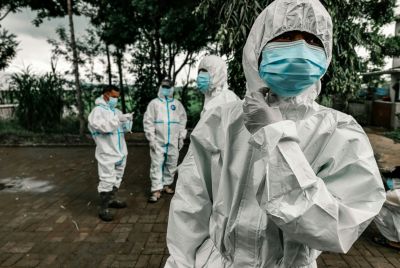
The WHO has declared a public health emergency of international concern over a rising Ebola outbreak in Central Africa. However, officials stressed the crisis has not reached pandemic proportions, per The New York Times.
The announcement followed a meeting of the WHO emergency committee on Tuesday. Director-General Dr. Tedros Adhanom Ghebreyesus reassured the public and confirmed that the experts agreed the situation is 'not a pandemic emergency.'
'WHO assesses the risk of the epidemic as high at the national and regional levels and low at the global level,' Dr. Tedros explained.
Ebola Has Crossed International Borders
This reassurance comes despite a continuous rise in both suspected cases and fatalities. Tedros disclosed that by Wednesday, just five days after the outbreak was officially declared, the number of suspected infections had risen to nearly 600. The current death toll stands at 139.
The outbreak is heavily concentrated in two provinces of the Democratic Republic of Congo: Ituri and North Kivu. The virus has been detected in both regional capitals but the disease has also crossed international borders. Neighbouring Uganda has reported two cases involving travellers arriving from the DRC. One of those individuals has since passed away.
'We expect those numbers to keep increasing, given the amount of time the virus was circulating before the outbreak was detected,' Tedros said.
An Update on the Vaccine
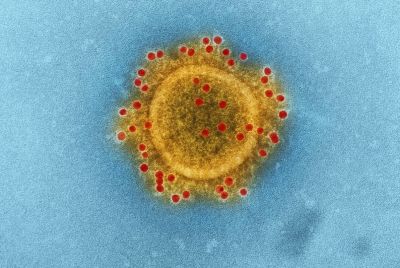
Health officials are facing unique difficulties due to the specific strain of the virus causing the outbreak. This crisis marks the DRC's 17th Ebola outbreak. However, it is driven by the Bundibugyo species, which has not been seen for more than a decade.
There are four species of Ebola known to cause disease in humans. The most common is the Zaire strain. The DRC has dealt with Zaire on numerous occasions and is highly familiar with it.
By contrast, the Bundibugyo species has only caused two previous outbreaks. It first appeared in Uganda in 2007, and later in the DRC in 2012. In those instances, it killed about a third of those infected. Although Bundibugyo is statistically less deadly than other Ebola species, its rarity presents a major hurdle. There are currently far fewer medical tools available to stop it.
The WHO stated it could take up to nine months before a vaccine against this particular species is ready for use. There is currently no approved vaccine for Bundibugyo. However, experimental options are in development. Experts suggest that an existing vaccine for the Zaire strain may offer some cross-protection.
Two possible 'candidate vaccines' against the Bundibugyo species are currently being developed. Neither has gone through clinical trials yet, BBC reported.
WHO advisor Dr. Vasee Moorthy commented on the situation on Wednesday. He stated that one candidate under development 'would be the equivalent of' the only vaccine currently available to prevent the spread of Ebola, which is only effective against the Zaire strain.
'This needs to be prioritised as the most promising Bundibugyo candidate vaccine,' he explained.
Based on current data, Moorthy noted it was 'likely to take six to nine months' before the vaccine is ready for deployment.
Health officials are still trying to pinpoint the exact start of the outbreak. They believe the virus began spreading silently 'a couple of months ago,' according to Anais Legand, a WHO technical officer.
Speaking at a press conference, officials warned that the outbreak could last for months. They also noted that many infections may have gone completely unreported due to the delayed detection.
© Copyright IBTimes 2026. All rights reserved.
- Recommended For You