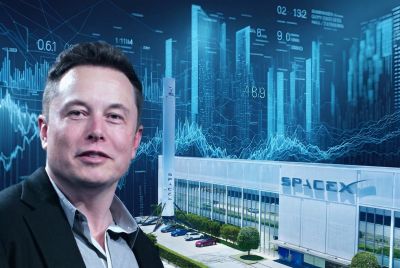
SpaceX Gives Elon Musk the Biggest Pay Package in History — $600 Billion Bonus Tied to Two Wild Conditions
Musk's unprecedented compensation plan depends on SpaceX achieving a $7.5 trillion valuation and establishing a human colony on Mars.
If things fall into place, Elon Musk could receive the biggest pay package in corporate history under a new structure tied to SpaceX. However, the proposed compensation is contingent on two extraordinary conditions that must first be met.
The two milestones that must be satisfied are reaching a $7.5 trillion market capitalisation and establishing a permanent human colony on Mars with at least one million inhabitants on the Red Planet, according to Fortune.
"For the entirety of its existence (...) human civilisation has lived on a single celestial body: Earth. The current paradigm, in which human civilisation is confined to one planet, exposes humanity to existential threats that are unpredictable and uncontrollable on a planetary scale," a section of the filing with the US Securities and Exchange Commission dated Wednesday, 20 May, read.
"We do not want humans to have the same fate as dinosaurs," the filing added.
Mission Impossible?
Given the staggering conditions, it will be interesting to see whether Musk can pull it off. There are elements in place as of this writing. That includes having an integrated platform that includes rocket manufacturing, satellite networks, artificial intelligence, and long-term infrastructure development for space habitation.
However, all these translate to massive investments, particularly in orbital computing and autonomous systems, which are needed to ensure operations run smoothly on Mars.
Considering the losses that SpaceX has been incurring, the task and conditions tied to it appear daunting. In the filing, it was shown how the company had already lost $2.6 billion from operations last year on $18.7 billion in revenue. Those losses continue to pile up at the start of the year.
In the first quarter alone, the company has already recorded a $4.3 billion net loss. This was attributed to heavy spending on artificial intelligence development and infrastructure build-out.
On the brighter side, strong revenue is generated from its satellite internet service, Starlink. For the full year of 2025, the service generated $11.387 billion in revenue, a notable increase of about 50%, with an EBITDA (Earnings Before Interest, Taxes, Depreciation, and Amortisation) of $7.168 billion.
For the first quarter of 2026, the service has generated $3.257 billion in revenue with $2.087 billion in EBITDA.
Can Musk Pull It Off?

With the conditions, there is no question that Musk faces a daunting task. However, his activities before the filing came out suggest he may be working on reaching that.
He merged his AI company xAI and social media platform X into the SpaceX ecosystem, creating a combined entity intended to support both terrestrial revenue and interplanetary ambitions. Wheels are in motion, but critics remain skeptical about whether these goals can be met.
Assuming Musk somehow manages to get it done, he stands to become one of the world's first trillionaires. This is tied to one billion restricted shares of Class B common stock aside from his existing stake in the company. At present, Musk owns an estimated $700 billion based on current projected valuation estimates.
Critics Give Reality Check
SpaceX's goal is arguably hard to believe and critics don't consider it a real and viable plan. Among them is NASA advisor and Johns Hopkins research scientist Paul Sutter, who raised questions on Musk's Mars ambition.
'It's like announcing a camping trip on your next available weekend without having purchased any camping supplies. And your car is in the shop. And has exploded,' Sutter quipped.
Looking at his other ventures, revenue is generated from them, but the losses are notable in the end. Despite it all, Musk remains bullish on investments and remains upbeat about future-focused ventures.
'You want to wake up in the morning and think the future is going to be great—and that's what being a space-faring civilisation is all about. It's about believing in the future and thinking that the future will be better than the past,' Musk said.
© Copyright IBTimes 2026. All rights reserved.
- Recommended For You