Elon Musk vs Sam Altman: Everything at Stake as Tech Trial Hits Final Stretch
In a courtroom far from Silicon Valley's conference stages, Elon Musk vs Sam Altman has become a proxy battle over who gets to write the rulebook for the AI age.

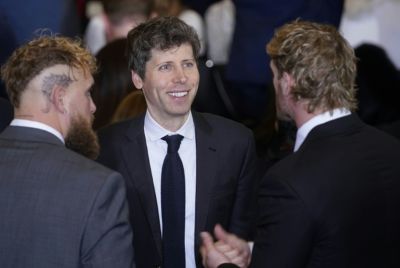
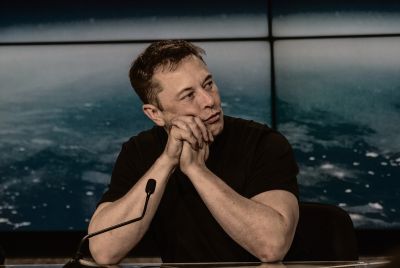
Elon Musk vs Sam Altman is entering its final stretch in an Oakland federal courtroom this week, as Musk's lawsuit against Altman and OpenAI heads towards closing arguments and prepares to call three star witnesses, including OpenAI cofounder Ilya Sutskever, Microsoft chief executive Satya Nadella and Altman himself.
The case centres on Musk's claim that he was misled by Altman and OpenAI president Greg Brockman when the once idealistic AI non-profit shifted into a powerful, tightly held for‑profit company. Musk, who helped found OpenAI and bankrolled its early years, argues that the organisation betrayed its original mission of building artificial general intelligence for the benefit of humanity. OpenAI's legal team has pushed back hard, framing the lawsuit as a competitive gambit by Musk as he scrambles to grow his rival AI venture, xAI.

The trial has pulled back the curtain on one of Silicon Valley's most secretive and mythologised firms. Business Insider reporters have sat through days of testimony in the packed Oakland courtroom, describing a strange mix of high‑stakes corporate drama and very human awkwardness as two of the tech world's most recognisable figures, Musk and Altman, are picked apart in real time.
Elon Musk testified for more than seven hours over three days in his $150 billion lawsuit against ChatGPT parent OpenAI and CEO Sam Altman. Here is what we learned from the first week in court https://t.co/IIFcrgdE8d pic.twitter.com/5aILEyuqEe
— Reuters (@Reuters) May 2, 2026
Ilya Sutskever's Role
The next phase in Musk vs Altman is expected to hinge in part on Sutskever, the former OpenAI chief scientist who helped design its earliest research culture and later tried to push Altman out. In 2023, Sutskever led a boardroom revolt that briefly removed Altman as chief executive, only to backtrack within days and join the chorus demanding his return.
That reversal left him an ambiguous figure, admired for his scientific work yet distrusted by multiple factions. According to an October 2025 deposition cited in the trial, Sutskever told lawyers he had not spoken to Altman for more than a year and formally left OpenAI six months after the failed ouster. He has since launched his own lab focused on long‑term AI risks, a theme that Musk's lawyers have been eager to highlight as they press their case that OpenAI abandoned safety in favour of speed and profit.
Who Sutskever appears to side with on the stand could shape the narrative. If he supports Musk's portrayal of a mission‑driven research lab slowly captured by commercial forces, that would lend emotional weight to Musk's breach‑of‑trust story. If he instead backs Altman's description of a necessary evolution to fund eye‑wateringly expensive AI research, that would blunt one of Musk's sharpest lines of attack. Either way, Sutskever is unlikely to enjoy being turned into a proxy for their feud.
Microsoft boss Satya Nadella's expected testimony sits in a different register. Microsoft has poured billions into OpenAI and threaded its models through products from Windows to Office. Nadella's appearance is set to underline just how far the organisation has travelled from the scrappy non‑profit Musk once supported. Musk's team is poised to argue that this deep corporate integration proves OpenAI has become exactly the sort of closed, commercially driven AI powerhouse it was created to offset. OpenAI's lawyers will counter that without such backing, the company simply could not compete in a global race dominated by Big Tech balance sheets.

Can Sam Altman Reframe Musk vs Altman?
The most delicate moment in Musk vs Altman will arrive when Altman takes the stand. Long before this lawsuit, his reputation was dogged by questions over his candour and internal deal‑making, concerns that resurfaced during his short‑lived ouster in 2023 and in a recent investigative profile in The New Yorker. Musk's complaint leans heavily on that theme, depicting Altman as someone willing to shade the truth to secure control of OpenAI and its intellectual property.
Altman has said he is glad the case is going to trial so he can 'explain all this to the world and have this chapter behind us.' In practice, that means withstanding a cross‑examination designed to paint him as untrustworthy in front of a jury that may already have strong feelings about both men. Some jurors will admire the man who steered OpenAI to release ChatGPT and jolted the global AI industry. Others may share Musk's suspicion that too much power has been concentrated in too few hands.
Here's a general summary of Elon Musk’s 3.5 hour long testimony today during day 2 of the OpenAI trial:
— Sawyer Merritt (@SawyerMerritt) April 29, 2026
• Elon on Sam Altman & Greg Brockman: “If they wanna get rich, they should go do so as a for-profit. They should not get rich off a nonprofit. I gave them $38 million of… pic.twitter.com/ZpAy08stYj
Beyond the reputational score‑settling, the trial has surfaced a trove of internal emails, management notes and personal text messages that will inform how historians and regulators interpret the last decade of AI. Business Insider's legal team has already flagged what it calls some of the most eye‑catching details, from tensions over safety research to the negotiation of OpenAI's hybrid structure, which attempts to balance a non‑profit board with a capped‑profit operating arm.
The jury will not be asked to deliver a criminal verdict. Instead, they must decide whether Altman, Brockman and OpenAI are civilly liable for breaching obligations to Musk and, if so, what compensation is appropriate. Any remedies would then be shaped by US District Judge Yvonne Gonzalez Rogers, who is known for keeping her own counsel. Musk has floated sweeping ideas, including ousting Altman and reverting OpenAI to a pure non‑profit, but there is no guarantee the court will entertain such structural surgery.

Even a technical win for Musk could leave him with far less than the moral victory he appears to be chasing. Much also remains uncertain. Key testimony, including Sutskever's and Altman's, has yet to fully play out, and no final ruling has been issued, so nothing is confirmed and all predictions should be treated with caution.
However the verdict lands, the case has already achieved something unusual. It has forced the normally opaque world of frontier AI into a public forum, with sworn witnesses, court reporters and a jury of non‑experts trying to decide not just who misled whom, but what kind of AI future these men are actually building.
© Copyright IBTimes 2026. All rights reserved.
- Recommended For You