Foldable iPad Release Date, Specs, Features, Design, Price and Everything We Know So Far
Apple's foldable iPad and iPhone Ultra are edging closer to reality, promising crease‑light hinges, heavy prices and a risky rethink of the iPad–Mac divide.


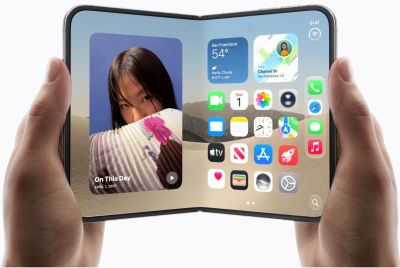
Apple is developing a foldable iPad with a crease‑free hinge design shared with its upcoming 'iPhone Ultra' foldable iPhone, according to multiple leaks from China and reporting by Bloomberg, with the tablet‑sized device not expected to reach customers before 2029.
The foldable iPad project was believed to have stalled last year after a July report claimed that Apple had paused work on a larger‑screen folding tablet due to engineering problems. Bloomberg reported in March that the programme was still alive but facing delays linked to weight and display technology — in keeping with Apple's habit of sitting out the first wave of new hardware and arriving later with a more polished, pricier take.
Blur The Line With The Mac
Weibo tipster Digital Chat Station claims Apple's foldable iPad will use the same crease‑minimising hinge design being readied for the iPhone Ultra. If Apple has a hinge that can hide the tell‑tale groove running down existing foldable screens, that would help explain why it has let Samsung and others take the early flak.
Rumours are unusually consistent on what the foldable iPad will be. Internally, it is said to use an 18‑inch OLED panel supplied by Samsung. Externally, it reportedly resembles a MacBook more than an iPad: aluminium shell, no outer display, and a clamshell shape when folded. Open it up and you get something roughly the size of a 13‑inch MacBook Air, only the keyboard has vanished, replaced by a single uninterrupted touchscreen.
If this ships, it will inevitably be read as a touchscreen Mac in disguise, or an iPad trying to grow up — and Apple will have to position it carefully. The trade‑offs are already clear. Early prototypes reportedly weigh about 3.5lb, significantly heavier than any current iPad Pro. Typing on a flat sheet of glass for hours has never convinced laptop users, and no leak yet suggests a radical rethink of that experience.
Apple is reportedly continuing development of a foldable iPad that could feature a near crease-free display, using the same advanced hinge technology expected in the company’s first foldable iPhone, informally referred to as the “iPhone Ultra,” according to Digital Chat Station. pic.twitter.com/mF2X6ByN12
— Oneily Gadget (@OneilyGadget) May 20, 2026
Price could be an even bigger barrier. The current 13‑inch iPad Pro already starts at $1,299. Component costs for a custom 18‑inch folding OLED panel are high, and analysts following the supply chain suggest the foldable iPad could land around $3,900 if those costs do not fall, pushing it into a new luxury tier that Apple has barely tested outside the very top end of the Mac line.
Two Experiments, One Hinge
The hinge is the common thread tying Apple's foldable iPad to its first folding iPhone, the so‑called iPhone Ultra.
On the phone side, leaks are more detailed. The iPhone Ultra is expected to debut alongside the iPhone 18 Pro and 18 Pro Max, with a 5.5‑inch display when shut and a 7.8‑inch tablet‑style screen when open. It is tipped to run Apple's A20 chip built on a 2nm process, paired with 12GB of RAM, a new C2 5G modem with satellite support, and a separate N1 chip for Wi‑Fi and Bluetooth.
This might be Apple’s most ambitious iPhone redesign since the original iPhone X.
— Saurav (@Saurav_DJ47) May 14, 2026
Apple’s first foldable iPhone aka the iPhone Ultra 👀
Expected features:
• Book-style foldable design
• Crease-free inner display
• Titanium frame
• Ultra-thin body
• 5.5" outer display
•… pic.twitter.com/T8Ip0edzKj
Design‑wise, reports point to a titanium frame and a 'liquid metal' hinge intended to minimise the crease, even if it cannot quite erase it. Analyst Ming‑Chi Kuo has suggested the folded device will look like two iPhone Airs stuck together.
Compromises are expected. The foldable iPhone is rumoured to rely on Touch ID in the side button rather than Face ID, apparently because there is no space for Apple's full TrueDepth camera hardware. Camera expectations are also being managed: instead of the Pro line's triple‑lens array, the Fold is said to have two 48MP lenses — wide and ultra‑wide — plus internal and external selfie cameras, with early chatter about optical zoom fading.
Battery life should be a strength. A Weibo leaker known as Fixed Focus Digital claims the iPhone Fold will pack around 5,500mAh of battery capacity, leveraging the extra internal volume afforded by the thicker body.
Pricing rumours put the iPhone Ultra firmly in ultra‑premium territory. Kuo has floated a $2,000 to $2,500 range, while another Weibo account, Instant Digital, has quoted more precise figures: about $2,320, $2,610, and $2,900 for the 256GB, 512GB, and 1TB options. These numbers are not verified but match the broader trend in high‑end phones and Apple's push toward higher storage tiers.
The timetable is still fuzzy. Nikkei Asia reported in April that the foldable iPhone might slip to 2027. Bloomberg's Mark Gurman has suggested Apple is targeting an unveiling alongside the iPhone 18 Pro models, with an actual release following later, possibly nearer Christmas, and perhaps restricted to a few launch markets, a pattern Apple used when the iPhone X followed the iPhone 8.
With a foldable iPad hovering somewhere out in 2029 and an iPhone Ultra wrestling with price, yield and durability, Apple appears ready to repeat its usual approach in a new category: wait longer than rivals, then test whether customers will pay extra for the version that looks, feels and folds the most like an Apple product.
© Copyright IBTimes 2026. All rights reserved.
- Recommended For You