

Iran Conflict Fuels $11.5B Equinor Windfall as Hormuz Disruption Lifts Oil Prices
Norwegian energy giant benefits from rising oil prices due to geopolitical tensions
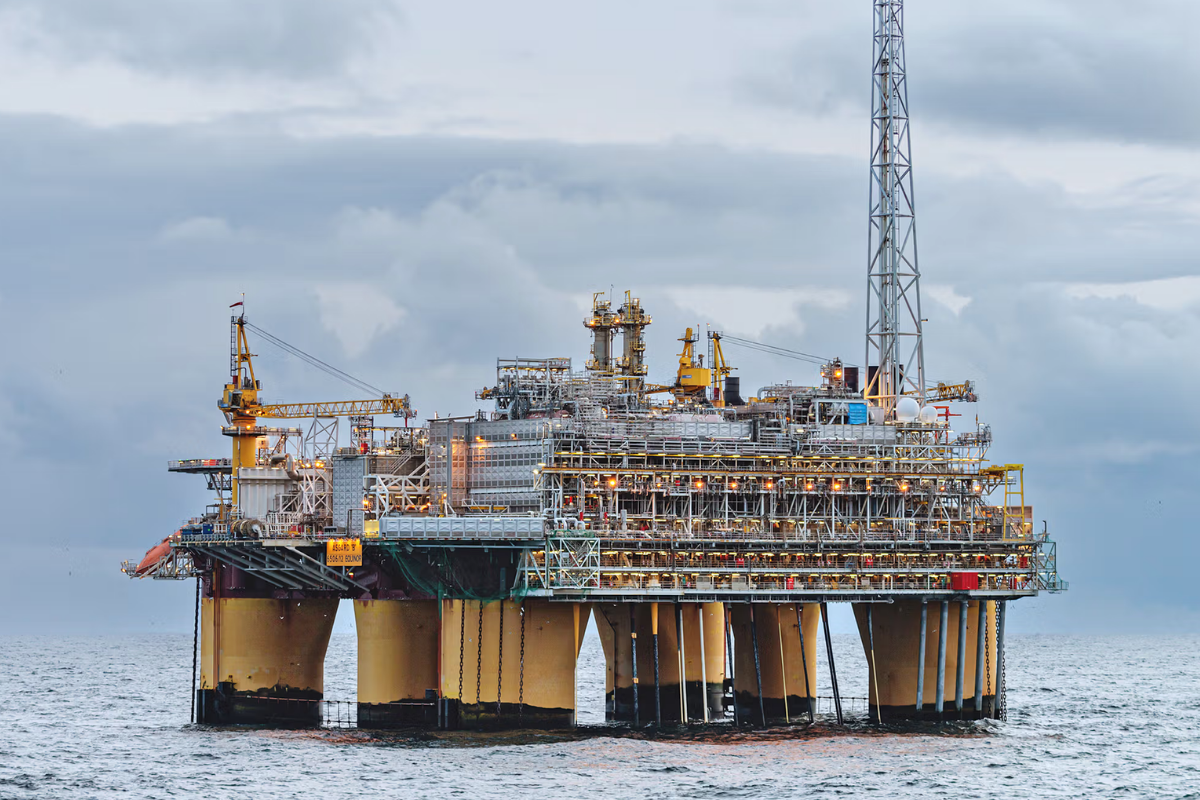
Norway's state-controlled Equinor reported adjusted operating income of $11.48B (£8.6B) for the second quarter, nearly double the $6.54B (£4.9B) it made a year earlier. The war against Iran pushed oil and gas prices sharply higher.
The figure beat the $11.37B (£8.5B) consensus of 17 analysts compiled by the company. Net operating income more than doubled to $12.99B (£9.7B) from $5.72B (£4.3B), net income reached $4.84B (£3.6B), and shares in Oslo rose about 2% on the day.
Equinor said the result was driven primarily by higher liquids prices globally and European gas prices, partly offset by weaker US gas. It realised $97.9 (£73) a barrel on liquids and $15.8 (£11.8) per million British thermal units on gas in Europe.
British households are paying the same wholesale gas prices. Ofgem lifted its energy price cap by 13% from 1 July, with the gas element up 24% against about 5% on electricity. The regulator attributed the rise to wholesale gas costs caused by the conflict in the Middle East. Around 33 million accounts sit on the standard variable tariffs the cap covers. Equinor is the UK's biggest single supplier of gas.
Production also rose. Equity output averaged 2,165 thousand barrels of oil equivalent per day, a 3% increase on the year, helped by new fields in Norway, the UK, and Brazil. Equinor raised output as the conflict began, filling part of the hole left when traffic through the Strait of Hormuz came close to a standstill.
Why Hormuz Disruption Lifted Equinor Earnings
Gulf supply has yet to recover. Global oil output rebounded by 4.1 million barrels a day in June to 98.8 million, but stayed roughly 9.4 million below pre-war levels, the International Energy Agency said. Gulf exports reached 16.1 million barrels a day against an average of 24 million before the fighting.
Crude moved sharply in both directions. North Sea Dated fell to about $68 (£51) a barrel by early July, its weakest since January, before an escalation on 7 and 8 July lifted the marker to roughly $77 (£58). Brent traded between $75 (£56) and more than $100 (£75) a barrel across April to June, against $60 to $70 (£45 to £52) a year earlier.
Prices climbed again on the day of the results. The US military launched an 11th night of strikes on Iran, and Yemen's Houthis announced a naval blockade of Saudi Arabia, which had been moving crude by pipeline to the Red Sea while Hormuz stayed restricted.
Susannah Streeter, chief investment strategist at Wealth Club, said: 'Brent crude has raced upwards again to trade around $93 a barrel, the highest level in six weeks.'
Product markets stayed tight. Gulf exports of refined products and liquefied petroleum gas ran at less than half their pre-war rate in June, the agency said, lifting refinery margins to four-year highs. Equinor said its marketing, midstream, and processing unit gained on crude trading and refining.
Where the Equinor Windfall Goes Next
The board declared a second-quarter dividend of $0.39 (£0.29) a share and opened a third buyback tranche worth up to $1.13B (£840M), running until 26 October at the latest. That takes the 2026 programme to as much as $3B (£2.2B). Full-year guidance was unchanged at $13B (£9.7B) of organic capital spending and 3% production growth.
The Norwegian state, which owns roughly two-thirds of the company, takes the largest single portion of both. It collected a further $6.4B (£4.8B) in the quarter as Equinor settled its final three Norwegian continental shelf tax instalments for 2025.
Cash flow from operations after tax paid reached $7.68B (£5.7B), and net debt to capital employed fell to 10.4% from 15.3%.
'Reliable energy is important in a volatile world marked by heightened geopolitical tension,' chief executive Anders Opedal said. 'Our role is to deliver energy safely and efficiently every day.'
Rosebank Adds to the Equinor Windfall Row
The results drew criticism in Britain. Climate campaign group Uplift accused the producer of 'raking in billions in profits while millions of people across the UK are struggling with unaffordable energy bills.'
Executive director Tessa Khan said the company was pushing ministers to approve the Rosebank oilfield off Shetland 'to keep those profits flowing.' The field would not cut bills because it is 'overwhelmingly oil for export,' she said, but would leave Equinor and the Norwegian government 'even richer'. She called on the new prime minister, Andy Burnham, to reject it and back renewable generation instead.
The agency's forecast of a return to surplus late this year assumes tanker traffic through the Strait gradually recovers, letting Gulf producers restart fields and refiners resume shipments. Renewed exchanges of fire, it said, show the risk of failing to reach a lasting peace deal.
© Copyright IBTimes 2026. All rights reserved.