

Trump Faces New Iran War Crisis as Conflict Escalates and Fears of US Involvement Grow
US Naval Blockade and Rising Oil Prices Amid Middle East Conflict
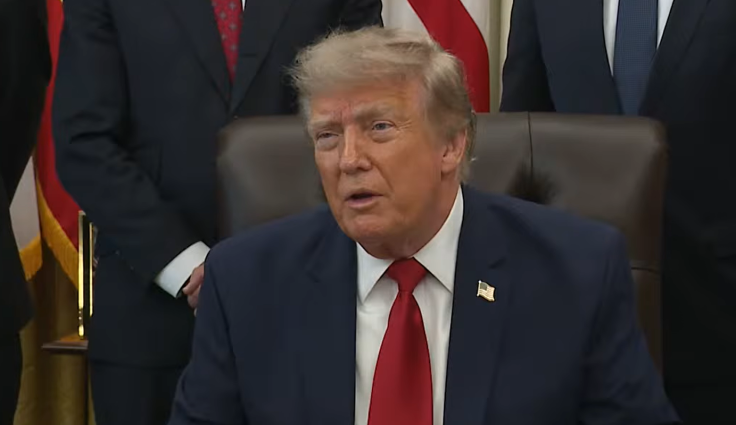
Donald Trump is facing a new Iran war crisis after ordering a naval blockade against Tehran, as fighting spreads across the Middle East and concerns grow that the United States could be pulled deeper into the conflict.
The move came after Iran allegedly attacked another commercial vessel, declared the Strait of Hormuz closed and exchanged fresh military strikes with the US and its regional allies, in one of the most serious escalations since fighting resumed.
Saudi Arabia has also entered the conflict by launching airstrikes against Iran-backed Houthi rebels in Yemen, raising fears that the fighting could spread across the region.
With roughly one-fifth of the world's oil passing through the Strait of Hormuz, the latest escalation has already pushed oil prices higher and increased concerns that Washington could become more involved if the conflict continues to spread.
Trump Announces Naval Blockade On Iran
Trump announced that the United States would reinstate a naval blockade on Iran, preventing ships from entering or leaving Iranian ports after Tehran allegedly attacked another commercial vessel in the Strait of Hormuz.
Writing on Truth Social, Trump declared that the US would now be known as 'The Guardian of the Hormuz Strait' and said preparations for the operation would begin immediately.
The proposal immediately raised questions about how the measure would be enforced under international maritime law, with the administration yet to provide further details.
Under maritime law, the blockade cannot take effect immediately because commercial shipping operators must receive at least 24 hours' notice.
Strait Of Hormuz Tensions Push Oil Prices Higher
The announcement came just days after Iran's Islamic Revolutionary Guard Corps declared the Strait of Hormuz closed 'until further notice' following US military strikes on Iranian targets.
Tehran said no vessels would be allowed to pass until what it described as American interference in the region came to an end.
About one in every five barrels of oil traded globally passes through the Strait of Hormuz, making even temporary disruptions capable of affecting fuel prices and inflation worldwide.
Any disruption to shipping there has immediate consequences for global energy markets.
Financial markets reacted almost immediately. Brent crude rose about five per cent to £59.88 ($79.93) per barrel, its highest level since June 19, as traders priced in the risk of further disruption to global oil supplies.
Saudi Strikes Open A New Front
Saudi Arabia also expanded the conflict by launching airstrikes against Iran-backed Houthi rebels in Yemen.
Houthi officials said warplanes bombed Sanaa International Airport while an Iranian aircraft was reportedly attempting to land. The group responded by declaring an 'end to the de-escalation phase' and warning that the attacks 'will not go unanswered or unpunished.'
The strikes indicate the conflict is no longer limited to direct exchanges between Washington and Tehran, but is increasingly involving Iran's regional allies.
Trump Says Ceasefire Is 'Over'
As tensions intensified, Trump defended his administration's tougher approach, telling Fox News: 'We're taking over the Strait.'
Trump's latest actions came after a ceasefire that briefly reduced tensions collapsed following fresh attacks on commercial shipping in the Strait of Hormuz. According to US officials, Iran attacked three commercial vessels in the Strait of Hormuz last week, prompting retaliatory American strikes against Iranian military infrastructure.
Speaking during the NATO summit in Ankara, Trump declared the truce effectively over. 'There's something wrong with them. They're cuckoo. As far as I'm concerned, it's over.'
US Secretary of War Pete Hegseth also signalled further military action after Iranian attacks targeted American interests. 'Iran made a poor choice. Now they pay,' Hegseth said before additional strikes were launched over the weekend.
Wider Consequences For The US And Region
The latest escalation has turned what began as a confrontation between the US and Iran into a broader regional crisis involving key American allies and some of the world's most strategically important shipping routes.
Any prolonged disruption to shipping through the Strait of Hormuz could push energy prices even higher, increase inflation and disrupt global trade.
At the same time, continued attacks by Iran and its regional allies could place growing pressure on the Trump administration to expand its military response, increasing the risk of a wider conflict.
The growing confrontation also raises the possibility of deeper US military involvement, making this one of the most significant international crises facing the Trump administration.
© Copyright IBTimes 2026. All rights reserved.