

Florida Learjet Crash Explained as Animation Reveals How Nine Passengers Went From Cruising at 35,000 Feet to a Deadly Plunge
Investigators examine icing, turbulence and rapid altitude loss to determine the cause of the crash
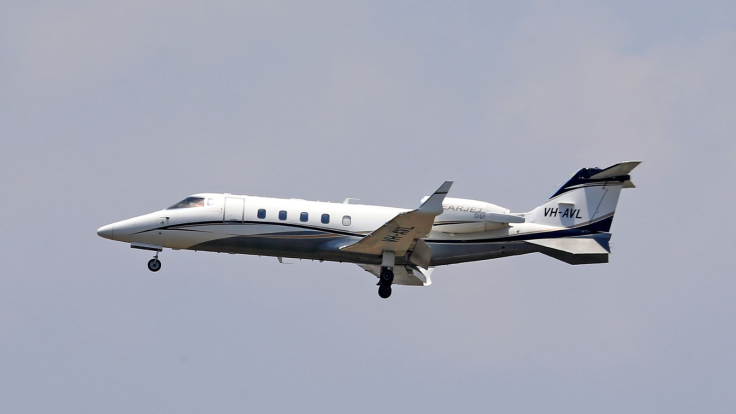
A private Learjet carrying nine people plunged thousands of feet in barely a minute before crashing in Florida, killing everyone on board. A gripping animation breaking down the aircraft's final moments offers a possible explanation of how a routine flight to the Bahamas turned into a catastrophic disaster.
The Learjet 60 departed Austin, Texas, bound for North Eleuthera in the Bahamas, before encountering trouble at around 35,000 feet on Sunday, 1 November. Investigators are examining reports of icing, turbulence and a rapid loss of altitude as they piece together what happened during the flight's final moments.
What Happened Before the Florida Learjet Crash?
According to preliminary information released by the National Transportation Safety Board (NTSB), the crew reported light clear icing and moderate turbulence while cruising at approximately 35,000 feet.
The pilot initially described the icing as manageable but later reported precipitation and requested permission to climb to 37,000 feet in search of smoother conditions.
Air traffic controllers approved the request. However, within seconds, the aircraft began experiencing serious difficulties. The crew reported a rapid descent before declaring an emergency, with communications indicating the jet was losing altitude at an alarming rate.
Dangerous Factors at High Altitude
The animation illustrates how several potentially dangerous factors at high altitude could have combined to threaten the aircraft's stability.
At 35,000 feet, the air is considerably thinner than at lower altitudes. Aircraft operating at these heights have a narrow range of speeds within which they can maintain safe flight. Flying too slowly can cause a wing to stall, resulting in a sudden loss of lift. Meanwhile, excessive speed can introduce other aerodynamic complications.
Ice accumulating on the aircraft's wings can further disrupt airflow, reduce lift and increase drag, making it harder to maintain stable flight. Climbing higher in search of smoother air may also have reduced the aircraft's operating margins.
However, investigators have yet to establish whether these factors contributed to the crash or how they interacted.
Learjet Plunged Thousands of Feet in Seconds
The aircraft's descent rapidly escalated into a terrifying emergency. According to preliminary flight information, the Learjet lost approximately 27,000 feet in around a minute before tracking data disappeared.
The animation depicts a possible scenario in which a loss of lift causes the aircraft's nose to drop, triggering a steep descent. At an estimated rate of 20,000 to 30,000 feet per minute, the jet would have been losing thousands of feet of altitude every few seconds.
Footage of the crash showed the aircraft descending at an extraordinary speed before striking the ground and erupting into flames.
The NTSB has also reported indications that the aircraft may have begun breaking apart before impact, although investigators have not determined what caused this.
What the Pilots' Final Communications Revealed
Air traffic control recordings captured the crew reporting the rapidly deteriorating conditions as the aircraft descended. The pilots communicated with controllers during the emergency, reporting the aircraft's altitude loss and an overspeed condition.
An overspeed occurs when an aircraft exceeds its permitted operating speed. Investigators will need to establish whether this developed as a result of the initial emergency or contributed to the aircraft's loss of control.
The NTSB is examining the wreckage, aircraft systems, weather conditions and available flight recordings to reconstruct the sequence of events.
What Caused the Florida Learjet Crash?
The investigation remains ongoing, with officials warning that the available information is preliminary. Investigators are examining whether icing, turbulence, precipitation or other factors contributed to the aircraft's rapid descent.
Although the animation provides a visual explanation of a possible chain of events, it is not an official reconstruction by investigators. The precise cause of the Learjet 60 crash that killed all nine people aboard has yet to be established.
© Copyright IBTimes 2026. All rights reserved.