'God Chose Trump': POTUS Sponsored 'Rededicate 250' Fest Sparks Outrage Over Pastor's Ballroom Claim
Govt-backed religious jubilee in Washington saw Pastor Robert Jeffress claim God 'raised up' Donald Trump to build a new White House ballroom

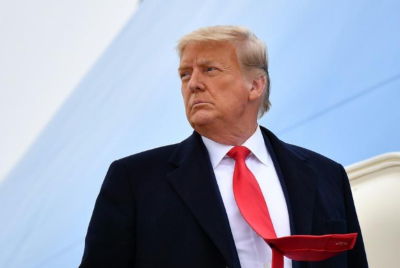
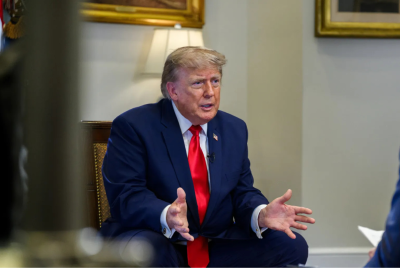
Donald Trump was hailed as a leader 'chosen and raised by God' to build an opulent new White House ballroom at a government-backed religious celebration in Washington on Sunday, triggering outrage from civil liberties groups and critics of his long‑standing alliance with conservative Christian leaders.
The nine-hour 'Rededicate 250: National Jubilee of Prayer, Praise & Thanksgiving' event was billed as a commemoration of 250 years of American religious heritage under the Trump administration's watch. The programme leaned heavily on two traditions that have been among Trump's most reliable political allies: Evangelical Protestants and conservative Catholics. What it did not do, according to detractors, was offer anything close to a full picture of the increasingly plural religious life of the United States.
At the centre of the storm was Pastor Robert Jeffress, senior pastor of First Baptist Church Dallas and a high-profile Trump supporter. Speaking to a roaring crowd, Jeffress told worshippers it was 'hard to believe that it would take two centuries for the lord to raise up a great man to bring that ballroom to stand where it needs to stand'. The suggestion that the President's role in constructing an expensive White House ballroom formed part of a divine plan crystallised the unease of those who see Trump-era politics and Christian nationalism as tightly entwined.

God, Donald Trump And The White House Ballroom
Trump has courted and rewarded conservative religious constituencies, from judicial appointments to overtly faith‑inflected campaign rallies. For his supporters in the room, Jeffress's flourish sounded like a logical continuation of that story: a president whose secular power is constantly framed as spiritual destiny.
Annie Laurie Gaylor, co‑president of the Freedom From Religion Foundation, described the government‑sponsored prayer fest as 'the epitome of exactly what our secular Constitution forbids our government from doing.' Her organisation, which campaigns for strict church‑state separation, argued that the spectacle was more than just enthusiastic piety.
🇺🇸 President Trump is the only one who can truly set this world right.
— MAGA Guardian🇺🇸 (@MAGAGuardian) May 16, 2026
There is still no one as courageous as him.
I am so grateful to God that Donald Trump is the President of the United States.
Agree? pic.twitter.com/Tjtolaw2om
According to Gaylor, the event represented 'a fusion not only of church and state, but also of our federal government with Christian nationalism.' The language is stark, but so was the visual: hours of worship and political speeches, anchored on federal backing, that primarily amplified one slice of the Christian spectrum.
There was no roster of Lutherans, Methodists or Episcopalians on the stage. The Church of Jesus Christ of Latter-day Saints was absent. So were Orthodox Christian voices, Muslim leaders, Buddhists, Hindus and representatives of the country's fast‑growing non‑religious population. It may sound like a programming quirk, yet in a nation where roughly a quarter of adults now describe themselves as religiously unaffiliated, according to Pew Research Centre data, omission is itself a statement.
Pew's figures sketch a very different landscape from the one that appeared in the ballroom. Around 23% of Americans identify as evangelical Protestants and 19% as Catholics, while mainline Protestants account for roughly 11%. More than 25% do not claim any religious affiliation. None of those unaffiliated voices had a formal place at the jubilee.

Critics Say Trump‑Era Religious Events Ignore US Diversity
The Council on American-Islamic Relations, the country's most prominent Muslim civil rights and advocacy group, urged organisers to rethink the line‑up and include speakers from other faiths. Corey Saylor, CAIR's director of research and advocacy, reminded reporters that Muslims arrived in North America before the United States declared independence, a historical point often airbrushed out of narratives about 'Judeo‑Christian' foundations.
'The reality is that the religious landscape in the United States was more diverse than many people think of, and it certainly means today we have a religious landscape that deserves to be looked at and respected,' Saylor told Reuters. His argument was less about numbers than about acknowledgement: who gets to stand on the stage when the nation's story is being retold.
The official programme did include some attempts at breadth within the bounds of Abrahamic faiths. Among the religious figures were Rabbi Meir Soloveichik, the chief rabbi of Congregation Shearith Israel in New York City; Jonathan Falwell, chancellor of Liberty University; and Bishop Robert Barron of the Catholic Diocese of Winona-Rochester. All are well‑known in conservative circles, and their presence underlined just how deliberately the event was curated.
It's great to have a real President again.
— American Warrior for Christ (@johnrackham82) May 17, 2026
Here's a picture of Donald Trump dumping EVERYTHING from the China visit. pic.twitter.com/RtRR91Iir8
On the political side, Republican Senator Tim Scott and House Speaker Mike Johnson were among the scheduled speakers. No prominent Democrats were listed. In a sharply polarised election season, that felt less like an oversight and more like an open declaration of which voters the event was courting.
Defenders of the format pushed back at charges of exclusion. Samuel Rodriguez, leader of the National Hispanic Christian Leadership Conference and one of Sunday's speakers, told Reuters that the heavily Christian line‑up reflected what the American colonies looked like in the aftermath of the 18th‑century Great Awakening. In other words, the organisers were not attempting to mirror 21st‑century demographics so much as a particular historical memory of revival and nation‑building.
Church‑state separation groups are already signalling that they see the jubilee as another marker in a longer‑term shift: an American presidency, and now a president, increasingly comfortable blurring the border between public office and religious mission. Nothing about Jeffress's claim that God 'raised up' Trump to build a ballroom can be independently verified, so it should be taken with a grain of salt, but the political intent behind such rhetoric is harder to dispute.
© Copyright IBTimes 2026. All rights reserved.
- Recommended For You