Pope Leo XIV Installs Three New Bishops Known for Clashing With Donald Trump
Bishop Evelio Menjivar, Father Gary Studniewski and Father Robert Boxie III have previously spoken out on political and social issues linked to the Trump administration.

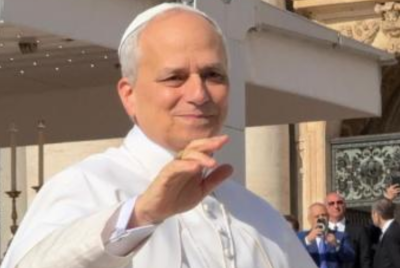
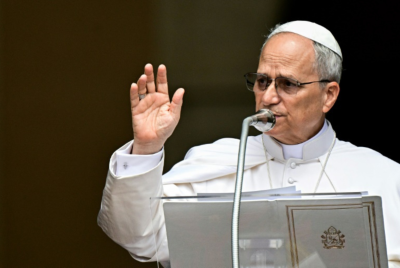
Pope Leo XIV has appointed three new bishops in the United States this week, placing figures who have openly criticised Donald Trump into senior church roles at a time of ongoing tensions between the Vatican and the White House.
The appointments, announced in early May 2026, include Bishop Evelio Menjivar, Father Gary Studniewski, and Father Robert Boxie III. According to Newsweek, all three have previously spoken out on political and social issues linked to the Trump administration, from immigration to civil rights and the events of January 6.
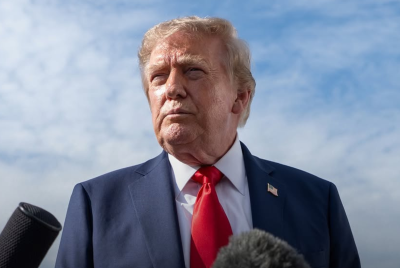
The move has raised eyebrows in Washington as relations between the Vatican and Trump have been strained for months. The divide escalated after the pope criticised US actions in Iran in April, prompting Trump to respond by calling him 'weak on crime and terrible for foreign policy' and adding, 'If I weren't in the White House, Leo wouldn't be in the Vatican.'
Pope Leo XIV Appointments
The choice of bishops is not random. Bishop Evelio Menjivar, who will now lead the Diocese of Wheeling-Charleston, has been particularly outspoken on immigration policy. Writing last year, he described federal enforcement as a 'shock and awe' campaign that went beyond standard immigration control.
He warned that such actions were creating fear not only among undocumented migrants but also among people with legal status and even US citizens with immigrant families. His language reflected a broader concern within parts of the Catholic Church about how policy affects human dignity.
Father Robert Boxie III, now appointed as an auxiliary bishop in Washington, has taken aim at efforts to roll back diversity, equity and inclusion initiatives.
Speaking in 2025, he said, 'In a lot of ways we have made great progress, but in so many ways I feel like we're regressing.' He added that the term 'DEI' had become unclear, saying, 'I don't even know what that means anymore. It's a term that's been hijacked.'
Meanwhile, Father Gary Studniewski brings a different kind of experience. A former Army chaplain, he was in Washington during the 6 January attack on the US Capitol. Reflecting on that day, he described it as 'very disturbing, very disheartening,' adding, 'It was a normal day until all that sickening unrest in the afternoon.'
Vatican-Trump Rift Deepens
The appointments suggest that Pope Leo XIV is choosing bishops who are comfortable speaking openly about political issues, even when that puts them at odds with government policy. Two of the new bishops will serve in the Archdiocese of Washington, a key location close to US political power, which gives their roles added influence.
Over the past few weeks, tensions between US President Donald Trump and Pope Leo XIV have turned into a very public disagreement, largely focused on war, immigration and how world leaders should talk about conflict.
The dispute escalated after Pope Leo XIV criticised aspects of US military policy during the ongoing Iran conflict, warning about rising violence and the human cost of war. His comments were followed by a strong reaction from the White House, and the situation developed into a back-and-forth that continued into May. Trump responded by calling the pope 'weak on crime' and 'terrible for foreign policy,' arguing that the Vatican was stepping into political territory.
Pope Leo has pushed back, saying his comments are based on moral teaching rather than politics. He has defended his right to speak on issues like war and human dignity, while Vice President JD Vance has tried to calm the situation, saying disagreements were being exaggerated and were part of dealing with a 'messy world.' Even so, neither side has really stepped away from its position.
Still, public opinion shows a noticeable split. A recent poll found that 48% of Catholics think it is acceptable for the pope to criticise Donald Trump's policies, while only 21% think it is acceptable for Trump to criticise the pope. The survey was carried out between April 21 and 23 among 2,000 US adults, with a margin of error of plus or minus 2.3 percentage points.
The Vatican has not added further comment on the appointments, and it is not fully clear whether they are meant as a direct challenge to US policy. What is clear, however, is that these bishops are stepping into positions close to political decision-makers at a time when relations between the Church and the US government remain tense and unsettled.
© Copyright IBTimes 2026. All rights reserved.
- Recommended For You