Nearly 90% of Americans Don't Have This Key Document And It Could Leave Their Families Facing Court Battles
Millions of Americans lack a power of attorney, leaving families unprepared during medical emergencies


Life does not always unfold as planned. A sudden illness, an accident or an unexpected medical emergency can quickly turn routine financial decisions into complicated problems for families. Yet millions of Americans remain unprepared for that possibility.
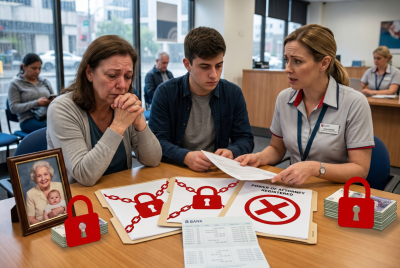
A report highlighted by financial journalist Beth Pinsker indicates that nearly 90 percent of adults in the United States do not have a power of attorney in place. The figure comes from a national survey conducted by Trust & Will, an estate planning platform. Despite its formal name, the document serves a straightforward purpose. A power of attorney allows a trusted person to manage financial matters if someone becomes unable to handle those responsibilities themselves. Without that authority, even close family members may be unable to access bank accounts, pay bills or manage property. In many cases, relatives must seek court approval before they can take action.
When Families Are Forced Into Court
The absence of a power of attorney can lead to a legal process known as guardianship. In these situations, relatives must petition a judge for the right to manage the financial affairs of someone who has become incapacitated. The process can take weeks or even months and often involves legal filings, medical evaluations and court hearings.
During that period, ordinary financial obligations, such as mortgage payments, insurance bills and utilities, may become difficult to manage. According to the Trust & Will survey, which included responses from about 5,000 American adults, only around 11 percent reported having a durable financial power of attorney.
Cody Barbo, the company's chief executive, said many families only recognise the importance of such documents after facing a crisis.
In comments reported by MarketWatch, Barbo said the issue has become increasingly personal as his own parents grow older. His father is 81 and his mother is 70, and he noted that clear legal arrangements could become essential if health complications arise.
Estate Planning Is More Than Writing a Will
For many Americans, estate planning begins and ends with writing a will. Legal professionals say that assumption can leave important gaps. A will determines how assets are distributed after someone dies. It does not provide authority for managing finances while the person is still alive but unable to make decisions.

The survey found that only 26 per cent of Americans currently have a will. That figure has declined slightly from the previous year, when 31 per cent reported having one. Other estate planning tools appear even less common.
Only about 14 per cent of respondents said they had established a trust, a legal structure that can help families avoid probate—the court-supervised process used to distribute assets after death. Probate can take months to complete and typically becomes part of the public record. Taken together, the findings suggest that many Americans have yet to organise basic legal preparations for their finances and property.
Planning for Medical Decisions
Financial planning is only one part of preparing for unexpected illness. Medical decisions can also become complicated if someone is unable to communicate their wishes. A healthcare proxy allows a trusted individual to make medical decisions on a person's behalf during emergencies.
However, the survey found that only about 19 per cent of adults have created such a document. Barbo noted that once serious illness develops, preparing legal documents can become far more difficult. Conditions such as Alzheimer's disease or dementia may affect a person's legal capacity to sign official paperwork.
Sudden accidents or hospitalisations can create similar challenges, leaving families forced to make urgent decisions without clear legal guidance. Another document often overlooked is a HIPAA authorisation, which allows healthcare providers to share medical information with a designated family member or trusted individual. Only about 10 percent of survey respondents reported having completed one.
Younger Generations Show Some Awareness
The survey also examined how estate planning habits vary across age groups. Members of Generation Z — many of whom are just entering adulthood — showed slightly higher engagement with some planning tools than older generations. Even so, more than half reported having no estate planning documents at all.
About 21 per cent of Gen Z respondents said they had established a trust. However, far fewer reported having documents related to financial authority or healthcare decisions. Researchers at Trust & Will describe the pattern as a gap between awareness and action. Many people understand the importance of planning but delay putting legal documents in place.
The Cost of Waiting
One reason estate planning is often postponed is the belief that such preparations are only necessary for wealthy families. Legal professionals note that this assumption can be misleading. Even households with modest assets usually have financial responsibilities that must be managed if someone becomes unable to act.
Bank accounts, insurance policies, monthly bills and shared household expenses all require attention. Without clear legal authority, relatives may struggle to manage these obligations during already stressful circumstances. The survey does offer one encouraging insight. Among people who had completed at least one estate-planning document, more than 80 per cent said they felt confident they could handle a family member's financial affairs if necessary. For many families, that confidence begins with a simple step — preparing a document that millions of Americans still overlook.
© Copyright IBTimes 2026. All rights reserved.
- Recommended For You