Trump Orders Negotiators to Take Their Time Closing a Deal with Iran as the World Teeters on Economic Collapse
US-Iran negotiations face uncertainty as Trump advises patience, impacting global markets and regional security.
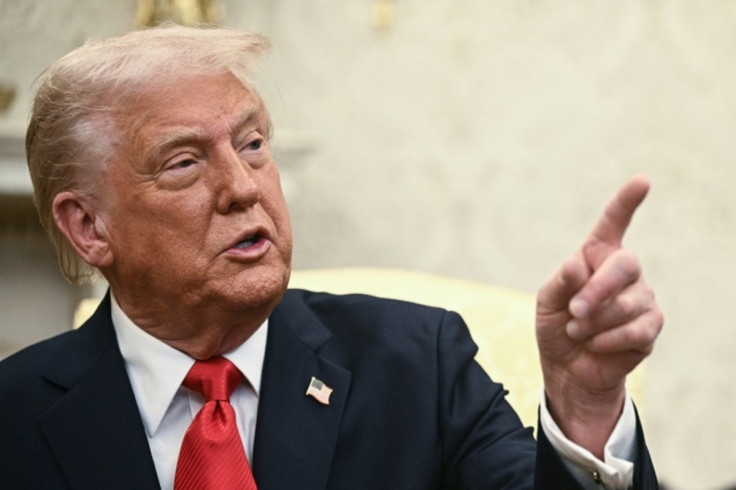
President Donald Trump has said he has instructed American negotiators 'not to rush into a deal' with Iran, insisting that 'time is on our side' as tensions in the Middle East continue to unsettle global markets and raise fears of a wider economic downturn.
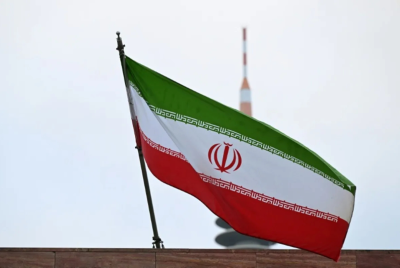
Speaking amid renewed diplomatic efforts between Washington and Tehran, Trump said the US blockade linked to the Strait of Hormuz would remain 'in full force and effect until an agreement is reached, certified, and signed'. His comments have added further uncertainty to already fragile negotiations over Iran's nuclear programme and regional security issues.
The US president also refused to rule out future military action against Iran, keeping open the possibility of strikes should the talks collapse. The latest remarks came shortly after Pakistani Prime Minister Shehbaz Sharif said another round of talks between the United States and Iran was expected to take place very soon.
Trump Claims US Has Leverage
There had been growing optimism over recent days that a breakthrough agreement could be reached quickly, with speculation that a deal might even have been signed over the weekend. However, White House officials have since adopted a more cautious tone, suggesting several key issues remain unresolved.
Officials insisted they still believed an agreement would eventually be reached, but indicated the process could take several more days rather than hours. The mixed messaging has highlighted the continuing rift between Washington and Tehran over what has actually been agreed behind closed doors.
Throughout the negotiations, both sides have repeatedly contradicted one another's public statements. American officials have at times described certain issues as settled, only for Iranian representatives to reject those claims outright.
The dispute is being watched closely because of its impact on the Strait of Hormuz, one of the world's most important oil shipping routes. World markets had initially reacted positively after Trump suggested the waterway could soon reopen fully to international trade.
However, concerns remain over how long the standoff can continue without inflicting deeper damage on the global economy. Reports in major US newspapers citing leaked American intelligence assessments claimed Iran may be capable of sustaining its current position for another three to four months.
Analysts warn that persistently high oil prices could place additional strain on economies already battling inflation and sluggish growth, increasing fears of a broader recession if tensions continue.
Fighting Intensifies Along Israel-Lebanon Border
At the same time, violence has continued to escalate along the border between Israel and Lebanon despite ongoing ceasefire efforts.
Israeli air raids reportedly continued across southern Lebanon, where more than 3,100 people have been killed since 2 March. Among the latest casualties was a paramedic killed in a strike in the Nabatieh region.
The Lebanese armed group Hezbollah claimed responsibility for 28 separate military operations on Sunday targeting Israeli troops and military positions in southern Lebanon.
According to statements released by the group, attacks involved rockets, artillery shells and drones directed at Israeli troop concentrations, military vehicles and newly established command centres in areas including Biyyada, Rashaf, al-Quzah and Naqoura.
US Criticises Failure of Nuclear Treaty Talks
Meanwhile, the US State Department expressed frustration after member states at the 2026 Review Conference for the Nuclear Non-Proliferation Treaty failed to reach a consensus on a final document.
Washington specifically blamed what it described as Iran's 'continued noncompliance' with obligations linked to the International Atomic Energy Agency.
In a statement, US officials argued that the inability to secure agreement undermined the credibility of the treaty system and warned that countries violating nuclear safeguards could not be allowed to weaken international accountability mechanisms.
Iran's Sticking Points Also Delay Negotiations
Iran's news organisation Tasnim reported that a deal with the US and Iran to end the war is near but warns that talks could be cancelled at the last minute.
Tasnim reports that the key clause of possible agreement remains unsettled, including the subject of frozen Iranian assets.
The Iranian government has continually urged foreign nations to unblock its assets, which were frozen due to prolonged US sanctions.
The US demands Iran completely halts uranium enrichment and dispose of its highly enriched stockpile. Iran rejects this, citing its sovereign right to peaceful nuclear technology.
Iran also objects to the US blockade at the Straight of Hormuz and insists on controlling the waterway.
Global Oil Prices Slide Over Delayed US-Iran Agreement
Global oil prices continued to fall sharply as uncertainty surrounding negotiations between Washington and Tehran fuelled growing concerns over the impact of prolonged disruption in the Strait of Hormuz on the world economy.
Brent crude futures dropped by $4.64 (£3.44), or 4.48 per cent, to settle at $98.90 (£73.37) a barrel by 22:03 GMT, while US West Texas Intermediate (WTI) crude fell $4.42 (£3.28), or 4.58 per cent, to $92.18 (£68.38) a barrel.
Markets remain on edge over the lack of clarity surrounding a potential US-Iran deal, with traders increasingly worried that ongoing restrictions affecting one of the world's most important shipping routes could slow global economic growth and place further pressure on energy supplies.
US Secretary of State Marco Rubio previously mentioned that 'significant' but 'not final' advancement had been made in the negotiations to end the war.
Rubio alluded to positive news on the opening of the Straight of Hormuz, saying that development over the past 48 hours may lead to a 'completely open strait... without tolls.
Meanwhile, Pakistan's Deputy Prime Minister Ishaq Dar, the mediator of the US-Iran talks, has said that the latest negotiations are 'grounds for optimism' that an encouraging outcome is 'within reach'.
© Copyright IBTimes 2026. All rights reserved.
- Recommended For You