Oil Whipsaws $30 in 24 Hours as Trump Vows to 'Hit Iran Extremely Hard'
Crude oil swung nearly $30 per barrel in 24 hours after Trump's primetime vow to escalate the Iran conflict reversed a ceasefire-driven rally.
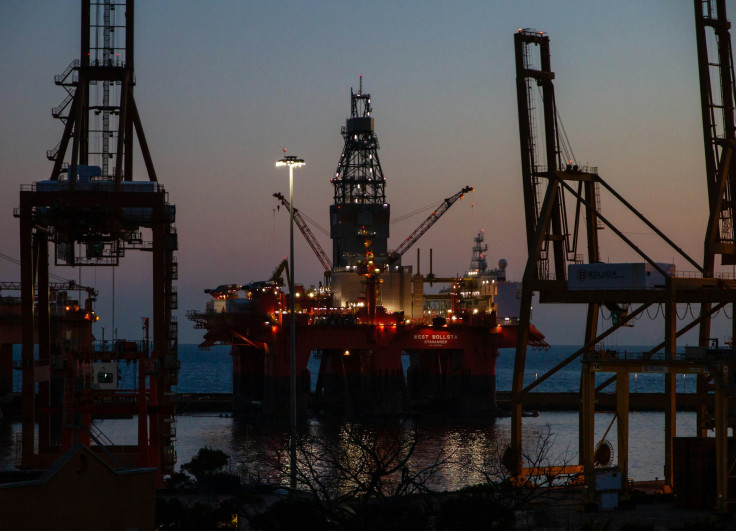
Oil prices swung nearly $30 (£24) per barrel in 24 hours as ceasefire hopes collapsed and President Donald Trump vowed in a primetime address to 'hit' Iran 'extremely hard' over the coming weeks.
Brent crude futures surged more than 8% to $109.16 (£86) per barrel on 2 April, while US benchmark West Texas Intermediate climbed 8.2% to $108.36 (£86), CNBC reported. Both benchmarks had traded below $100 (£79) just hours earlier, after traders bet the five-week-old conflict was nearing its end.
The reversal came after Trump delivered his first national address on the Iran war from the White House on the evening of 1 April. He told the nation the United States would 'hit them extremely hard over the next two to three weeks' and said the US would send Iran 'back to the Stone Ages, where they belong.'
That rhetoric shattered a brief rally that had formed earlier on 1 April. WTI closed the regular session at $100.12 (£79) per barrel, down 1.24%, while Brent settled at roughly $101.04 (£80), down 2.82%, after Trump told reporters that the US military could wind down operations within weeks.
Iran dismissed the ceasefire suggestion. Foreign Minister Abbas Araghchi told Al Jazeera that Tehran would continue to fight. 'You cannot speak to the people of Iran in the language of threats and deadlines,' he said, PBS News said.
Trump Speech Sends Oil Markets Into Reverse
.@POTUS: To those countries that can’t get fuel, many of which refused to get involved in the decapitation of Iran, I have a suggestion—Number 1, buy oil from the United States. And Number 2, build up some delayed courage, go to the Strait, and just take it. Iran has been,… pic.twitter.com/n7lV2w7qJE
— Rapid Response 47 (@RapidResponse47) April 2, 2026
Trump's 9:00 p.m. ET address offered no concrete exit strategy. He claimed military objectives under Operation Epic Fury were 'on track' but stopped short of announcing a withdrawal timeline.
He called on other nations to reopen the Strait of Hormuz, the waterway through which roughly 20% of the world's oil supply passes. It has been effectively shut since Iran restricted tanker traffic after the conflict began on 28 February.
Trump said other countries 'must take care of that passage,' adding that the US 'does not need' the strait. He blamed the oil price spike on Iran's 'deranged terror attacks against commercial oil tankers,' CNBC said.
Markets reacted swiftly. Brent climbed from around $100 (£79) to above $109 (£86) within hours of the address. Asian stock markets opened sharply lower on 2 April, with South Korea's Kospi falling as much as 4.5%.
IEA Warns April Oil Losses Will Double March's

The volatility came as International Energy Agency Executive Director Fatih Birol warned that oil supply disruptions would worsen significantly in the coming weeks.
Speaking on the 'In Good Company' podcast on 1 April, Birol said April would be 'much worse than March,' with supply losses expected to roughly double. He explained that some cargoes contracted before the war were still reaching ports in March. 'In April, there is nothing,' CNBC quoted.
The IEA estimates more than 12 million barrels per day of oil supply have been lost since fighting began. Birol described the crisis as worse than the 1970s oil shocks and the loss of Russian gas in 2022 combined.
Shortages of jet fuel and diesel are the most pressing concern, with the crunch already hitting Asia and expected to reach Europe by April or early May. The IEA is weighing further releases from strategic reserves, though Birol cautioned that such action would only 'reduce the pain.'
'The cure is opening up the Strait of Hormuz,' he said.
Brent crude surged more than 60% over the course of March, its steepest monthly gain since records began in the 1980s. The benchmark had been trading at roughly $70 (£55) per barrel before the conflict began on 28 February, when the United States and Israel launched coordinated airstrikes on Iranian military targets.
Trump also claimed on 1 April that Iran's president wanted a ceasefire. Iran's government rejected the assertion, with state media calling it 'baseless,' PBS News added. US gasoline prices have already topped $4 (£3.16) per gallon, with further increases expected as the conflict enters its second month.
© Copyright IBTimes 2026. All rights reserved.
- Recommended For You