

US-Iran Talks Begin: How Nuclear Negotiations Could Impact Oil Prices, Inflation, and Your Wallet
President Trump warns Iran of consequences, backed by military force including a second carrier strike group and over 50 fighter jets
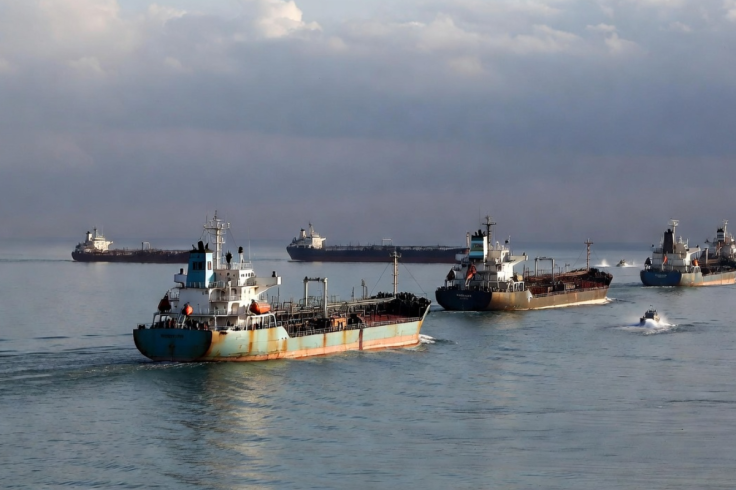
The price you pay for petrol next month may depend on what happens in a Swiss conference room this week.
US and Iranian negotiators met in Geneva on 17-18 February for a second round of talks over Tehran's nuclear programme. While diplomats exchanged proposals inside, Iran's Revolutionary Guard conducted live-fire exercises in the Strait of Hormuz outside, temporarily shutting down sections of the waterway. The timing was no accident.
Your Fuel Bill Hangs in the Balance
About 20% of the world's oil, roughly 20 million barrels per day, moves through the Strait of Hormuz, according to the US Energy Information Administration. Block that chokepoint, even briefly, and prices spike. Fast.
In the UK, petrol currently sits at about 131.6p per litre, the lowest since summer 2021, according to fuel tracking data. But that number can change quickly. When Trump threatened military action against Iran in early February, Brent crude jumped over 3% in a single session.
On Tuesday, oil moved the other way. Brent crude fell 1.79% to $67.42 (£49.75) per barrel after Iran's foreign minister, Abbas Araghchi, announced that both sides had reached 'a general agreement on guiding principles' for a potential deal. West Texas Intermediate dropped 0.89% to $62.33 (£45.99) per barrel.
Good news? Maybe. But don't fill up your car with optimism just yet.
What Both Sides Are Saying
President Donald Trump has warned Iran of 'potential consequences' if no deal materialises. He's backed those words with hardware: a second aircraft carrier strike group, plus over 50 fighter jets moved to the region in the past 24 hours, according to Axios.
'I'll be involved in those talks — indirectly — and they'll be very important,' Trump told reporters aboard Air Force One on Monday, according to NPR. 'Typically, Iran's a very tough negotiator.'
Tehran isn't backing down either.
Supreme Leader Ayatollah Ali Khamenei dismissed the American position outright. 'The Americans say, let's negotiate over your nuclear energy, and the result of the negotiation is supposed to be that you do not have this energy,' he wrote on social media during the talks. 'If that's the case, there is no room for negotiation.'
Still, both sides agreed to draft text for a potential agreement. Iranian negotiators will return to Geneva with detailed proposals within two weeks, a US official told Axios.
The Real-World Cost If Talks Collapse
Failed negotiations could push oil toward $91 (£67.14) per barrel by late 2026, according to energy market projections. That kind of spike doesn't stay at the pump. It spreads. Transport costs rise. Shipping gets more expensive. Supermarket prices follow.
In the British context, households already face fuel duty increases totalling 10p per litre by March 2027. Add an oil price surge on top of that, and the Bank of England's inflation targets come under serious pressure. The Office for National Statistics has pointed to falling fuel prices as a key reason inflation has eased recently. Reverse that trend, and the relief disappears.
Across the Atlantic, the story is the same. US drivers are currently paying an average of $2.81 (£2.07) per gallon. But as in the UK, this relief is fragile. In states like New Jersey and Michigan, new state-level fuel tax hikes have already kicked in this year. If the diplomats in Geneva fail, millions of Americans will face a 'double whammy' of rising global crude costs and higher domestic taxes, potentially reigniting the very inflation the Federal Reserve has fought to cool.
A Busy Day for Nuclear News
The Geneva talks weren't the only nuclear story breaking on Tuesday. At a Washington DC event hosted by the Hudson Institute, US officials revealed intelligence claiming a 2020 earthquake near China's Lop Nur test site was actually an underground nuclear blast, NPR reported.
The timing raises questions. With Iran talks underway and the New START treaty with Russia expired, the Trump administration appears to be framing nuclear concerns on multiple fronts at once.
What This Means for You
Energy markets are cautiously optimistic for now. But if Geneva falls apart, analysts have modelled scenarios where Brent crude surges by $20-25 (£14.76-18.45) per barrel, adding roughly 10-15p per litre at UK pumps.
You'll feel it at the forecourt. You'll feel it at the supermarket checkout. You'll feel it when your heating bill arrives.
What happens in that Swiss conference room this week? It lands at your doorstep next month.
© Copyright IBTimes 2026. All rights reserved.