

Iran Accepts Ceasefire but Warns 'Our Hands Remain Upon the Trigger' as Oil Prices Drop
Tehran agrees to a 14-day ceasefire and talks with Washington, but warns the truce is fragile and war could resume at any moment

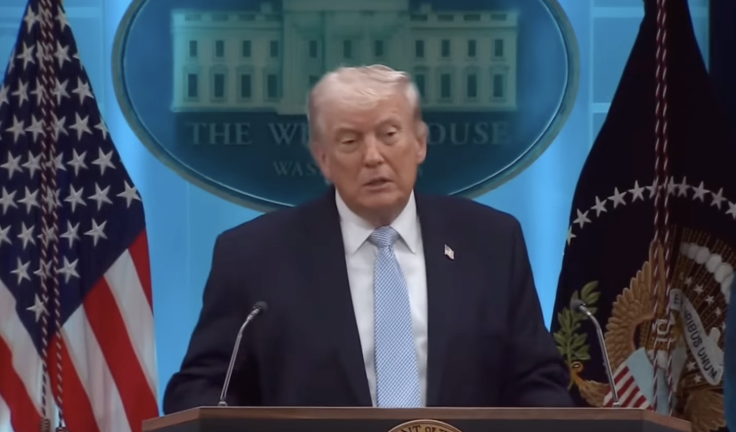
With less than two hours to go before his ultimatum expired, Donald Trump chose to step away from the brink of a massive military confrontation on Tuesday night. The US President pivoted toward de-escalation, abandoning his earlier vows of ruinous strikes just as the window for Tehran to surrender or face a significant offensive was closing.
The American President confirmed he is pausing the planned strikes against Iran's infrastructure—including its bridges and energy facilities—following a 14-day truce deal that hinges on the Strait of Hormuz being cleared for shipping. Trump noted that a 'workable' 10-point proposal put forward by Tehran has provided a path to potentially resolve the conflict, which first broke out with US and Israeli operations in February.
BREAKING: Iran says it has "forced" the US to accept its "10-point plan" which includes the following terms:
— The Kobeissi Letter (@KobeissiLetter) April 7, 2026
1. Commitment to non-aggression
2. Iran’s control over the Strait of Hormuz
3. Acceptance of Iran's uranium enrichment
4. Lifting of all primary sanctions
5. Lifting of…
A Fragile Truce and Global Diplomacy
The Supreme National Security Council (SNSC) in Tehran has confirmed its agreement to a 14-day pause in the ongoing conflict. According to an official release, the regime is set to enter talks with Washington this coming Friday in Islamabad. However, the council was quick to clarify that the truce is fragile, stating: 'It is emphasised that this does not signify the termination of the war. Our hands remain upon the trigger, and should the slightest error be committed by the enemy, it shall be met with full force.'
Statement by the Secretariat of Iran's Supreme National Security Council:
— The Cradle (@TheCradleMedia) April 7, 2026
——
"The noble Iranian people must know that, thanks to the sacrifices of their sons and their historic presence on the battlefield, the enemy has, for over a month, been pleading for a halt to the intense…
According to Abbas Araghchi, the Iranian Foreign Minister, ships will be permitted to transit the strait so long as they remain under the supervision of Tehran's armed forces. This arrangement leaves some uncertainty as to whether the regime truly intends to relax its restrictive grip on the vital shipping lane.
Under the new proposal, both Tehran and Muscat would be permitted to collect transit tolls from vessels navigating the Strait of Hormuz, the slender gateway to the Persian Gulf. According to a regional representative speaking on Wednesday, the Iranian government intends to funnel these gathered funds into rebuilding efforts across the country.
Conditions for a Lasting Peace
Beyond its insistence on managing the shipping lane, Tehran is conditioning a final peace on the departure of American troops from the Middle East. The regime's list of requirements for ending the hostilities also features the removal of economic penalties and the unblocking of its seized financial reserves.
Despite the ceasefire declaration, sirens rang out across the United Arab Emirates, Israel, Saudi Arabia, Bahrain, and Kuwait in the early hours of Wednesday. The persistent missile alerts highlighted the volatile atmosphere complicating the recent diplomatic efforts. In Abu Dhabi, government representatives confirmed that a gas processing plant had been set alight following a barrage of Iranian strikes.
While American forces have suspended all strikes aimed at the Islamic Republic, they remain engaged in protecting their current positions, according to a source who requested anonymity to discuss confidential troop movements. This latest retreat follows a familiar pattern for Donald Trump, who has frequently abandoned his own ultimatums at the final moment since the outbreak of hostilities.
Pakistan Brokers a Path Forward
By choosing to retreat once more on Tuesday, Trump explained via social media that his shift in strategy followed 'conversations' with Pakistan's Prime Minister, Shehbaz Sharif, and the nation's influential army chief, Gen. Asim Munir. Just hours prior, Sharif had used a post on X to lobby the American leader for a fortnight's extension to give diplomatic efforts room to breathe.
In that same message, the Prime Minister called on Tehran to unblock the shipping lane for the duration of the truce. 'Almost all of the various points of past contention have been agreed to between the United States and Iran, but a two week period will allow the Agreement to be finalised and consummated,' Trump stated.
Israeli Reservations and Regional Fallout
According to an anonymous White House representative not permitted to speak on the record, Israel has also signed on to the truce. Furthermore, the Pakistani Prime Minister confirmed that the agreement covers a cessation of hostilities between Israel and Hezbollah, effectively pausing the conflict in Lebanon.
The deal has sparked unease within Israel, according to a source close to the matter who requested anonymity as they were not authorised to brief the press. This individual suggested that Israeli leadership remains unsatisfied, believing more should have been accomplished.
Central to these concerns is that Tehran's reserves of highly enriched uranium remain secured in underground facilities. This nuclear activity was a primary justification used by both Israel and Washington when the conflict first began.
Financial Markets Rally as Energy Costs Plunge
Crude prices collapsed on Tuesday following Trump's decision to accept a 14-day truce with Tehran, raising expectations that shipping traffic will soon resume through the critical Strait of Hormuz.
BREAKING: US oil prices crash -23% from their high of the day as Iran, Israel, and the US agree to a ceasefire for two weeks. pic.twitter.com/HjDONBQkJf
— The Kobeissi Letter (@KobeissiLetter) April 7, 2026
This shift in the geopolitical landscape sent a wave of optimism through global finance, driving US stock futures and Asian indices higher. In after-hours trading, Dow futures climbed over 900 points—a jump of roughly 2 percent—while S&P 500 and Nasdaq futures saw gains of 2.1 percent and 2.5 percent, respectively.
© Copyright IBTimes 2026. All rights reserved.
- Recommended For You


