

JD Vance Says Americans Don't Need Bunkers as He Warns 'You Have to Be Prepared for Everything' Amid Outages
The vice-president said the administration saw no imminent crisis, while urging the government to prepare for serious emergencies and officials investigated separate disruptions
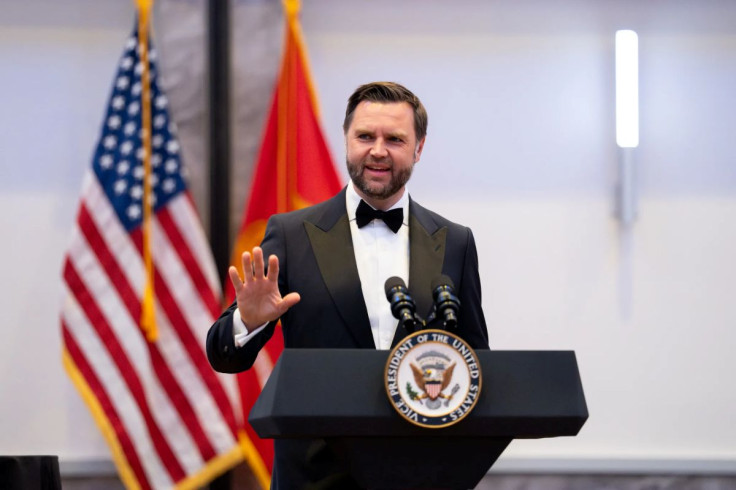
US Vice President JD Vance told Americans they did not need to build bunkers or stockpile food and water amid recent technology outages. Speaking on Fox News' The Ingraham Angle on Monday, 16 November, Vance said the administration did not see an imminent crisis, while stressing that the country still needed to prepare for emergencies.
The exchange followed disruptions involving Microsoft services, a nationwide Federal Aviation Administration (FAA) ground stop and problems reported by online banking customers. The separate incidents prompted questions about their causes and whether households should prepare for something more serious.
Vance was responding to host Laura Ingraham, who asked whether Americans should take extra precautions following the recent disruptions. His answer drew a distinction between the government's responsibility to plan for emergencies and the personal measures some people were considering.
JD Vance Bunkers Comments Follow Questions From Friends
Vance said friends had contacted him to ask whether they should prepare to build a bunker or put aside food and water. He told Ingraham that his answer had been no.
'We don't see a crisis coming down, but you have to be prepared for everything,' he said.
"Should Americans be prepping for something here given what's just happened over the past two weeks?"
— Rapid Response 47 (@RapidResponse47) November 17, 2026
.@VP: "We do not see some crisis coming down, but you have to be prepared for everything." pic.twitter.com/na510SopEF
The wording was reassuring, but it came with a qualification. Vance was not saying that serious disruptions were impossible. Instead, he said the government should be ready to handle the worst outcomes even while seeking to prevent them.
He also described military readiness and emergency planning as part of responsible government, rather than evidence that a crisis was approaching. His remarks did not announce a change to federal household preparedness guidance or identify a specific threat requiring Americans to take extraordinary precautions.
The timing helps explain the questions. Microsoft users had experienced service interruptions, while the FAA stopped departures nationwide on Friday, 13 November. Banking customers also reported problems accessing services.
The FAA later attributed its ground stop to instability in its telecommunications network. Its initial investigation identified excessive data traffic affecting legacy equipment and two potential locations involved in the disruption. The agency said it had no indication of a cyberattack or an outside malicious actor, although its investigation into the root cause continued.
JD Vance Bunkers Reassurance Contrasts With Cyberattack Fears
Not everyone was satisfied that the disruptions were unrelated. Republican Senator Josh Hawley told TMZ DC that he wanted answers about whether outages involving aviation, banks and technology could reflect a coordinated cyberattack.
Hawley questioned whether the incidents were coincidental, but acknowledged that he could be wrong. His concerns were questions rather than evidence that a coordinated attack had occurred.
The White House said on Tuesday, 17 November, that there was no evidence the wider series of disruptions resulted from a cyberattack. Homeland Security Secretary Markwayne Mullin also told Reuters that the outages affecting United Airlines, the FAA, Microsoft and JPMorgan Chase were not tied to cyberattacks. He suggested that newer technology being introduced on older computer systems could be overwhelming existing infrastructure.
These assurances do not amount to a complete technical explanation for every interruption. The FAA, for example, said its investigation into the telecommunications failure was continuing. However, the available findings do not establish that the separate incidents shared a common cause.
Vance's response was narrower than some of the questions being asked. He rejected the idea that Americans needed to rush into extraordinary preparations, while insisting that officials plan for possibilities they hope never materialise.
For travellers whose flights were halted and customers unable to access banking services, the consequences were immediate. Whether those individual failures reveal wider weaknesses remains a question for the agencies and companies responsible for explaining them.
© Copyright IBTimes 2026. All rights reserved.