'This Is Not Our War': How King Charles Is Walking Into Washington While the UK Snubs America's Iran Policy
Behind the pageantry, ministers, historians and constitutional experts admit the monarch is stepping into a politically charged moment shaped by Donald Trump's rhetoric and a strained 'special relationship'.

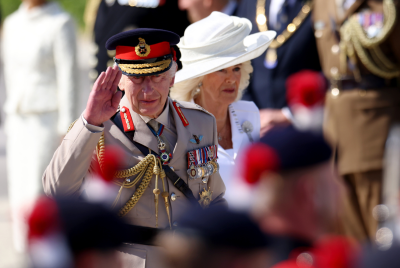
King Charles III is due to land in Washington in late April for a tightly choreographed state visit that will see him address Congress and dine at the White House, even as the UK's government pointedly distances itself from America's war in Iran with the blunt message that 'this is not our war'.
The King, accompanied by Queen Camilla, is expected to spend several days in the United States as part of events marking the 250th anniversary of American independence.
King Charles, Congress And A Careful Show Of Unity
The centrepiece of the trip is designed to be Charles's appearance on Capitol Hill. He will become the first British monarch in more than three decades to speak to Congress, following in the footsteps of Queen Elizabeth II, who addressed US lawmakers in 1991 at the tail end of the Cold War. Congressional leaders have presented the invitation as a symbolic reaffirmation of the 'enduring alliance' between Washington and London.
The rest of the programme looks like a classic state visit on paper. There will be a formal banquet at the White House, continuing the long‑established habit of using royal pageantry to show diplomatic affection.
The timing has been wrapped around the 250th anniversary of American independence, allowing both sides to talk about shared history, reconciliation and the maturing of a relationship that began in revolution.
Buckingham Palace has leaned heavily on that framing, stressing that the purpose of the visit is to honour 'the historic connections and the modern bilateral relationship between the United Kingdom and the United States'.
Away from the set‑piece language, however, there is a growing acceptance that the context is anything but straightforward. As Toronto‑based royal historian Carolyn Harris put it in one interview, 'It's a very politically tense time period for King Charles III and Queen Camilla to be visiting the United States.'
'This Is Not Our War': Iran, Trump And A Strained "Special Relationship"
The sharpest tension point is Iran. While the United States is locked in a war it is fighting alongside Israel, Britain has declined to follow America into direct involvement.
Prime Minister Keir Starmer has been explicit about wanting distance from the conflict, reportedly telling audiences that 'this is not our war'.
Overlaying that is Trump's 'America First' instinct, which has raised questions about how reliable US security guarantees really are for European allies. His repeated criticisms have not been limited to policy.
He has taken aim at Starmer personally – complaining he is 'no Winston Churchill' – and has grumbled about the state of the UK's armed forces, even musing about what Britain should be doing with its oil supply while the Iran conflict drags on.
Against that backdrop, there has been open debate in the UK about whether a royal visit now is wise. Craig Prescott, a constitutional expert at Royal Holloway, University of London, summed up the dilemma starkly when he said there were serious questions about 'whether it's appropriate for the King to go or not'.
Some prominent voices have gone further. Veteran broadcaster David Dimbleby told the BBC it was a 'misuse of the King' and 'a bad political moment' to send Trump 'the present of the King, with all the panoply that involves'.
Prescott argued that, for ministers, 'it's still in Britain's interest to remain close with the United States' and 'not to be confrontational with Trump', whoever happens to occupy the Oval Office.
Trump, for his part, looks delighted. On his Truth Social platform he called the visit a 'momentous occasion', adding, 'I look forward to spending time with the King, whom I greatly respect. It will be TERRIFIC!'
A Monarch On A Diplomatic Tightrope
For King Charles, all of this creates what Harris called 'a very delicate diplomatic situation', adding that he would need to tread carefully to stay above politics and keep his neutrality if he found himself in any awkward moments.
The current visit may be even more hazardous than Trump's state trip to the UK last September, when Charles was in the hosting chair and the British side controlled more of the choreography.
This time, as Prescott noted, the 'greatest risk' is that Trump says something 'enormously disobliging about the UK or the Royal Navy' while the King is standing beside him, forcing Charles to navigate an awkward moment in real time. The monarch is commander‑in‑chief; he is not expected to improvise testy comebacks.
Observers will be paying close attention not only to the King's speech to Congress, which in this sort of setting tends to carry 'substantive content', but also to the unscripted interactions – the small‑talk at dinners, the body language in photocalls, the off‑the‑cuff remarks that can undercut or reinforce the official script.
No Stop In Canada This Time, But A Visit To Bermuda
Previous US state visits by British monarchs, including King George VI and Queen Elizabeth II, have often been paired with a stop in Canada, reflecting the sovereign's multiple roles. That will not happen this time.
Harris has suggested this is deliberate, pointing out that Charles will be in Washington 'in his capacity as King of the United Kingdom'. Involving Canada would require Canadian ministers and priorities to be part of the mix, complicating what is already billed as a relatively short, tightly focused trip.
After Washington, Charles is expected to travel on to Bermuda for his first visit there as monarch. Prescott described the decision as 'perfectly reasonable' given Bermuda's status as a British Overseas Territory and the practical sense of combining engagements in the region.
Buckingham Palace confirmed the trip only recently, after months of speculation fuelled in part by Donald Trump himself, who had been talking up the prospect of a royal visit. Palace officials said the journey was being made 'on the advice of His Majesty's government'.
According to Trump, the visit will run from 27 to 30 April, with Charles invited to address a joint meeting of Congress on 28 April.
© Copyright IBTimes 2026. All rights reserved.
- Recommended For You