Buckingham Palace Issues Rare Statement After Donald Trump Makes 'Jaw-Dropping' King Charles Claim
A former president's hunger for royal validation has collided head‑on with a monarch's duty to stay silent on war.

Buckingham Palace has issued a rare public response after Donald Trump claimed in a new interview that King Charles III would have backed him on the Iran war, insisting the monarch is 'above politics' ahead of a high‑stakes US state visit later this month.
Trump, 79, used a lengthy interview with The Telegraph to suggest that the King would have 'taken a very different stand' from the UK Government on the current conflict with Iran, while also describing King Charles as 'a friend of mine' and praising him as 'a great representative for your country.' The remarks dropped just weeks before King Charles is due in Washington for his first state visit to the United States as King, a trip already freighted with diplomatic symbolism.
Trump's choice to pull the monarch into a live foreign policy dispute jarred with one of the bedrock principles of the modern British monarchy: political neutrality. According to a Palace source quoted in response, the answer was brisk, almost icy in its simplicity. Asked about Trump's suggestion that King Charles would back his approach to the war, the insider replied with just five words: 'The King is above politics.'
It gently contradicted Trump without turning the episode into an open row and, just as importantly, it reasserted the constitutional distance between Buckingham Palace and Downing Street at a time when Britain's relationship with the former US president is already strained.
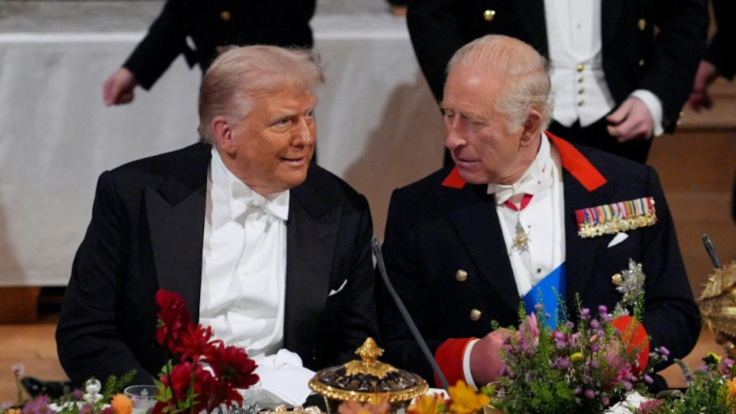
Donald Trump's Long Fascination With The Royal Family
Trump has spoken for decades about his fascination with the Royal Family, rooted in childhood. As a six‑year‑old in 1953, sitting in a New York living room with his Scottish mother, Mary, he has said they watched Queen Elizabeth II's coronation on television and 'never left their seats all day.' He later described how his mother was 'enthralled by the pomp and circumstance, the whole idea of royalty and glamour.'
Trump has repeatedly highlighted his Scottish ancestry, buying golf courses in Scotland and using royal‑adjacent imagery freely. On his most recent state visit to the UK as US president, he sat beside Catherine, Princess of Wales, at the Buckingham Palace banquet and later called her 'radiant' in his speech. He has spoken warmly of Prince William and of King Charles, both as Prince of Wales and as King, while making no secret of his dislike for Prince Harry.
Trump tells a British newspaper that he has a 'great relationship with King Charles' and has 'known him a long time,' it sits within a long‑running personal mythology in which the Trumps and the Windsors are almost parallel dynasties. In the same interview, he praised the monarch as 'a good man' and 'a wonderful and brave man' who had 'been through a lot, in many ways.'
The Palace response punctured only one element of this narrative, but it was a crucial one: any implication that Charles, privately or otherwise, was aligned with Trump's hawkish stance on Iran.
Palace Pushback As King Charles Prepares For US Visit
At the end of the month, King Charles will travel to the United States for what will be his twentieth trip there but his first as King. The visit is expected to include a state dinner at the White House and an address to Congress, placing him squarely in the glare of American domestic politics just as Trump reasserts himself on the US stage.
Trump's comments did more than flatter the King; they also jabbed at Britain's current leadership. The former president contrasted his claimed rapport with Charles with what he sees as faltering support from Prime Minister Sir Keir Starmer's government over the Iran conflict. At one point, he disparaged the UK's offer to send aircraft carriers, reportedly saying: 'We don't need people who join Wars after we've already won!'
The former president's own record on military service is well known and heavily documented, including five legal deferments during the Vietnam War. That history has long coloured perceptions of his more martial rhetoric, not least in Britain, where the language of 'already won' wars can grate against the reality of protracted conflict.
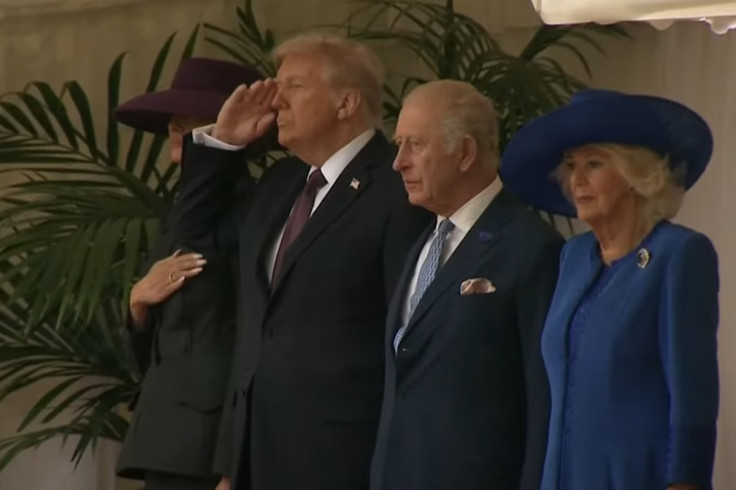
Starmer, for his part, has struggled to find a steady line on Trump. He has attacked him in press conferences, only to sound markedly warmer when face‑to‑face, an oscillation that has not gone unnoticed in Westminster. Trump, by contrast, has shown little inclination to soften his tone, repeatedly pouring scorn on what he sees as the UK's half‑hearted backing for his Iran policy.
Into this already frayed landscape walked the King, or rather, was pulled in by Trump's insistence on invoking their supposed friendship. The Palace's five‑word rejoinder was not just a defence of Charles personally but an attempt to keep the Crown clear of a transatlantic quarrel over war, alliances and political loyalty.
Nothing in Trump's description of private conversations with Charles has been independently corroborated. The Palace has not confirmed any of his characterisations beyond the narrow point about political neutrality, so his claims about what the King might think of Iran policy should be treated with caution.
© Copyright IBTimes 2026. All rights reserved.
- Recommended For You