

Trump's Claims of Effective Defences Contrasted With Whistleblower's Account of Vulnerable Kuwait Base
A congressional complaint alleges military leaders ignored vulnerability warnings, while an Army investigation into the six deaths remains unreleased

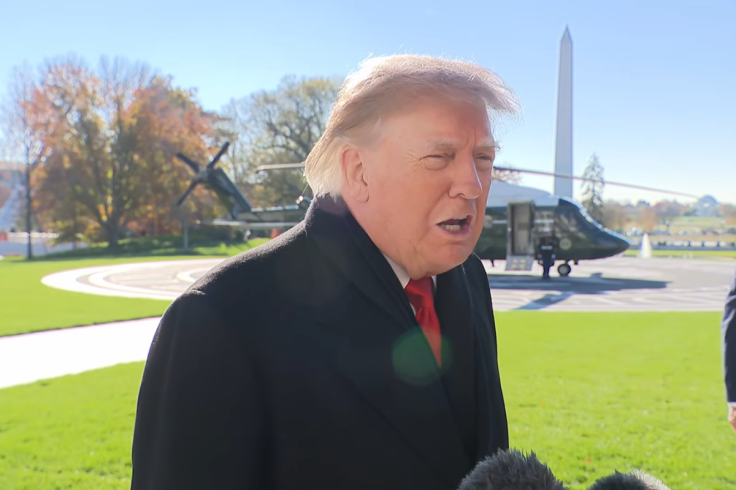
President Donald Trump says only two Iranian attack drones got through US defences and caused American fatalities during the war. But a wounded Army major has questioned whether troops at a US military command post in Kuwait had adequate protection before a drone strike killed six soldiers.
An Iranian drone struck the operations centre of the US Army Reserve's 103rd Expeditionary Sustainment Command at Port Shuaiba, a seaport in Kuwait. The attack came during Operation Epic Fury, the US-led campaign against Iran that began on 28 February. Trump's figures concern fatalities across the campaign. Maj Stephen Ramsbottom's account focuses on protection at one site.
Trump Says Two Drones Caused US Fatalities
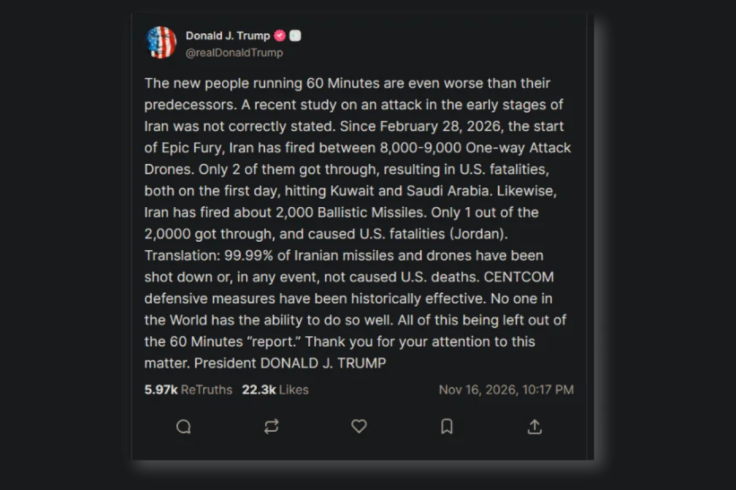
In a Truth Social post on 16 November, Trump said Iran had launched between 8,000 and 9,000 one-way attack drones since the campaign began. 'Only 2 of them got through, resulting in U.S. fatalities, both on the first day, hitting Kuwait and Saudi Arabia,' he wrote.
The two locations Trump cited were Port Shuaiba in Kuwait, where six soldiers were killed, and Prince Sultan Air Base in Saudi Arabia, where another US soldier later died from injuries sustained in an Iranian attack on 1 March.
He also said Iran had fired about 2,000 ballistic missiles, with one getting through and causing US fatalities in Jordan. Trump described US Central Command's defensive measures as 'historically effective' and said 99.99% of Iranian missiles and drones had been shot down or had not caused US deaths.
His percentage is not an interception rate: it combines weapons reportedly intercepted with those that did not cause US deaths. Trump criticised CBS's 60 Minutes report for omitting his figures. The programme examined the Kuwait strike and Ramsbottom's allegations about the command post's protection.
Major Says Port Shuaiba Had No Dedicated Drone Protection
Ramsbottom, deputy chief of operations for the 103rd Expeditionary Sustainment Command, told CBS the command post lacked a dedicated system designed to protect it from aerial attacks.
'There was nothing there designed to protect from an aerial attack,' he said.
The operations centre was housed in trailers surrounded by concrete T-walls. Ramsbottom said the barriers were intended to protect against ground-level threats, including car bombs, rather than drones approaching from above.
He said a command sergeant major told troops a counter-drone system would be sent, but it never arrived. The account does not establish whether the system was formally ordered or requested.
Soldiers also spotted five quadcopters circling the site the night before the attack and suspected they were conducting surveillance, Ramsbottom said. On the morning of 1 March, troops received the all-clear. About 30 minutes later, an Iranian drone struck the central trailer, killing six soldiers and wounding dozens.
Whistleblower Says Warnings Were Dismissed
In a complaint submitted to congressional Armed Services committees, Ramsbottom alleged military leaders dismissed concerns about the command post's vulnerability. He said intelligence assessments had identified Port Shuaiba as a potential Iranian target before the war.
'I feel this is a tactical failure by the Army, our leadership, and myself,' Ramsbottom told CBS. 'We just did not plan this well, and this needs to be a lesson that we learn.'
His account differs from Defence Secretary Pete Hegseth's public description of the tactical operations centre as fortified. Hegseth referred to the attacking drone as a 'squirter' on 2 March, saying it had penetrated air defences and hit a fortified tactical operations centre. Ramsbottom's complaint questions whether the site had adequate protection against aerial threats.
The allegations have not been independently substantiated. They raise questions about whether warnings were acted on and whether the command post had adequate equipment to defend against the threat.
Army Findings Have Not Been Released
The Army completed its investigation into the strike in June 2026, but its findings have not been publicly released, Stars and Stripes reported.
Ramsbottom has also filed a complaint with the Pentagon inspector general seeking an independent investigation, Stars and Stripes reported. Sen. Richard Blumenthal, the ranking member of the Senate Permanent Subcommittee on Investigations, has separately requested a classified briefing and Port Shuaiba's force-protection assessments from Hegseth.
The Pentagon declined to comment to CBS on Ramsbottom's allegations or whether adequate force protection had been in place.
© Copyright IBTimes 2026. All rights reserved.