

Nancy Guthrie Update: Investigation Hits 'DNA Challenge' as Experts Reveal Racial Hurdle in Search
In the Nancy Guthrie investigation, one fragile strand of DNA has exposed not just a kidnapper's shadow, but the quiet inequalities built into the science meant to find them.

A porch light burning over a neat Tucson doorway. A grainy doorbell clip of a masked figure. A pair of gloves discarded on the roadside like rubbish. That is what an alleged abduction looks like in 2026: not cinematic, not clean, just fragments that refuse to resolve into a person.
Somewhere inside this mess is the case of Nancy Guthrie.
The 84‑year‑old, who lives in Tucson, Arizona, was reported missing on 1 February. Detectives believe she was taken against her will. She is also the mother of TODAY co‑host Savannah Guthrie, a detail that has turned one family's private terror into a grimly public narrative.
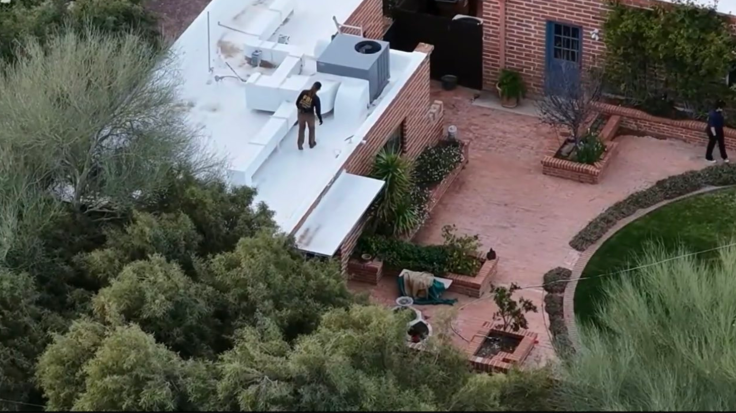
Investigators have not named a suspect or even a person of interest. Sheriff Chris Nanos has gone out of his way to say the Guthrie family has been cleared. Beyond that, the story is a tangle of unanswered questions and one stubborn scientific problem.
For readers outside the United States, the cast matters. The Pima County Sheriff's Department is in charge of the investigation, working with state and federal agencies alongside it. That layered approach is standard in major American cases. If you were sketching this for a visual explainer, you would probably place a simple map of Tucson next to a timeline running from 1 February to the latest lab update, just to keep your bearings.
Nothing beyond what officials and named experts have said publicly is confirmed, so everything here should be taken with a grain of salt.
Nancy Guthrie Update And The DNA That Refuses To Cooperate
Inside Guthrie's home, forensic teams found mixed and partial DNA. Some of it belongs to Guthrie. Some belongs to her family. Some belong to people known to have worked at the property. And then there is the unknown material.
'We believe that we may have some DNA there that may be our suspect, but we won't know that until that DNA is separated, sorted out, maybe admitted to CODIS, maybe through genetic genealogy,' Nanos said, referring to CODIS, the FBI‑run DNA database used to search for matches to offenders or crime‑scene profiles.
On Friday, the sheriff told NBC News that the lab had reported 'challenges' with the sample and declined to spell out exactly what was wrong. 'We listen to our lab, and our lab tells us that there's challenges with it,' he said. Technology is moving quickly, he added, and some of these problems might ease 'in a matter of weeks, months or maybe a year.'
His department followed with a carefully flat written statement: 'As with any biological evidence, there can be challenges separating DNA, etc. There are currently no updates regarding this process.' It read like a warning dressed as a reassurance.
Other leads have been equally stubborn. Blood found on Guthrie's front porch was confirmed to be hers. A glove discovered about two miles from her home yielded a DNA profile that was fed into CODIS; it came back with no matches. The FBI has said that DNA from another glove, found nearer the house, appeared to be consistent with gloves worn by a masked figure seen on a doorbell camera shortly before the abduction. Consistent is not the same as conclusive.
Genetic genealogist Barbara Rae‑Venter, who helped identify the Golden State Killer, thinks the heart of the problem may lie in the mixture itself. If there is too much of the victim's DNA and too little of the unknown contributor, there simply may not be enough signal from the suspect to work with.
Colleen Fitzpatrick, another leading genetic genealogist, put it in stark terms. 'Suppose you have a mixture and it's 90% Nancy's and 10% somebody else's, that might not be enough for the lab to go forward and get enough markers and make the identification,' she said. Even a 50‑50 blend, she added, can be 'hard to separate'. DNA, it turns out, does not always behave like television taught us.
Nancy Guthrie Update And The Racial Hurdle No One Really Wants To Talk About
Hanging over the whole investigation is investigative genetic genealogy, or IGG. It takes a usable DNA profile, searches specialised genealogy databases for distant relatives, then builds out family trees until a likely identity emerges. It sounds like science fiction, but it has already been used to crack cases that once looked unbreakable, including the Golden State Killer.
CeCe Moore, chief genetic genealogist at Parabon, says mixtures like the one in the Guthrie case are not automatically fatal to an investigation. They can still be solved, though they require more time and heavy bioinformatics work to extract the suspect's profile from the blend. The very fact that there is mixed DNA tied to Guthrie's home makes her 'hopeful,' because it could, in theory, be pinned directly to an abductor.
But even when the lab work goes right, the search itself is not neutral.
Moore is blunt about the quiet inequality built into the databases. 'If the person of interest, in this case, has deep roots in the U.S. and is a white person, they could be identified in minutes or hours,' she said. That speed is not a reward for being white; it is the by‑product of who has taken commercial DNA tests and opted into law‑enforcement searches. Accessible databases are dominated by people with northwest European ancestry and long‑established American family lines.
Everyone else waits longer. For people with recent immigrant backgrounds, or those whose families are not steeped in US records, the family trees are thinner and more fragile.
For African Americans, Rae‑Venter points out, there is a brutal historical break. When genealogists try to follow records backwards, Black family trees often hit what she describes as a 'brick‑wall' at emancipation. 'You get brick‑walled at emancipation,' she said. 'You can't get any further back than 1863.' The absence of detailed records from the era of slavery means many Black families effectively vanish from the paper trail just when investigators most need those branches.
Layer that on top of the practical limits of IGG. Law‑enforcement genealogists are allowed to search only a fraction of the DNA profiles that exist. Big-name companies such as AncestryDNA and 23andMe do not permit open police trawling of their databases, citing user privacy. Instead, investigators rely on smaller sites like GEDmatch and FamilyTreeDNA, where people explicitly opt in to law‑enforcement use.
In a cold case, that might simply mean more late nights and slow progress. In the disappearance of an 84‑year‑old woman who, according to officials, has a pacemaker and needs daily medication, every delay feels like an indictment of the tools. The science the public has been told to trust is suddenly on its own clock, and it is not moving nearly fast enough for the person at the centre of it.
© Copyright IBTimes 2026. All rights reserved.