FBI Tests 'Rootless Hair' DNA As Nancy Guthrie Case Reaches Critical Point
As a volunteer navy waits on the desert's edge, a single strand of hair in an FBI lab has become the latest fragile hope in the search for Nancy Guthrie.

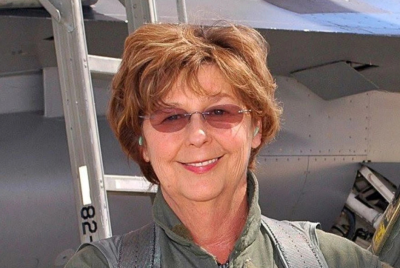
FBI specialists are reportedly testing DNA from a 'rootless hair' sample recovered inside Nancy Guthrie's Tucson home, according to a US reporter, as the case of the missing 84 year old enters a potentially important new phase and outside groups urge Arizona authorities to expand the search.
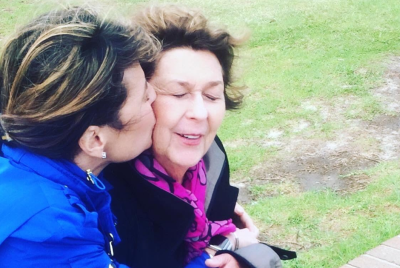
Guthrie, the mother of Today star Savannah Guthrie, was last seen on 31 January after being dropped at her Catalina Foothills home following dinner with her daughter Annie and son in law Tommaso Cioni. Investigators have said they believe she was taken in the early hours of 1 February in what they have repeatedly described as a targeted abduction. The FBI has said blood found at the scene belonged to Nancy and has released footage of a masked man on her porch, but no suspect has been publicly identified and no arrest has been made.
Volunteer Rescuers Frozen Out As Pressure Mounts On Sheriff
As the investigation appears to have slowed, the United Cajun Navy, a volunteer search and rescue group, has been pushing to join the hunt. Incident commander Josh Gill said his team submitted a 41 page proposal to the Pima County Sheriff's Department shortly after Guthrie disappeared, setting out how they could search the difficult terrain around Tucson.
'We want permission from the lead agency,' Gill told Fox News Digital. 'I don't think there would be any harm. I think it would be one step closer to providing some closure not just to the family or the community, but to the nation.'
Gill said the group offered to work entirely under the sheriff's direction. If volunteers found anything potentially significant, they would leave it untouched and alert deputies so the chain of evidence could be preserved.
The proposed search areas included desert scrub, drainage ditches, abandoned buildings and other remote locations that can be difficult for law enforcement to cover alone. According to Gill, the organisation was prepared to deploy certified cadaver dogs, a scent tracking dog and heat detecting drones to scan wide areas from the air.
He said the group has received no formal response. 'We have not been contacted on the plan that we provided,' Gill told the outlet, adding that he remained 'open to developing a new plan with law enforcement'.
Gill also said the organisation had the manpower and experience to help. He said GPS tracked volunteers could carry out daily grid searches from 8am to 6pm. 'We've got some of the best and brightest, and our network is huge. Let us work with the sheriff's department to do what's best.'
The lack of movement has prompted pressure from outside the investigation. Independent journalist Cherise 'Pebbles' Wilson has launched a Change.org petition calling on Pima County to accept the United Cajun Navy's help.
'I lost my vulnerable grandmother a couple of years ago, and Nancy Guthrie's disappearance pulled at my heartstrings,' Wilson told Fox News Digital. 'Knowing that somebody took advantage of a loving lady, an elderly lady like that, is really disturbing.'
Inside The Timeline As 'Rootless Hair' DNA Heads To The FBI
The push for a wider ground search comes as forensic work continues behind the scenes. Investigative reporter Brian Entin said in a 16 April episode of Brian Entin Investigates that a source told him DNA evidence from Guthrie's home had been sent to the FBI lab for advanced analysis.
He later highlighted one sample in particular on X. 'The hair sample from Nancy Guthrie's house could be significant and comes at a time when scientists are able to get DNA off of rootless hair,' he wrote. 'This was not possible until recently. The technology is advancing quickly.'
The hair sample from Nancy Guthrie's house could be significant and comes at a time when scientists are able to get DNA off of rootless hair. This was not possible until recently. The technology is advancing quickly.
— Brian Entin (@BrianEntin) April 16, 2026
More here:https://t.co/QxcO9s9sfz
That detail could matter. Traditional forensic testing has relied heavily on hair roots, where cells are more readily available. If investigators can now extract a usable DNA profile from a rootless hair shaft, a sample that might once have yielded little could become far more important.
Entin did not say whether the hair belonged to Guthrie or to another person. The FBI has not publicly commented on his report, so the precise value of the sample remains unclear.
What investigators have set out publicly is a narrow disappearance window. Guthrie was dropped home on the evening of 31 January, and detectives believe she was taken in the early hours of 1 February.
The FBI later released doorbell camera footage showing a masked man on her front porch around the time of the suspected abduction. Together with the blood identified as Nancy's, the video has reinforced investigators' theory that she was abducted rather than wandering off or suffering an accident.

For all the forensic activity, questions remain about the scale of the search beyond Guthrie's home. That is what continues to drive calls for wider ground operations, with supporters of the United Cajun Navy arguing that laboratory advances cannot replace physical searches across desert terrain.
The Pima County Sheriff's Office has not publicly explained why it has not accepted the group's proposal or whether a revised plan is under consideration. With national attention still fixed on the case, the immediate question is whether new DNA testing and growing outside pressure will help move an investigation that still has no publicly named suspect and no clear trail into the wider Arizona landscape.
© Copyright IBTimes 2026. All rights reserved.
- Recommended For You