Nancy Guthrie Update: Genetic Genealogist CeCe Moore Says 'Second Location' Could Unlock DNA Breakthrough
The theory lands as former sheriff Richard Carmona accuses current Sheriff Chris Nanos of 'corrupting' the crime scene and eroding public trust.

Nancy Guthrie's disappearance from her Tucson home is now being reframed by experts, after genetic genealogist CeCe Moore said a 'second location' linked to the case could provide the DNA breakthrough investigators desperately need.
Speaking on a NewsNation podcast, Moore argued that finding another crime scene connected to the 84-year-old's alleged kidnapping would give detectives a new chance to isolate the kidnapper's genetic profile.
CeCe Moore Links Nancy Guthrie Case To 'Second Location' And DNA Hope
Moore, one of the most recognisable figures in investigative genetic genealogy, did not mince words when she was asked about the Nancy Guthrie case by NewsNation host Natasha Zouves.
'She had to be held somewhere,' Moore said. 'If there is a second crime scene that is discovered,' she continued, referring to a vehicle or another property, 'then that gives them another opportunity to find DNA.'
She told the programme that if investigators 'can get a viable profile from her actual kidnapper, he will be identified through investigative genetic genealogy', adding, 'I do believe something will eventually be found in that manner.'
DNA Clues, A Masked Man — And Claims The Scene Was 'Corrupted'
Detectives have already acknowledged that DNA was collected at Nancy Guthrie's home, but they described it as 'mixed' — a blend of genetic material from more than one person, notoriously difficult to disentangle. A man in a ski mask was also captured on the 84-year-old's front porch by her doorbell camera around the time she disappeared.
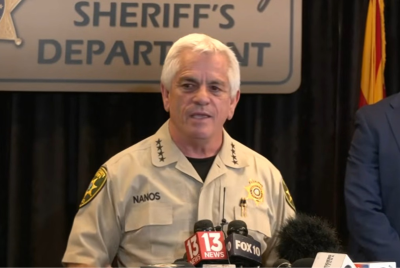
Former Pima County sheriff and former US Surgeon General Richard Carmona has publicly accused current Sheriff Chris Nanos of mishandling the Guthrie crime scene and, in his words, 'corrupting' it.

Speaking on NewsNation's 'Brian Entin Investigates' on 27 March, Carmona said Nanos made a 'fundamental error' by personally declaring the crime scene open, a decision he argued should rest with the lead detective once all evidence has been 'photographed, bagged, tagged, and so on'.
'That's not something a sheriff does,' Carmona said. He insisted that 'once it has been corrupted, that's the end of it' and that a scene cannot be 'reconstituted' after its boundaries have been breached.
Footage later emerged of a pizza delivery vehicle driving across the front lawn while the investigation was still active. Carmona warned that defence lawyers could use that clip to attack the reliability of any evidence collected at the property.
'If you're going to court and you're making a case, a defence attorney says, "That crime scene was corrupted — you had people delivering pizzas",' he said. 'How do we know this is real evidence?'
Carmona concluded that investigators had 'not maintained the integrity of that space' and argued that, as a result, Nanos had lost the trust of his community.
Sheriff Under Fire As Genetic Genealogy Becomes Central To Case
The pressure on Sheriff Nanos is not limited to television critiques. He is facing a recall effort, and the Pima County Deputies Organisation issued a unanimous no-confidence vote against him on 24 March. The Pima County Board of Supervisors has also ordered him to answer questions under oath about his handling of the Guthrie investigation.
Carmona has been particularly scathing about the wider impact on public confidence. 'The public has to have trust in its law enforcement agency. You cannot lead without trust,' he said. 'And when you have a sheriff that has to keep correcting himself and changing his story every day, the public loses faith in you.'

Nanos has pushed back. He has been criticised for sending physical evidence to a private laboratory in Florida, citing cost, instead of using free FBI services, but he told a local news station he stood by his decisions.
'I have no regrets about my team and their efforts,' he said. 'I don't regret we let the crime scene go too soon or any of that, that's just silly.'
Expanding Role of Investigative Genetic Geneology
Behind the feud sits the quietly expanding role of investigative genetic genealogy. According to coverage of the case, investigators said in the first month after Nancy went missing that they were looking into additional IGG options to check the DNA for matches.
The technique involves uploading crime scene DNA to genealogy databases such as Ancestry.com, GEDmatch or 23andMe. If a relative of the unknown suspect has submitted their DNA, analysts can build a family tree that gradually narrows towards a likely offender.
It is the same broad method credited with unmasking the Golden State Killer, Joseph DeAngelo, and used in the case of Bryan Kohberger, whose DNA was found on a knife sheath left on one victim's bed before he later pleaded guilty and received a life sentence in July 2025.
Moore's argument is that, for Nancy Guthrie, this powerful tool will only be as good as the material it is fed. The mixed DNA from the original scene may not be enough. A second location, if it exists, might hold the single, uncontested smear or stray hair that finally turns a faceless kidnapper into a name.
© Copyright IBTimes 2026. All rights reserved.
- Recommended For You