The Insider Theory: Why Experts Believe Nancy Guthrie's Kidnapper Is Someone She Knew
Haunting theories suggest Nancy Guthrie's abductor was a 'familiar' face who wore a mask and carried a 'kit' to hide her destination during the Catalina Foothills snatch

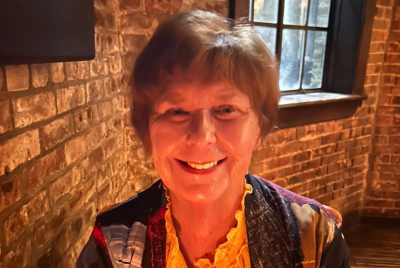
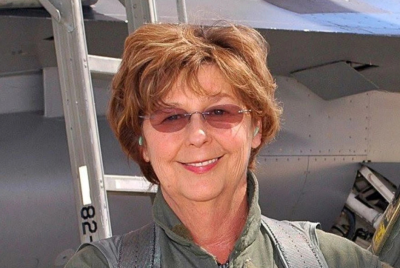
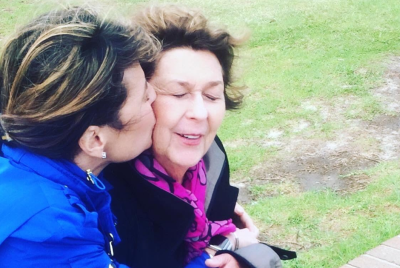
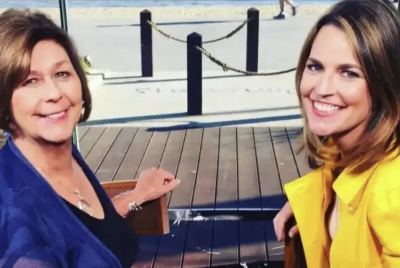
As the search in the Catalina Foothills area of Tucson enters its 80th day on 20 April 2026, veteran investigators have shifted their focus toward an 'insider theory' suggesting the 84-year-old mother of Today host Savannah Guthrie was snatched by an associate.
This angle into the disappearance of Nancy Guthrie has reached a chilling crossroads as Former FBI special agent Jennifer Coffindaffer, who has tracked the case since she vanished on 1 February, insists the perpetrator arrived at the property equipped with a 'kidnapping kit' and possessed intimate knowledge of the family's security.
The case has been further mired in a dispute over a staggering DNA evidence delay, after it was revealed a hair sample sat in a private Florida laboratory for 11 weeks before finally being transferred to the FBI Laboratory.
Despite the Pima County Sheriff's Department maintaining that they have worked in lockstep with federal agents, the revelation that evidence sat idle for nearly three months has sparked fury among legal observers.
Forensic researcher Gary Brucato has supported this Tucson kidnapper theory, stating the probability is 'very high' that the accused has a history of inappropriate or criminal behaviour known to Nancy's social circle. This 84-year-old vulnerable adult, who requires daily medication and has mobility limitations, was last seen by her son-in-law, Tommaso Cioni, at 9.50pm on 31 January.
Bloodstains found near the entrance of her home were later confirmed to be hers, suggesting a violent struggle during the Catalina Foothills abduction.
The 'Familiar Face' Theory In Nancy Guthrie's Disappearance
Jennifer Coffindaffer has publicly rejected the notion that Savannah Guthrie's mother's missing case is the result of a random, opportunistic crime. Speaking on her YouTube channel, Jennifer, an FBI veteran, argued that the suspect likely knew exactly when the 84-year-old would be alone.
'These are going to be my opinions based on everything I know about the case of someone she knew,' Coffindaffer said. She stressed that she believes the person responsible is 'somebody familiar' with both Nancy and her family.
That view is echoed by forensic researcher Gary Brucato, who has also weighed in on the limited information made public. In his assessment, '[the] accused who did this probably has some passing relationship, at least, with this victim', and may even have spent time inside the Guthrie home before the night she disappeared.
Brucato has gone further, suggesting 'the probability is very high that the person has had a long history of either inappropriate behaviour that people would remember or criminal behaviour.'
Inside Theories On Planning, Masks And Night of Abduction
Coffindaffer has publicly rejected the idea of a chaotic, opportunistic snatch by a passing offender. Instead, she has sketched a scenario in which the suspect arrived prepared, equipped and fully aware of the risk of being recognised.
'I think that if they were going to be seen anyway and she was going to know them, they wouldn't have masked up like this in the middle of the night,' she said. In her view, the kidnapper kept their face covered throughout: 'I don't think they removed their masks. I truly believe they grabbed her.'

She has also homed in on a small but disturbing detail: the suspect's backpack, visible on surveillance footage released earlier in the investigation. To Coffindaffer, it suggests more than a hurried grab-and-go.
'I think that they masked her or otherwise put a hood over her face. There was a lot in that backpack, everyone. And that backpack, you know, shows us that he brought things that he intended to use,' she argued. Part of that kit, she believes, would have been 'something to put over her so she wouldn't see the car or the destination they were taking her to.'
The DNA Dispute: Eleven Weeks in a Florida Lab
While behavioural analysis has grabbed attention, it is a behind-the-scenes dispute over DNA evidence that has drawn unusually sharp criticism from Coffindaffer and raised uncomfortable questions about the early handling of the case.
Earlier this week, it emerged that a private laboratory in Florida, which works with the Pima County Sheriff's Department, had recently transferred a hair sample to the FBI Laboratory. The material is now being subjected to what officials have described as new 'advanced technology' in the hope of identifying Nancy Guthrie's kidnapper.
The FBI then clarified that this was not fresh evidence at all. 'There is no new DNA evidence in the Nancy Guthrie case. The FBI requested this material over two months ago,' an FBI official told ABC News.
'The Pima County Sheriff's Office sent it to a private lab in Florida. Eleven weeks later, that lab has now transferred an original hair sample to the FBI Laboratory for testing. We remain fully committed to this investigation.'
Coffindaffer, who spent years working inside the Bureau, did not hide her frustration. 'The fact that they're saying the FBI has this advanced technology, they would've always had it,' she said, arguing that the sample should have gone straight to the FBI. 'So that should really irk everyone that the sample didn't go there because they would have always had the advanced technology and expertise.'
She initially accepted the explanation that the Florida lab was already set up with relevant DNA profiles and could move quickly because of 'time and urgency'. However, once officials started emphasising the FBI's cutting-edge capabilities, her patience apparently snapped.
'Knowing that they had that technology, that should really have the Guthrie family and anybody who cares about justice for Nancy Guthrie upset, because that is not tracking at all,' she said.
The Pima County Sheriff's Department has pushed back at any suggestion of mishandling, saying it has worked with the FBI 'since the beginning of the Guthrie investigation.'
Coffindaffer has warned that the testing could still take months to yield a usable profile, if it produces one at all.
Nancy Guthrie vanished from her home nearly three months ago, triggering a joint investigation led by the Federal Bureau of Investigation and the Pima County Sheriff's Department. Early on, the FBI released surveillance footage of a masked individual appearing to tamper with an outdoor camera at her property.
Forensic teams collected evidence from the scene, and a private laboratory in Florida later became involved in processing DNA samples. Even with those efforts, authorities have kept a tight lid on what, if anything, the evidence has revealed so far.
As the 80-day mark passes, the lack of an arrest continues to haunt the Tucson community. For now, the case remains a distressing puzzle of forensic delays and the terrifying possibility that the predator was someone Nancy Guthrie once trusted.
© Copyright IBTimes 2026. All rights reserved.
- Recommended For You