NBA To Use AI Referees For Key Calls As Adam Silver Reveals Major Shake-Up
AI technology set to revolutionise NBA officiating by automating objective calls.
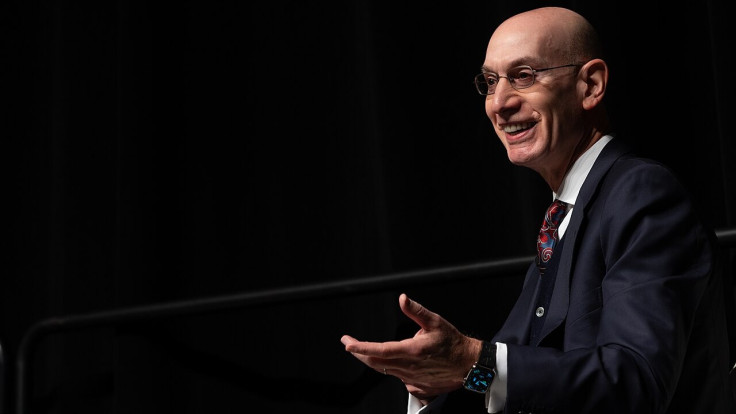
The NBA is preparing for a major change in how games are officiated after commissioner Adam Silver revealed that artificial intelligence will soon be used to make certain calls automatically. Speaking on ESPN's 'The Pat McAfee Show' on Wednesday, Silver explained that the league plans to introduce an AI-driven system for objective decisions such as out-of-bounds calls.
The move is aimed at speeding up games and cutting down on disputes over possession, which have become a regular source of frustration during reviews. Silver compared the planned technology to the Hawk-Eye system used in tennis for electronic line-calling.
According to the commissioner, cameras positioned around the court would instantly determine possession without the need for lengthy reviews or coaches' challenges. While referees will still oversee fouls and physical contact, the NBA believes removing objective calls from human control could improve the flow of games and reduce stoppages that often interrupt momentum.
AI System Set To Handle Objective Calls
Silver made it clear that the league sees automated officiating as the next step in modernising the game. Explaining how the technology would work, he said the NBA is moving towards 'a system like that where that whole category of calls will be automatic.'
The commissioner outlined that decisions involving possession after the ball goes out of bounds would no longer depend on referees making live judgments or reviewing footage courtside. Instead, the system would instantly determine which team should receive the ball.
'It's going to be Laker ball, Knick ball, whatever it is,' Silver said. 'Those calls will be done by an AI, automated system with cameras lined around the court.'
The NBA has increasingly relied on replay reviews and centralised decision-making in recent years in an effort to improve accuracy. However, those reviews have also drawn criticism for slowing the pace of games, particularly during close contests where stoppages can interrupt rhythm and momentum.
Silver suggested the new technology could solve that issue by making objective rulings immediate. He added that the change would also remove the need for coaches and players to challenge those decisions during games.
'It will take all those so-called objective calls out of the hands of the referees,' Silver explained. 'You won't have to deal with challenges on those calls.'
Although Silver did not announce a firm launch date, he indicated the rollout could happen sooner rather than later. According to the commissioner, the league expects the transition to happen 'fairly quickly'.
Referees Will Still Control Foul Decisions
Despite the planned expansion of AI technology, Silver stressed that referees will continue to play a crucial role in NBA games. While automated systems may be able to judge possession and boundary decisions, the commissioner said foul calls still require human interpretation.
Silver argued that physical contact in basketball cannot be judged purely through camera technology because officials must decide whether contact actually affects a play. That level of interpretation, according to him, still belongs in the hands of referees rather than machines.
'There's often contact on every play, but that doesn't mean there's a foul on every play,' Silver said. 'That's something that can't just be done on camera.'
The comments suggest the NBA is looking for a balance between automation and traditional officiating rather than a complete replacement of referees. Instead of removing officials from the game, the new system would allow them to focus more closely on physical play, fouls, and player interactions while AI handles straightforward rulings.
Silver's comparison to tennis highlighted how other sports have already embraced automated officiating for objective decisions. Hawk-Eye technology has become widely accepted in tennis because of its speed and accuracy, eliminating many arguments over whether a ball landed in or out.
The NBA now appears ready to follow a similar path. By automating out-of-bounds rulings and similar calls, the league hopes to reduce delays and keep games moving at a quicker pace without removing the human element entirely.
For now, the exact details of the rollout remain unclear, but Silver's comments offered the strongest indication yet that AI officiating is no longer just an experiment for the league. With the commissioner confirming that the system is expected to arrive 'fairly quickly', a major shift in how NBA games are controlled could soon become reality.
© Copyright IBTimes 2025. All rights reserved.
- Recommended For You