Elon Musk Claims US Military Used Starlink In Suicide Drones Against SpaceX Rules
Elon Musk claims improper use of SpaceX's Starlink by US military in Iran conflict.
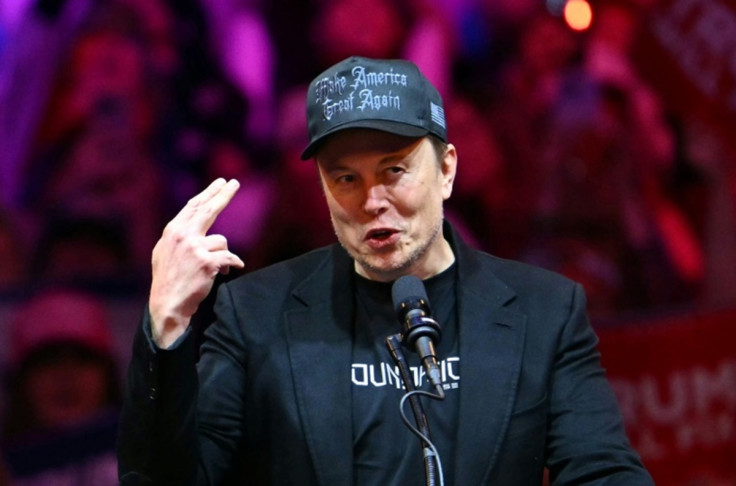
Elon Musk has claimed that the US military improperly used SpaceX's civilian Starlink system in 'suicide drones' during the Iran war, as fresh reports revealed a behind-the-scenes pricing dispute between SpaceX and the Pentagon over its Starshield satellite service. The row emerged after Reuters reported that SpaceX pushed for a major increase in what the military pays for satellite connections used in Low-cost Uncrewed Combat Attack System drones, also known as LUCAS drones.
According to the report, the Pentagon had initially objected to the higher charges before eventually agreeing to them. Musk quickly disputed parts of the Reuters report, calling it 'false', but at the same time appeared to confirm that military contractors had incorrectly used Starlink's civilian network instead of the government-focused Starshield system. The comments have drawn attention to the growing role of SpaceX technology in modern warfare and the tensions that can arise when commercial systems become tied to military operations.
SpaceX And Pentagon Clash Over Drone Satellite Pricing
The Reuters report stated that SpaceX recently sought to raise the Pentagon's payment for Starshield access on each LUCAS drone from $5,000 to $25,000 per connection. The drones are designed as one-way attack systems that strike targets and detonate on impact, making the monthly fee a point of frustration for Pentagon officials.
According to the report, SpaceX executives met Pentagon officials within weeks of the US launching strikes in Iran and argued that the military was underpaying for the service. The company reportedly claimed the drones were operating in conditions closer to its aviation-tier subscription service rather than a lower-priced land or mobility plan.
Reuters reported: 'SpaceX argued the LUCAS drones were operating under conditions that aligned more closely with its aviation tier subscription rather than a lower-priced land or mobility service.'
Almost everything you’re saying is false and simply copying fake news from other accounts.
— Elon Musk (@elonmusk) May 26, 2026
There is a US government arm of SpaceX called Starshield, which has a different set of satellites than Starlink, which is for civilian use.
The company that makes the suicide drones…
Pentagon officials reportedly pushed back against the argument because the drones only used the satellite connection for a short period before being destroyed. Despite the objections, Reuters said the Pentagon eventually agreed to the price increase.
The drones involved are part of the LUCAS programme developed by defence contractor Spektreworks. Reuters reported that each drone costs roughly $35,000 and was developed as a lower-cost alternative to traditional missiles, with the programme growing out of efforts to reverse-engineer Iranian-built drones.
The pricing dispute reportedly continued even after the Pentagon accepted the increase. Reuters said senior defence officials, including Deputy Secretary of Defense Steve Feinberg, remained uneasy about the arrangement and later revisited the issue with Terrence O'Shaughnessy, the retired Air Force general who now leads SpaceX's defence business.
At the same time, Pentagon documents reviewed by Reuters reportedly showed the military is considering buying more than 3,500 additional Starshield terminal subscriptions, including 100 higher-priced aviation-tier connections. Reuters said the potential agreement could generate hundreds of millions of dollars annually for SpaceX, although it remains unclear whether a final deal has been reached.
Musk Says Civilian Starlink Was Used 'Improperly'
While disputing the Reuters report, Musk appeared to acknowledge that the military drones had initially been connected to the commercial Starlink network instead of Starshield.
'They made improper use of the Starlink civilian system for military purposes. Direct violation of terms of service,' Musk wrote on X.
He later blamed the mistake on the contractor responsible for building the drones, explaining that Starshield and Starlink are separate systems.
'There is a US government arm of SpaceX called Starshield, which has a different set of satellites than Starlink, which is for civilian use,' Musk wrote. 'The company that makes the suicide drones incorrectly used the civilian system, instead of the Starshield.'
Musk had also addressed the issue earlier in March after images surfaced online appearing to show one of the drones equipped with a satellite terminal. At the time, he wrote: 'It is a violation of commercial Starlink terms of service to use the terminal for weapon systems. This applies to all users and is shut down when discovered.'
The Pentagon denied violating its agreement with SpaceX, according to Reuters. The report also noted that Starshield terminals sold to the military are capable of connecting to both the Starlink satellite constellation and the Starshield network.
The bigger dispute comes as SpaceX continues to dominate the low Earth orbit satellite market. Reuters noted that few companies currently offer an alternative comparable to Starlink, which has become increasingly important in warfare since Russia's invasion of Ukraine in 2022.
The Pentagon told Ars Technica that it is operating within the terms of its contracts with SpaceX while also exploring other options. In a statement, the Department of War said it is 'committed to fostering a competitive environment for commercial satellite communications' and is looking at additional partnerships across the industry.
Pentagon spokesperson Sean Parnell also rejected the Reuters report in a post on X, writing: 'The Fake News media has the story wrong, again. SpaceX remains a strong and valued partner to the Department of War.'
Musk later shared the post himself, describing it as a 'correction issued by [the] Department of War'.
© Copyright IBTimes 2026. All rights reserved.
- Recommended For You