How Did Bob Horner Die? Real Cause of Death and How He Rejected a Lowball Contract Due to Collusion
A prodigious bat, a bruising labour fight and an exit still shrouded in silence.
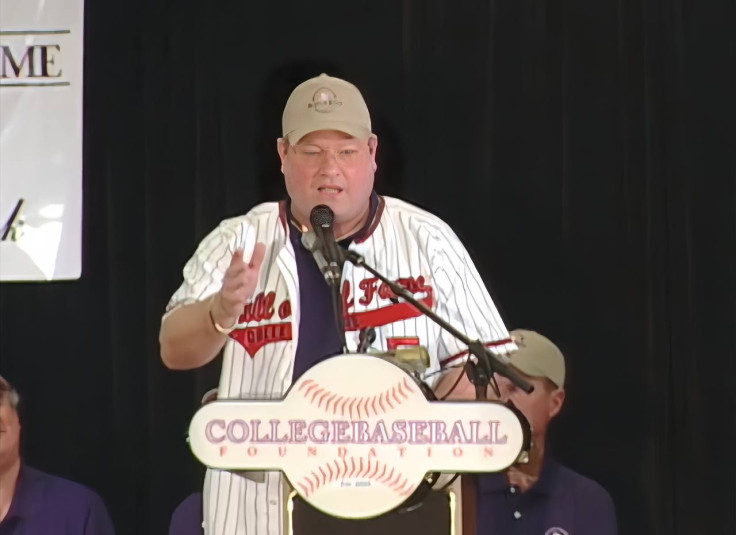
Bob Horner, the former Atlanta Braves slugger, All-Star and National League Rookie of the Year, has died at the age of 68, the club confirmed on Tuesday in a statement offering condolences to his family and friends. No cause of death for Horner has been made public, and nothing is confirmed yet, so everything should be taken with a grain of salt.
Horner had largely stepped away from the spotlight, living quietly with his family in the Dallas area following a brief but striking career in Major League Baseball and in Japan. A formidable right-handed hitter, he left the game with 218 MLB home runs and the lingering sense that, in a different labour climate, his story might have been very different.
We are saddened by the passing of former Braves third baseman Bob Horner.
— MLB (@MLB) May 26, 2026
The first overall pick in the 1978 MLB Draft, Horner made the jump straight to the Majors without playing a single day in the Minors.
Just ten days after being drafted, Horner made his MLB debut and… pic.twitter.com/bTGCupQWDA
Rise to Stardom
Horner arrived in professional baseball with almost absurd speed. Born in Kansas and raised in Arizona, he turned down a 15th-round draft selection by the Oakland A's out of high school, choosing instead to attend Arizona State University. It proved a shrewd decision.
Over three seasons with the Sun Devils, he hit 56 home runs, an all-time NCAA record at the time and still the highest total by any Arizona State hitter. He led ASU to a national title in 1977 and a runner-up finish the following year, achievements that later helped earn him a place in the inaugural College Baseball Hall of Fame class in 2006 alongside Will Clark, Robin Ventura, Dave Winfield and Brooks Kieschnick.
By June 1978, the Atlanta Braves were convinced enough to use the first overall pick in the draft on Horner and, unusually, to send him straight to the Major Leagues. There was no seasoning in the minors, no gentle ramp-up. He responded by hitting 23 home runs in just 89 games, including one off future Hall of Famer Bert Blyleven in his debut, and driving in 63 runs. Voters named him NL Rookie of the Year, just ahead of Ozzie Smith.
Through the early 1980s, Horner settled at third base in Atlanta and became one of the National League's most reliable power sources. He topped 30 home runs in each of his first two full seasons, finished ninth in MVP voting in 1980 after a career‑high 35, and made the 1982 All-Star team while helping the Braves to the NL West title. In total, across nine seasons with Atlanta, he hit .278 with a .339 on-base percentage and a .508 slugging mark, along with 215 home runs.
One afternoon in July 1986 offered a snapshot of what he was capable of. Against the Montreal Expos, Horner hit four home runs in a single game, one of only 21 such performances recognised in MLB history and still the only four-homer game by a Braves player. That Atlanta still lost 11-8 feels, in hindsight, like a grimly appropriate twist in a career that never quite aligned talent with fortune.
Bob Horner, 1978 National League Rookie of the Year, dead at 68 https://t.co/4yETyn5i3j pic.twitter.com/M0BSvEXHTA
— New York Post (@nypost) May 26, 2026
A Lowball Contract
Any discussion of how Horner died tends to lead quickly back to how his playing days were cut short, and why. After the 1986 season he reached free agency at a time when MLB owners were secretly acting in concert to hold down player salaries, behaviour that arbitrators later ruled violated the collective bargaining agreement. The resulting cases eventually produced a $280 million settlement in favour of the Players Association.
Horner, meanwhile, was trapped in the middle of it. He rejected what he viewed as a lowball offer from the Braves heading into 1987. No other MLB club stepped in with a better deal. In a decision that still rankles some Atlanta fans, he left for Japan, signing a $2 million contract with the Yakult Swallows in Nippon Professional Baseball.
On the field, he thrived. In 93 games for Yakult, Horner hit .327 with 31 home runs, producing the kind of star-level season that suggested the Major Leagues had badly misjudged his worth. Yet even there he chose principle over comfort. According to the Atlanta Journal-Constitution, when the Swallows offered him $3 million to stay, he turned it down and instead signed a one-year deal with the St Louis Cardinals for $950,000, determined to return to MLB.
The gamble did not pay. At 30, Horner endured the worst season of his career in 1988. Plagued by a left shoulder that never fully recovered from surgery, he signed with the Baltimore Orioles but retired during spring training in 1989, the injury effectively ending his career. His final MLB line a .277 average, .340 on-base percentage, .499 slugging, more than 1,000 hits and 685 runs batted in hints at what might have been in a less hostile market and with a healthier body.
In recent months, the Braves community has already absorbed the deaths of former owner Ted Turner and legendary manager Bobby Cox. The loss of Horner adds another layer of absence to that era. For supporters who grew up watching him hit balls into the Atlanta summer, the unanswered question of his cause of death will linger. Officially, though, there is only what the team has said: that he has died at 68, and that their thoughts are with those he leaves behind.
© Copyright IBTimes 2026. All rights reserved.
- Recommended For You