Netanyahu Heads to New York After Mamdani Pledged To Arrest Him, NYC Mayor Now Told To Fix Potholes Instead
The mayor is preparing for protests and security concerns months after saying he would support enforcing an ICC arrest warrant against Israel's prime minister

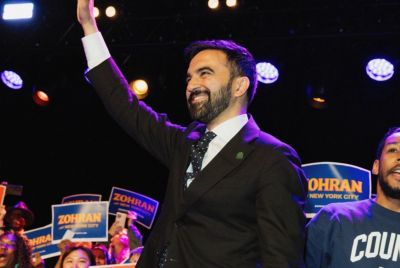
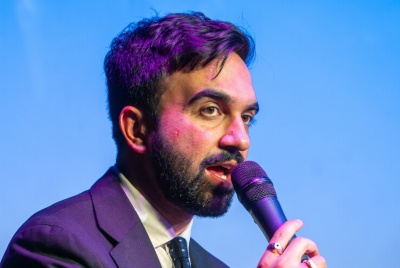
New York Mayor Zohran Mamdani is being urged to focus on the city's potholes as Israeli Prime Minister Benjamin Netanyahu prepares to visit New York for the United Nations General Assembly on 24 September, months after Mamdani pledged to have him arrested if he entered the city.
Mamdani later acknowledged that his administration lacks independent legal authority to enforce the International Criminal Court warrant against Netanyahu.
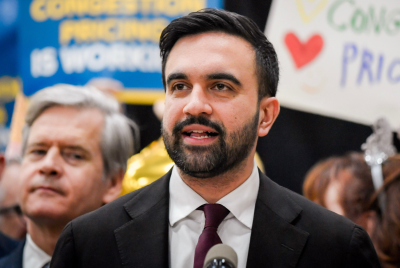
The timing puts Mamdani to the test on his own political priorities. During his mayoral campaign, he repeatedly presented 'pothole politics' as a model for local government focused on practical problems.
On Thursday, his administration announced the repair of New York's 200,000th pothole and released its first management report under the headline 'Pothole Politics' is Working'.
The mayor has also faced criticism over his approach to Netanyahu and the protests expected during the Israeli leader's visit. Critics argue that Mamdani should concentrate on issues directly affecting New Yorkers rather than becoming deeply involved in an international conflict.
Mamdani's Pothole Politics Meets Netanyahu's Visit
During his mayoral campaign, Mamdani promised to have Netanyahu arrested if the Israeli prime minister entered New York, saying he would support enforcement of the ICC's arrest warrant. The warrant, issued against Netanyahu in 2024, alleges war crimes and crimes against humanity in connection with Israel's conduct in Gaza. Netanyahu and Israel have rejected the allegations.
In July, however, Mamdani acknowledged the limits of his authority. 'It is clear that we do not have the independent legal authority to enforce this warrant,' he said, according to The Guardian.
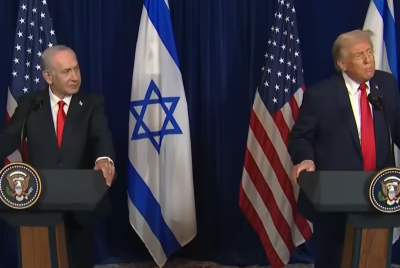
Netanyahu is now due in New York for the UN General Assembly, with his visit scheduled despite Mamdani's previous warning that 'war criminals at large' were 'not welcome'.
Danny Danon, Israel's ambassador to the United Nations, has criticised the mayor's position. 'Mamdani has no mandate,' Danon told The Telegraph, before accusing him of 'inciting and promoting anti-Semitism'.
Those are Danon's political claims and are not established findings. Mamdani has faced sustained criticism from some Jewish organisations and leaders over his approach to Israel and Gaza, while he has defended his right to criticise Israel's conduct in the war.
The visit is expected to bring demonstrations. Pro-Palestinian groups are planning protests against Netanyahu, while Jewish organisations are preparing a separate 'No More Excuses' rally focused on antisemitism.
Mamdani has faced criticism over comments made in July that opponents interpreted as encouraging protests against Netanyahu. This week, he clarified his position, saying New Yorkers have the right to protest in the city.
New York Democratic strategist Jake Dilemani described the earlier comments as unwise. 'Protests against visiting leaders is nothing new – a mayor advocating for people to do so is,' he said, arguing that the city's budget, schools, childcare and workforce should remain among Mamdani's priorities.
Netanyahu Visit Puts Mamdani Under a New Spotlight
The contrast is particularly sharp because Mamdani's administration has made pothole repairs a visible measure of its focus on local government.
The city's management report said 229,000 potholes were repaired during the 2026 fiscal year, although the report covers a period that includes six months under former mayor Eric Adams and six months under Mamdani.
Mamdani separately marked the repair of the city's 200,000th pothole this week, using the milestone to promote his administration's emphasis on basic municipal services.
Netanyahu's arrival will shift that focus towards foreign policy, protests and public safety. Basil Smikle, a Democratic strategist and former executive director of the New York Democratic Party, said attention would be on how Mamdani deals with foreign leaders, President Donald Trump, demonstrations and security concerns.
Netanyahu has dismissed Mamdani's previous arrest threat and accused him of 'fomenting hate' in New York.
His Likud party has also attacked the mayor, while Mamdani's image has appeared on a billboard in Israel alongside images of Iranian leaders and Hezbollah's leader.
The Israeli prime minister is expected to spend less than 24 hours in New York before returning to Israel.
He is also facing a re-election campaign and an ongoing corruption trial, while his government continues to face domestic criticism over its handling of the aftermath of the 7 October Hamas attacks.
Back in New York, Mamdani has faced criticism from some Jewish leaders over his approach to Israel and Gaza. Earlier this summer, a group of rabbis urged him to more clearly condemn Hamas and to make clear that Jewish Americans should not be held responsible for the actions of a foreign government.
The wider climate around antisemitism is another concern for community organisations. New York recorded 1,160 reported antisemitic incidents in 2025, the highest total of any US state, according to the Anti-Defamation League's annual audit. The ADL recorded 860 of those incidents in New York City and 90 antisemitic assaults statewide.
Andrew Gross, the American Jewish Committee's New York regional director, said the figures were unacceptable. He argued that Mamdani's rhetoric had contributed to what he described as a hostile environment for Jewish New Yorkers.
'Mamdani's words carry consequences and deepen divisions,' Gross said.
Marina Rosenberg, the ADL's senior vice-president of international affairs and a former Israeli diplomat, said the demonstrations should remain peaceful and stressed the distinction between legitimate political criticism of Israel and hate speech.
'But there must be a clear line between any legitimate political criticism of Israel and when it crosses into hate speech,' she said.
Thousands are expected to demonstrate outside the UN headquarters as Netanyahu arrives. For Mamdani, the immediate task will be managing protests and security in a city where his administration has made a point of saying that local government should focus on practical concerns, even as one of the world's most contentious international disputes arrives on his doorstep.
© Copyright IBTimes 2026. All rights reserved.
- Recommended For You