

UK Says Netanyahu's Claim Britain Is Becoming 'Islamic' With Nuclear Weapons Is 'Unacceptable'
The UK has hit back at Benjamin Netanyahu after he mocked Britain as an 'Islamic republic' with nuclear weapons during an interview about Israel and Iran
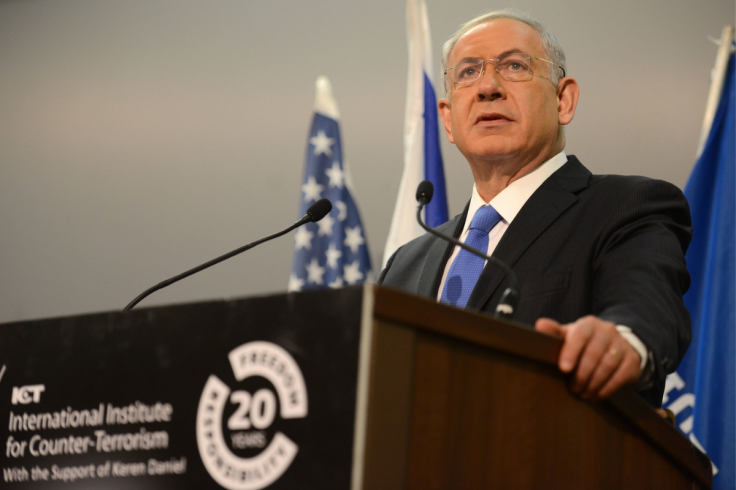
The UK government has condemned Benjamin Netanyahu's description of Britain as an 'Islamic republic' with nuclear weapons, calling the Israeli prime minister's remarks 'completely unacceptable.'
The comments, made during an Israeli Army Radio podcast interview, have added another point of tension to an increasingly strained relationship between London and Jerusalem. Netanyahu was discussing Britain's changing political climate while praising Randolph Churchill, the son of former prime minister Winston Churchill, for his positive coverage of Israel during the Six-Day War in 1967.
He contrasted that era with modern Britain, saying it was now 'what is called the Islamic republic of Britain'. The British government said the remarks had been raised directly with the Israeli government.
UK Rejects Netanyahu's 'Islamic Republic' Remark
Netanyahu did not stop at describing Britain as an 'Islamic republic'. During the interview, he also repeated a claim that Britain would be the 'first Islamic republic with nuclear weapons'.
The host then suggested that Europe as a whole was heading in the same direction. Netanyahu agreed before repeating the nuclear weapons comparison.
'Yes, but someone said, 'the first Islamic republic with nuclear weapons will be the Islamic republic of Great Britain',' he said.
He then added, 'So, we'll make sure there isn't a second one here in Iran.'
Britain remains a nuclear-armed state, although Netanyahu's remark was not literally accurate. Pakistan, an Islamic republic, has possessed nuclear weapons since 1998.
What makes Netanyahu's remarks particularly pointed is the way they connect Britain's nuclear status with his characterisation of the country as increasingly influenced by Islam. The UK government has now made clear that it does not accept that characterisation.
'These comments are completely unacceptable and we have conveyed our position to the Israeli government,' a government spokesperson said.
UK-Israel Relations Already Under Strain
The dispute comes amid worsening relations between the UK and Israel in recent months, particularly following the change of government under Prime Minister Andy Burnham.
Before entering Downing Street, Burnham apologised for what he described as the Labour Party's initial response to the war in Gaza and said the party needed to 'do better'. He also pledged to increase pressure on Netanyahu's government, including through further sanctions and potentially restricting trade with illegal Israeli settlements.
His position combined condemnation of Hamas with criticism of Israel's conduct of the conflict. Burnham described Hamas's 7 October attacks as 'monstrous' and condemned antisemitic incidents in the UK, while also arguing that Britain needed to be direct in its criticism of the suffering in Gaza.
In early July, he described the suffering in Gaza as 'a scar on our collective conscience'. He also said innocent Palestinians continued to be killed and argued that Britain needed to do more to pressure the Israeli government.
The previous government under Keir Starmer had already shifted from its strong initial support for Israel following the 7 October attacks towards increasingly forceful criticism of Israel's military campaign and the humanitarian situation in Gaza.
Burnham has signalled that he intends to go further, arguing that Britain should put more pressure on the Israeli government. His comments suggest that, while the change in Downing Street has not completely altered Britain's position, the tone towards Israel has become noticeably tougher under the new Labour leadership. Burnham officially became prime minister on 20 July.
That position has sharpened Britain's focus on the humanitarian situation in Gaza, creating further friction with Netanyahu's government. The latest row therefore goes beyond a single provocative description of Britain. Netanyahu's comments touch on a broader disagreement over how London views Israel, the Gaza war and the political direction of Britain itself.
For London, however, the message was simpler. The government has rejected Netanyahu's description of Britain as an 'Islamic republic' and has formally objected to the remarks through diplomatic channels.
© Copyright IBTimes 2026. All rights reserved.