

Netanyahu Calls Trump Daily to Pressure Him to Nuke Iran; Decision Could Come by November 7, Tucker Carlson Claims
Carlson says a nuclear strike on Pickaxe Mountain is the only way to destroy Iran's alleged enrichment tunnels
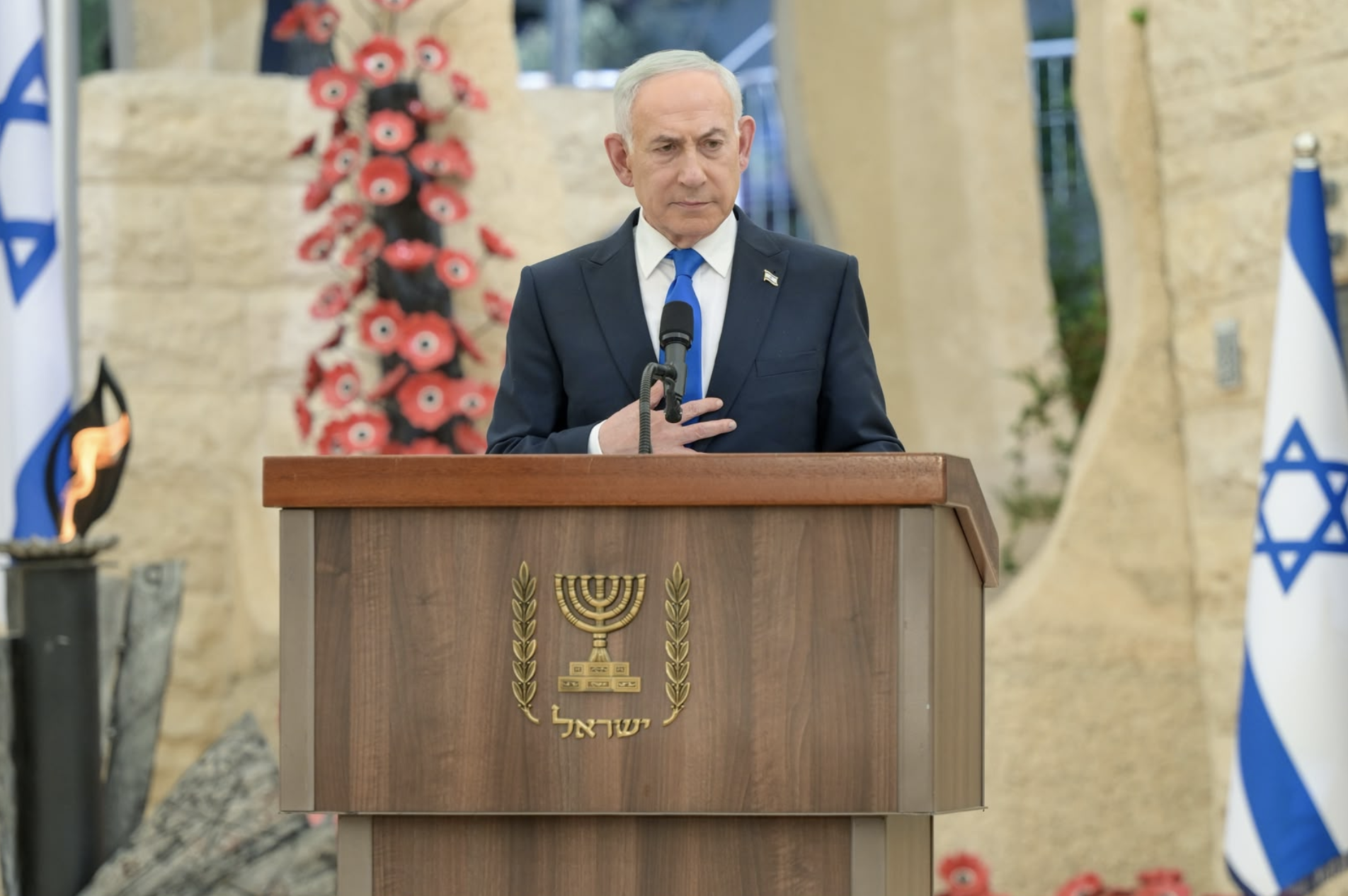
Benjamin Netanyahu calls Donald Trump every day to press him to launch a nuclear strike on Iran, and the US president could make his decision by 7 November, Tucker Carlson has claimed.
In a post on X on Sunday that drew more than 11.7 million views, the former Fox News host cited 'an informed observer', writing, 'Bibi calls Trump about it every day.' He added, 'Close observers say Trump is likely to decide by next weekend whether or not to use nuclear weapons.'
Trump Pledged No Strikes Before the Midterms
The US and Israel launched their war on Iran on 28 February, killing Supreme Leader Ayatollah Ali Khamenei. An April ceasefire and a June interim peace deal both collapsed. The White House has pledged no attack before Tuesday's midterm elections, and US Central Command chief Admiral Brad Cooper briefed Trump on military options on Thursday.
Axios, citing one Israeli and one US source, reported that during a phone call on Saturday, Netanyahu urged strikes immediately after the midterms, while Trump wanted negotiations to play out. The Israeli source described the call as 'tough'. The US source called it 'direct'.
'Just had a very good talk with him,' Trump told reporters in Dubuque, Iowa, on Sunday, confirming that Iran was discussed. 'We've had such a victory, and we'll put it away very soon, one way or the other.'
Carlson Names Pickaxe Mountain as the Target
Carlson wrote that the target would be Pickaxe Mountain, where he said Israeli intelligence believes Iran has restarted uranium enrichment. 'No conventional weapon in the American arsenal can penetrate 300 feet of solid granite to destroy the tunnels where enrichment is supposedly taking place,' he wrote. 'The only military option is a nuclear strike.'
The site, beside the Natanz enrichment complex, has not been hit in the war. Nonproliferation analysts estimated in 2023 that it lay 80 to 100 metres underground, while the US military says its GBU-57 bunker-buster penetrates at least 60 metres.
Trump named the site himself on Saturday. 'We still have to take care of, I would say, one or two sites, but we can do that in 10 minutes,' he said at Mar-a-Lago. 'You probably could look at Pickaxe Mountain, and you have to take care of that.' He did not specify weapons. On 15 October, he told Newsmax, 'I wouldn't use nuclear.'
Under pressure from Israeli prime minister Benjamin Netanyahu, the Trump administration may be within days of launching a nuclear strike on Iran. The target would be Pickax Mountain in central Iran, where Israeli intelligence claims the Iranian government has restarted its nuclear enrichment program. No conventional weapon in the American arsenal can penetrate 300 feet of solid granite to destroy the tunnels where enrichment is supposedly taking place. The only military option is a nuclear strike. Netanyahu has been pushing hard for one. “Bibi calls Trump about it every day,” says an informed observer.Netanyahu is cornered and desperate. After last week’s election results, he can’t form a government unless Trump intervenes directly in Israeli politics and brokers a deal with other parties that gives Netanyahu 61 seats in the Knesset. Otherwise, he is out as prime minister and on his way to ignominy, investigations and possibly jail. Netanyahu must stay close to Trump. He needs this war.To that end, he’s applied maximum pressure to his closest allies in the administration, including Secretary of Defense Pete Hegseth and CENTCOM commander Brad Cooper. Both oppose a negotiated settlement to the war they’ve so grievously mismanaged; both are pushing to restart major combat operations. Secretary of State Marco Rubio and CIA director John Ratcliffe are also following Netanyahu’s lead, as are leaders of the Democratic Party. In a recent meeting on the subject, former president Barack Obama said he opposes the current Iran peace deal being drafted in Doha.The rest of America’s longtime allies in the Middle East are terrified by the prospect of more war. On September 27th, Netanyahu flew secretly to Abu Dhabi to enlist the UAE in his lobbying effort for a final attack on Iran. The Emiratis refused. After eight months of conflict, Gulf economies are teetering. So are global energy and fertilizer markets. They won’t recover soon. Globally, there are a total of about 850 supertankers used to transport oil from producers to the rest of the world. In October alone, 11 of them were badly damaged in Hormuz. At this pace, a global depression is imminent. A nuclear strike would radically accelerate the destruction. Fallout from a ground explosion at Pickax Mountain would contaminate the Persian Gulf, poisoning the water supply for 100 million people.And those are just some of the immediate consequences for the region. The rest of the world is every bit as exposed. No country other than the United States has ever used a nuclear weapon in war. Some would like to. An American nuclear attack on Iran would set a new precedent. The Russians have already told at least two other governments that an American nuclear strike on Iran would free them to use nuclear weapons against Ukraine. Pakistan and India would be tempted to do the same against each other, as would North Korea against Seoul. After the first nuclear strike, World War Three is inevitable. That war would be short and final.We’ve been sleepwalking toward this moment for months. Since February, the administration has quietly rewritten America’s nuclear doctrine to make first use of so-called “battlefield nukes” easier and therefore more likely. No one in Washington in either party seems bothered by this. Now we’re on the brink of it.Close observers say Trump is likely to decide by next weekend whether or not to use nuclear weapons. That would be November 7, six days from now. To his credit, he’s hesitating. At the moment, Trump is listening to his vice president, JD Vance, and to his envoy and friend Steve Witkoff, both of whom argue a deal with Iran can be made.They’re right, though it won’t be simple. The Iranians are famously frustrating to negotiate with under any circumstances, and elements of that government have become more radical since Ayatollah Ali Khamenei and his family were killed in February. After decades of isolation, even relatively moderate Iranian leaders seem confused by how decisions are made in the West. (There is a widespread belief in Tehran, for example, that the United States government controls Israel.) But overall, people who have spoken to decision-makers in Iran say there is consensus there that more war is bad for everyone and a deal is worth making.One group that hasn’t been consulted so far is the global population — the hundreds of millions of people who will be killed along with their children if Trump is pushed by Netanyahu into launching a nuclear strike next week. Now would be the time for them to speak up.
— Tucker Carlson (@TuckerCarlson) November 2, 2026
Netanyahu's Coalition Problem
Carlson linked the alleged pressure to Israel's 27 October election, in which Netanyahu's bloc won 53 of 120 seats, short of the 61 needed to govern. 'Netanyahu is cornered and desperate,' he wrote, claiming only Trump's intervention could secure him a majority. Without it, Carlson said, Netanyahu faces 'ignominy, investigations and possibly jail.' He added, 'He needs this war.'
President Isaac Herzog begins consultations on Wednesday on who should first try to form a government, with rival Gadi Eisenkot projected to win about 60 recommendations to Netanyahu's 46. The Washington Post has reported that Netanyahu's camp is pushing for a unity government with Eisenkot, who has refused to serve under him. Netanyahu, on trial since 2020 on bribery, fraud, and breach of trust charges that he denies, is still awaiting a decision on the pardon he requested in November 2025.
Israeli officials have denied steering US policy before. 'We do not tell the president of the United States what to do,' public diplomacy chief Tzipi Hotovely said in July.
Talks Continue in Doha as Carlson Draws Criticism
Carlson said Trump is hesitating and listening to Vice President JD Vance and envoy Steve Witkoff, who he said argue a deal is possible. Vance wrote to Iranian security chief Mohsen Rezaei last week about reviving talks, and Iranian negotiators spent a third day with Qatari mediators in Doha on Sunday. Secretary of State Marco Rubio said no decision on strikes had been made. In Tehran, Supreme Leader Mojtaba Khamenei ordered the armed forces on Saturday to be ready for any attack.
Asked last week about post-election strike plans, a White House official said, 'We do not comment on sensitive military plans that may or may not exist.' Pro-Trump activist Laura Loomer accused Carlson on X of 'spreading the hoax' that Trump would use nuclear weapons on Iran.
© Copyright IBTimes 2026. All rights reserved.