

NY Man Sues DHS After ICE Agents Show Up at His Home Over Email Calling Todd M. Lyons a 'Monstrous Human Being'
David Streever claims Homeland Security retaliated against him for criticising ICE's former acting director.
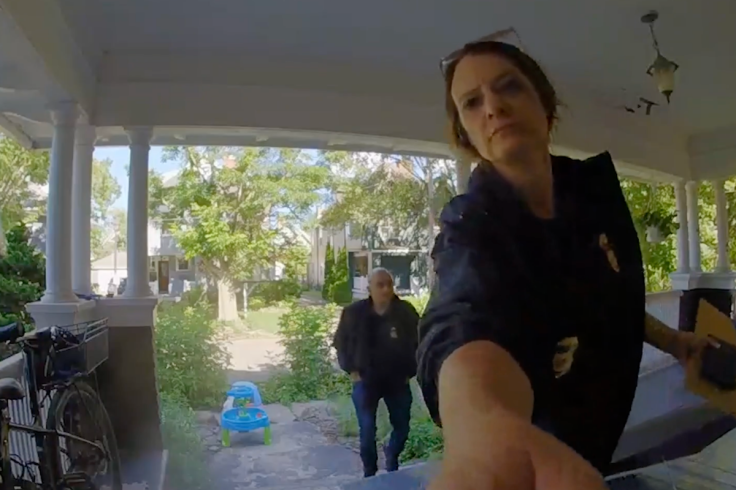
A New York author has sued the Department of Homeland Security after federal agents showed up at his home and tracked him to a hotel over an email he sent criticising ICE's former acting director.
David Streever filed a 27-page lawsuit in federal court in Washington, DC on Monday, arguing that Homeland Security retaliated against him for a January email to then-acting ICE Director Todd Lyons calling Lyons a 'monstrous human being'. The suit, brought with help from the Foundation for Individual Rights and Expression (FIRE), names Homeland Security Secretary Markwayne Mullin and several agents as defendants. It centres on a visit agents paid to Streever's Rochester home in June, months after the email, while he was travelling in Finland with his young daughter.
The Email That Sparked a Federal Response
According to the lawsuit, Streever sent the email on 26 January, under the subject line 'What's next', after an ICE officer fatally shot Minneapolis resident Renee Nicole Good during an anti-ICE demonstration. The three-paragraph message compared Lyons to Reinhard Heydrich, a senior Nazi official, and told him he would 'never know peace'.
Streever has said he wrote the email out of anger rather than intent to threaten Lyons, and FIRE argues the message is protected political speech, not a genuine threat. 'I cherish our right to speak openly about issues of public concern,' Streever said in a statement released through FIRE. Lyons stepped down as ICE's acting director at the end of May, roughly a month before agents visited Streever's home.
2/ After federal agents shot and killed Alex Pretti in Minnesota, David Streever emailed ICE’s then-director, Todd Lyons, calling him a “monstrous human being” whose conscience would never be at peace if he kept defending the shooting. pic.twitter.com/Ox3ox2Tx6x
— FIRE (@TheFIREorg) July 6, 2026
Agents Visited His Home and Followed Him to a Hotel
Court records describe how, on 23 June, two federal agents appeared at Streever's Rochester home and left his wife a 'Warning Notice' on ICE and DHS letterhead, stating Streever 'may be in violation of federal law' over the email and warning him to 'discontinue' the conduct.
Streever's wife told the agents he was abroad and due back that Friday, but agents did not wait. The lawsuit states that later the same day, while Streever and his daughter were at a New York City hotel, a Homeland Security Investigations agent came to the front desk asking for him and left a business card. Multiple agents also left voicemails referencing the email, court records show.
The lawsuit argues Homeland Security's actions were meant to chill Streever's willingness to criticise federal law enforcement, and seeks a court order barring DHS and ICE officials from continuing what it calls retaliatory conduct.
DHS Defends Its Agents as Mullin's Office Denies Free Speech Claims
A DHS spokesperson defended the agents' conduct, saying the agency 'investigates all credible threats towards its employees and officers, including threats to the ICE director,' declining further comment on what it called an ongoing investigation.
A statement from Secretary Mullin's office rejected the lawsuit's central claim, calling any allegation that DHS is trying to "squash free speech" categorically false, and warning that 'anyone who assaults or threatens our law enforcement officers will face the consequences.'
Any allegation DHS and its components are attempting to ‘squash’ free speech is categorically FALSE.
— Homeland Security (@DHSgov) July 6, 2026
ICE investigates all credible threats towards its employees and officers, including threats to the ICE Director. As a matter of policy, we do not comment on any ongoing… https://t.co/R8LjOGjKuq
A Similar Case Playing Out In Syracuse
The lawsuit notes Streever isn't the only upstate New Yorker to receive a federal warning in June. On the same day agents visited his home, two federal agents entered a polling place at the Syracuse Central Library during the state's primary to confront poll worker Paigelynne Gonyea over an Instagram post naming the agent who shot Good and calling for his indictment.
A Democratic election commissioner has said there is generally no legal basis for law enforcement to enter an active polling place absent an emergency, and Rep. Bennie Thompson, the House Homeland Security Committee's ranking Democrat, has since formally questioned ICE about the visit. DHS claims Gonyea's post also included the agent's home address, a claim she disputes and the agency hasn't substantiated. The New York Attorney General's Office says it is aware of both incidents and is reviewing the matter.
Streever's case now heads to a Washington federal court, where a judge will decide whether Homeland Security's response to an angry email crossed the line from law enforcement into retaliation against protected speech.
© Copyright IBTimes 2026. All rights reserved.