

Severe Thunderstorm Watch: 'Destructive' 80 MPH Storms Slam West Michigan, Trapping Woman in Home
When a routine summer storm is upgraded to 'destructive,' west Michigan is reminded how quickly the weather can turn from background noise to genuine threat.

A severe thunderstorm swept across west Michigan on Friday evening, prompting multiple 'destructive' warnings for winds up to 80 mph that left at least one woman reportedly trapped in her home and triggered alerts from Allegan to Calhoun counties. The National Weather Service began issuing the first severe thunderstorm warnings shortly after 3:24pm, after earlier placing the region under a broader severe thunderstorm watch.
Meteorologists had flagged the risk hours earlier, saying storms capable of damaging straight-line winds were likely to arrive in west Michigan after 5pm or 6pm. By mid-afternoon, that forecast had materialised into concrete alerts as a fast-moving line of storms built to the west and raced inland, catching many residents on their commute home and into the evening.

Severe Thunderstorm Watch Expands Across West Michigan
The initial severe thunderstorm watch was issued just after 3pm on Friday, covering a wide stretch of west Michigan as forecasters tracked intensifying cells on radar. The watch signalled conditions were ripe for storms to turn severe, though not all would do so. Within less than half an hour, however, the situation escalated.
At 3.24pm, the National Weather Service issued its first severe thunderstorm warning of the afternoon, targeting Allegan, Ottawa and Van Buren counties. That shift from watch to warning meant forecasters were now confident that a specific storm was capable of producing damaging winds or hail. Additional warnings were rolled out in quick succession, eventually extending into Berrien, Branch, Cass, St. Joseph and Kent counties as the line of storms pushed east.
By just after 4pm, Kalamazoo and Calhoun counties had also been placed under severe thunderstorm warnings. Those alerts carried a 'destructive' tag, a relatively new label the weather service reserves for the most dangerous thunderstorm threats. In this case, forecasters warned the storm could bring wind gusts up to 80 mph, along with quarter-sized hail.
An 80 mph gust is the kind of force more often associated with weak tornadoes than routine summer weather. According to the alert, such winds are strong enough to down large branches, snap power poles and hurl unsecured objects through windows. Although full damage reports were still emerging on Friday night, at least one woman was reported to have been trapped in her home during the height of the storm. Details of her condition, and the extent of any injuries, had not yet been released, and nothing is confirmed yet so everything should be taken with a grain of salt until officials provide an update.
The National Weather Service continued to refine its alerts as the system marched across the region. Kent County received an additional severe thunderstorm warning at 4.18pm, while Branch County was added to the list at 4.39pm. Each update reflected live radar analysis, with meteorologists watching for developing bowing segments in the storm line that often signal intense straight-line winds.
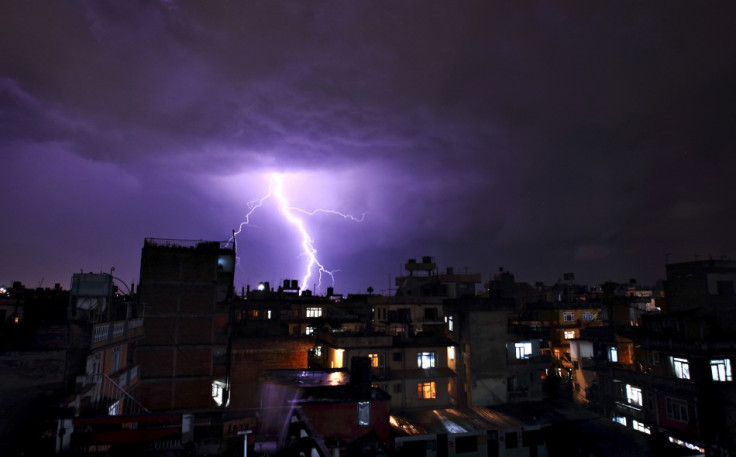
'Destructive' Severe Thunderstorm Warnings Raise Alarm
The use of the 'destructive' label on Friday's severe thunderstorm warnings was notable in itself. It is meant to cut through the haze of routine weather alerts and prompt people to take immediate shelter. For many in Kalamazoo and Calhoun counties, that meant scrambling indoors as skies darkened and winds suddenly rose.
The report said its meteorologists were tracking the storms closely throughout the afternoon and into the night, monitoring radar for new development behind the initial line. By early evening, severe thunderstorm watches and warnings that had blanketed west Michigan were cancelled as the main storms moved out of the region. That did not mean the threat had vanished.
Forecasters warned that additional storms capable of producing heavy rainfall, frequent lightning and gusty winds remained possible after midnight. While these later storms were not yet under the same 'destructive' label, they still carried the potential to bring fresh power outages and minor damage to areas already hit once.

Across the affected counties, emergency managers and local authorities were left to assess what exactly the severe thunderstorm had done. There were no immediate tallies of downed power lines, flooded roads or damaged homes, and officials had not released comprehensive figures by the time the warnings were lifted. Residents, meanwhile, were left scrolling through social media posts and local broadcasts, piecing together which neighbourhoods had taken the worst of it.
The pattern has become familiar in west Michigan: a forecast hinting at trouble, a rapid escalation to severe thunderstorm warnings, then a short, violent burst of weather that tests infrastructure and patience in equal measure. On Friday, the difference was the language. When a routine alert is upgraded to 'destructive,' people tend to look up from what they are doing. In this case, the radar images seem to have justified the alarm.
© Copyright IBTimes 2026. All rights reserved.