Subpoenas, Stalking, and Hotel Raids: How Trump's Homeland Security Is Targeting Citizens Who Speak Out
One angry email, one late‑night knock and a trail of subpoenas show how dissenters now live with the sense that Washington is quietly taking names.
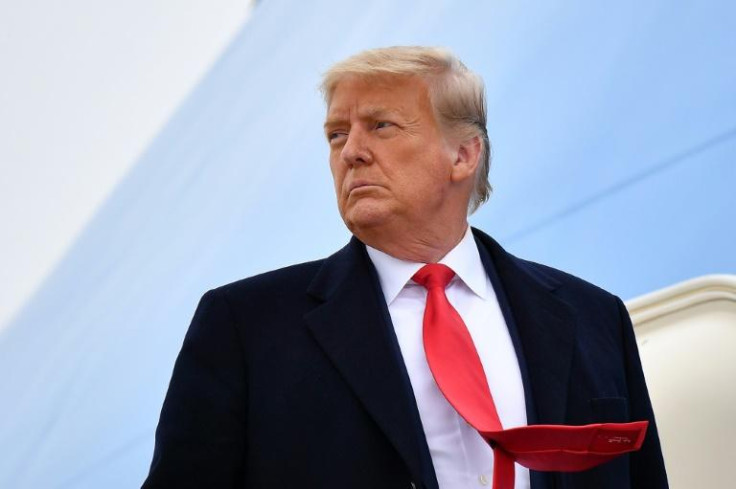
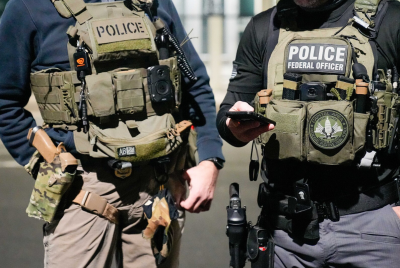
Donald Trump's Homeland Security apparatus has been accused of targeting ordinary US citizens who criticise his immigration policies, with federal agents confronting a New York father in his home state and then tracking him to a Manhattan hotel in March after he sent a furious email to a top immigration official.
The warnings delivered to 44‑year‑old writer and editor David Streever follow weeks of heavy scrutiny of the Trump administration's immigration crackdown, including the fatal shooting of two protesters, Alex Pretti and Renee Good, during anti‑ICE demonstrations in Minnesota. Streever's case, Michelle Breidenbach, sits alongside similar complaints from another New York resident and a separate legal battle over subpoenas aimed at unmasking anonymous critics of Trump's mass deportation programme on social media.

Trump Critics Draw Personal Visit From ICE
The trouble began when Streever emailed Todd Lyons, Trump's acting director of US Immigration and Customs Enforcement, in January. Enraged by the killings of Pretti and Good and convinced that ICE officials were shielding the agent involved, he sent Lyons a blistering message that read in part: 'You are a monstrous human being and will go down in history as America's Reinhard Heydrich, the butcher.'
In the same email he went on: 'The way you are protecting the obvious execution in Minnesota, even as we see the videos, will lead to your downfall. Even Trump will turn on you before the end, and you will be a sad, despised man who eats himself alive with shame at your own pathetic weakness.' He finished with an almost literary curse: 'You will never know peace. You will seek to lose yourself, to escape the burden of knowing the truth about yourself. But wherever you go, you will find yourself. You will torment yourself until your last day on Earth.'
There is no threat of physical harm in the text. Streever is explicit about that. 'A threat is when someone tells someone else that they're going to do a thing to them, and there's nothing in the email of what I will do to him,' he later told. 'It's really about how he will feel and what his boss will do, which I think was right on both counts.'

Two months after sending that message, while Streever was on holiday with his seven‑year‑old daughter at Moominworld, an amusement park in Finland, his phone buzzed with a motion alert from his door camera back in New York. He checked the feed and saw two strangers standing among his child's toys on the porch. One, a woman in a plain windbreaker and slip‑on shoes, clutched a stack of papers.
He was not there to answer the door. According to Streever, his wife spoke to the pair and was told they were federal agents delivering a 'warning letter' about his email to Lyons. The encounter alone would have unsettled most people. What happened when father and daughter returned to the United States tipped it into something more sinister.
On their first night back, holed up in a New York City hotel room, the landline rang at 9.55pm. The front desk told Streever that a 'special agent named Trevor Pitts' from Homeland Security Investigations had come to the lobby asking for him. Hotel staff, apparently wary, did not disclose that Streever and his daughter were upstairs. The agent left a card and left.
'Now Streever was really creeped out,' Breidenbach wrote. How did the Department of Homeland Security know where he was staying, and why had an angry email from January suddenly become an urgent matter for door‑knocking investigators and late‑night hotel visits?
Streever insists he is not a prominent political organiser, nor a public figure in the usual sense. That, in his mind, is partly the point. 'I feel like that front desk person, just some random person, stood up to this agent and that impressed the hell out of me,' he said. 'That little act of bravery. If he had come and banged on my door at 10pm I don't know. That's a scary thing to think about.'

Pattern of Pressure on Donald Trump's Dissenters
Streever later discovered he was not the only person in Syracuse to receive this kind of visit after criticising Trump's immigration enforcers. In a separate case, local resident Paigelynne Gonyea was confronted by ICE agents while she was working at a polling station during a recent primary election.
The agents reportedly told Gonyea she had 'threatened' Jonathan Ross, the ICE officer who shot protester Renee Good, by allegedly posting his home address online. Gonyea acknowledged criticising Ross on the internet but denied ever doxxing him. Streever believes the officers who approached her were the same pair who arrived on his porch.
Neither ICE nor the Department of Homeland Security's leadership is coverage responding to Streever's or Gonyea's accounts, and there is no indication in the reporting that the government has produced evidence of explicit threats. Without formal charging documents or further public comment, the precise legal basis for the 'warning' letters remains unclear, so these episodes should be treated with a measure of caution until more documentation emerges.

Still, the pattern alleged by the two New Yorkers echoes a larger fight now underway in the courts. Bloomberg recently revealed that the US Department of Justice had issued subpoenas to social media platforms X and Reddit, seeking the names, home addresses and banking information of anonymous users who had posted critical commentary about Trump's mass deportation plans.
Those users only learned of the subpoenas because the platforms notified them. They then hired lawyers to challenge the government's demands. As with Streever and Gonyea, the people targeted have not been told what crimes, if any, they are suspected of committing.
Defence lawyers suspect investigators are exploring whether any posts might have revealed a federal officer's location data or contained implicit threats. The attorneys, however, argue that their clients did nothing unlawful and describe the push to 'root out identities of dissenters' as an intimidation tactic even if no charges are ever filed.
Taken together, the front‑porch warnings in upstate New York, the late‑night hotel card from Agent Pitts and the dragnet subpoenas for anonymous critics paint a bleak picture of how dissent is being handled under Trump's homeland security machinery. None of it has been fully tested in court yet, and officials have mostly declined to explain themselves on the record, but for people like David Streever, the message already feels unmistakably loud.
© Copyright IBTimes 2026. All rights reserved.
- Recommended For You