

Iran's New Supreme Leader's Continued No-Show Fuels Speculations Over Succession
Mojtaba Khamenei's absence from public view during his father's funeral raises questions about Iran's leadership stability.
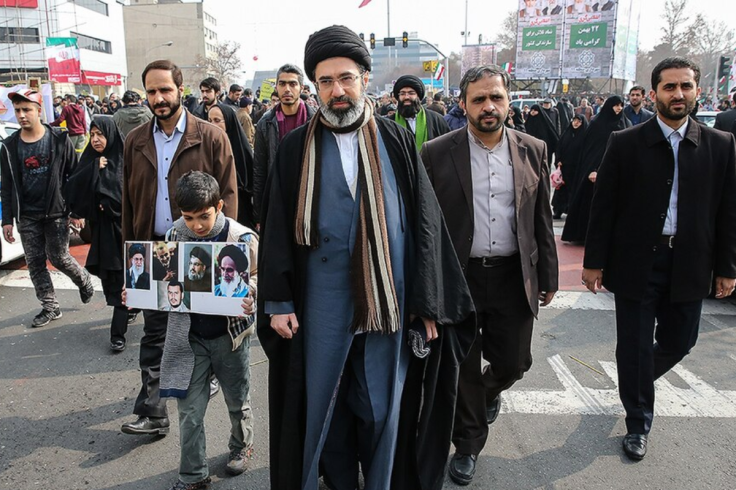
Mojtaba Khamenei has still not been seen in public since Iran's six-day state funeral for his assassinated father began on 4 July, and his continued absence is fuelling fresh doubt over how securely Iran's new supreme leader has consolidated power. The main funeral procession moved through Tehran on Monday, one of the largest single gatherings of the week-long mourning period.
Three of Ali Khamenei's other sons, named in state broadcasts as Mostafa, Meysam and Masoud, were shown praying beside the family's coffins in Tehran over the weekend. Mojtaba was absent from that appearance too.
Security Fears Keep Him Away, Officials Say
Ali Khamenei was killed alongside several family members in a joint US-Israeli strike on his Tehran residence on 28 February. Mojtaba is reported to have suffered facial and leg injuries in the same attack.
Iranian security officials have reportedly declined his request to attend the final burial in Mashhad, citing fears that Israel could target him directly. He has not made a single public appearance or issued an audio statement since the Assembly of Experts named him supreme leader in March.
A Selection That Was Contested From the Start
Mojtaba's appointment was never straightforward. Several members of the Assembly of Experts stayed away from the vote in protest, warning it amounted to hereditary rule inside a system built on rejecting monarchy.
His religious rank, hojjatoleslam, sits below that of ayatollah, a point critics have used to question his legitimacy as a spiritual leader. Ali Khamenei once compared hereditary succession to passing a household object between rulers. He had also barred his sons from entering the economic sphere for years, warning he would cut ties with them if they traded on his position.
Analysts Point to a Deeper Power Struggle
The Stimson Center has said Mojtaba's selection rested more on his ties to the Islamic Revolutionary Guard Corps and the Basij paramilitary force than on religious standing. The think tank noted he has spent decades cultivating relationships with security and intelligence officials rather than building a public profile as a cleric.
That approach gave him institutional backing at a moment when Iran's leadership was in chaos, but it also means his authority rests on different foundations from his father's. Ali Khamenei held the post for over three decades, partly through religious credentials built up over a lifetime, while Mojtaba has never held elected or appointed office and rarely speaks in public. And his health has still not been officially clarified since the war ended, leaving a gap in basic facts about the man now nominally running the country.
Mojtaba issued a public message on 4 June warning against enemies trying to sow internal division, signalling the warning as aimed as much at rivals inside his own camp as at foreign adversaries.
Millions of mourners have attended the funeral ceremonies of Iran’s former Supreme Leader Ali Khamenei.
— Al Jazeera English (@AJEnglish) July 6, 2026
However, his son Mojtaba Khamenei has not been seen in public since the Israeli air strike on February 28.
🔗: https://t.co/bymRBUr6BO pic.twitter.com/7G8zdPFhy6
Representatives from more than 100 countries have attended various stages of the funeral, and the absence of leaders from major world powers has underlined Iran's international isolation despite the scale of the turnout.
Mojtaba Khamenei's continued absence from his own father's funeral is more than a personal footnote. It goes to the heart of whether Iran's leadership transition, agreed upon in the chaos of war, can hold together once the cameras and coffins are gone.
For readers following the broader US-Israel-Iran conflict, the succession question shapes whether Tehran's foreign policy hardens or shifts in the months ahead, and who inside the regime, from the IRGC to rival clerics, ends up holding real power behind the throne.
© Copyright IBTimes 2026. All rights reserved.