

Perfect Example: AOC Says Jensen Huang Spy Scandal Exposes How Billionaire Power Could Threaten US Economy
Her comments followed reports of an alleged relationship involving Jensen Huang, a proposed shareholder lawsuit and a sharp fall in Nvidia's market value
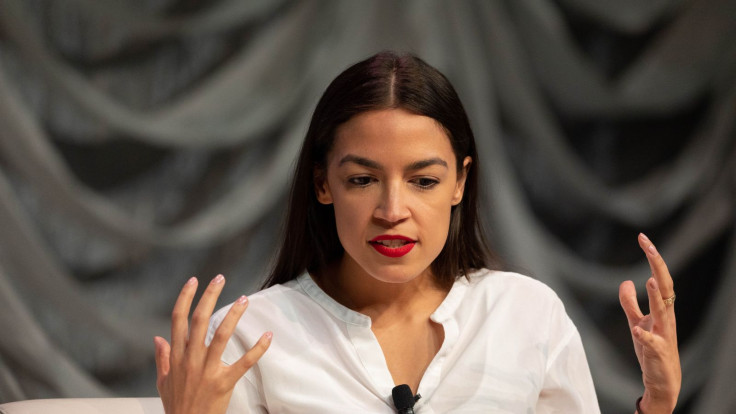
Representative Alexandria Ocasio-Cortez has warned that the allegations surrounding Nvidia chief executive Jensen Huang highlight the risks of concentrating immense corporate power in the hands of a few billionaires, arguing that compromising one influential executive could threaten the wider US economy.
Her intervention came as Nvidia faced a proposed shareholder class-action lawsuit accusing Huang and the company of misleading investors about his alleged relationship with Alice Huang, a former Megaspeed executive whom US intelligence officials reportedly suspect of having links to China's Ministry of State Security.
Nvidia has also suffered a sharp market setback, losing approximately $430 billion (£322.35 billion) in market value over two trading sessions as its shares fell around 9.5% following reports about the controversy. Beijing has rejected the espionage allegations, describing them as groundless and an attempt to smear China.
Warnings Over Concentrated Corporate Power
During an interview with TMZ in Washington on 10 November, Ocasio-Cortez said that compromising a single influential billionaire could destabilise the broader American economy.
She argued that excessive wealth is concentrated among too few executives and that major corporations hold disproportionate power, warranting antitrust breakups.
Her remarks followed reports that Huang, 63, had an alleged relationship with Alice Huang, a former executive at Singapore-based data centre company Megaspeed, whom US intelligence officials reportedly suspect of being an asset of China's Ministry of State Security. The two executives are not related.
Ocasio-Cortez described the situation as a 'tremendous national security and intelligence breach' requiring formal scrutiny.
National Security Probes and Political Scrutiny
The controversy has triggered multiple inquiries across Washington and corporate leadership. President Donald Trump said on Monday that the FBI was looking into the matter. He added that Huang had told him he had no idea Alice Huang was allegedly involved in espionage and said he believed the Nvidia chief executive.
The New York Times reported that Secretary of State Marco Rubio had previously briefed President Trump on US intelligence indicating that Jensen Huang had a relationship with a woman believed to be a Chinese intelligence operative. The report raised questions about when senior administration officials became aware of the potential security concerns.
The White House disputed the report, referring reporters to Trump's comments on Monday.
Meanwhile, chairmen of three US House committees have requested that Huang attend a joint, closed-door briefing on 18 November concerning his interactions with Alice Huang and Nvidia's safeguards against foreign espionage.
Market Fallout and Shareholder Litigation
Nvidia's independent directors have retained Joon Kim, a partner at New York law firm Wachtell, Lipton, Rosen & Katz and a former acting US attorney for the Southern District of New York, to lead an independent investigation into the matter, Reuters reported on Tuesday.
In a message to Nvidia employees, Huang apologised for being unfaithful to his wife and hurting his family, acknowledging that his actions had fallen short of his responsibilities to the company. He also pledged to cooperate fully with the independent investigation and remains committed to leading Nvidia as chief executive.
Nvidia's board has said it has no reason to believe that US national security or company secrets were compromised. However, the allegations and ensuing investigation have unsettled investors, contributing to a sharp decline in the company's market valuation.
On Monday, retail investor Mark Kistenmacher filed a proposed securities class-action lawsuit in federal court in California, alleging that Nvidia and Huang misled shareholders by failing to disclose the relationship and the associated national security risks.
© Copyright IBTimes 2026. All rights reserved.