Hosepipe Ban 2026: Thames Water's 10 Million Customers Risk £1,000 Fines as Restrictions Expand
Breaking a ban is a criminal offence, but the companies call prosecution a last resort and will not say if anyone has ever paid
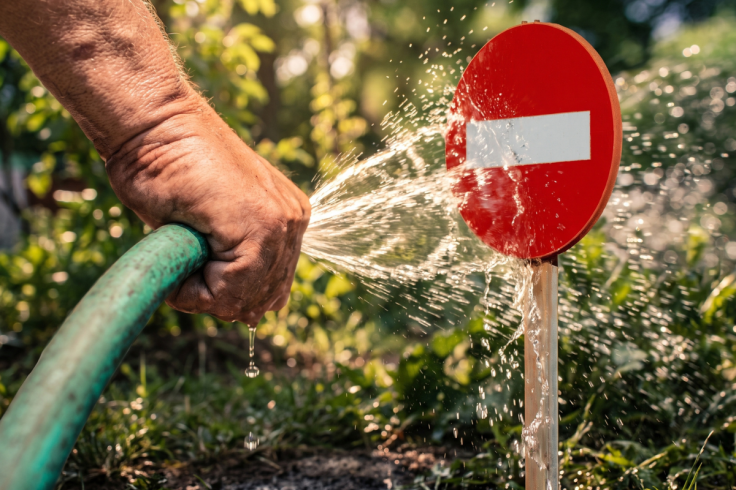
Thames Water's hosepipe ban came into force at one minute past midnight on Thursday, covering every household it supplies with drinking water across London, the Thames Valley, and the Home Counties. Two days later, South East Water widened its own restrictions into four more counties, and breaking either is a criminal offence carrying a fine of up to £1,000.
For a large part of the South East, the rules are unfamiliar. Households across Surrey, Hampshire, and Berkshire have not faced a South East Water restriction for 14 years, since 2012. Sussex, by contrast, is under its fourth set of restrictions in five years.
The restriction lands on the equipment rather than the activity, which is the distinction most households get wrong. The chart below sets out what has to stop and what carries on as normal.
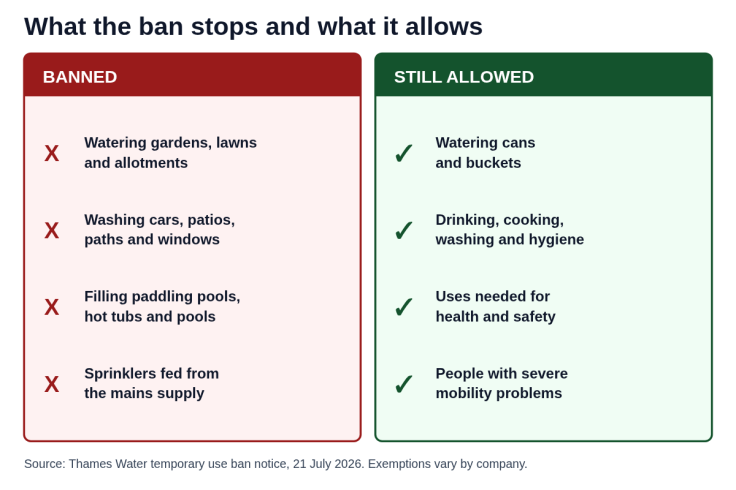
Thames Water sets out four prohibited uses:
- Gardens, lawns and allotments may not be watered by hose.
- Cars, patios, paths, driveways, and windows may not be cleaned with one.
- Pools and hot tubs may not be filled or topped up from the mains.
- Sprinklers are out altogether. South East Water's wording adds boats.
Everything essential continues:
- Drinking, cooking, washing, and hygiene are untouched.
- Buckets and watering cans remain legal for any purpose.
- Exemptions apply where water is needed on health or safety grounds, and for anyone the company classes as having severe mobility problems.
Why Two Companies Acted Within a Week
The weather caused most of the prohibitions. Thames Water's region took 40% of its average rainfall this spring, then went through three separate heatwaves, and no rain had fallen in the Thames catchment at all this month when the company announced the ban. Nine days nationally have now topped 34C, beating the tallies for 1976 and 2020.
Demand did the rest. Water use is running 7% above normal across London, and 10% above normal out in the Thames Valley and the Home Counties. That works out at an extra 100M litres a day, a volume the company compares to plugging every home in Manchester into its network. South East Water reported just over half its expected rainfall since March, enough to breach the triggers written into its drought plan.
Both companies say supply for essential use is not at risk. Nevil Muncaster, Thames Water's director of strategic water resources, described the step as 'necessary to protect water supplies for everyone and the environment.' His counterpart at South East Water, water supply director Douglas Whitfield, put the priority as 'enough water for everyone's essential daily needs.'
Where the Restrictions Apply and From When
Three separate sets of rules now cover the South East, each with its own start date and its own supplier, which matters because the ban follows the company rather than the county boundary. The timeline below shows who fell under restrictions and when.
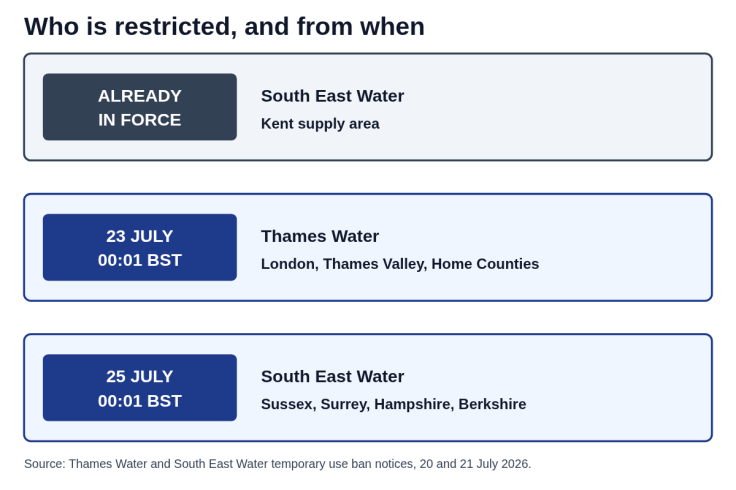
Households supplied by a different company are not covered, even where they sit inside the same postcode area as somebody who is. Thames Water's notice also makes clear that customers who take only wastewater services from it fall outside the ban entirely.
Anyone unsure which company supplies their drinking water can check on their most recent bill, since the restriction attaches to the supplier named there rather than to the local authority.
What Breaking the Ban Actually Costs
The £1,000 figure is real, and it is criminal rather than civil. Section 76 of the Water Industry Act 1991 makes breaching a temporary use ban an offence triable summarily, punishable by a fine of up to level 3 on the standard scale, which currently stands at £1,000. A conviction goes on the record of the person prosecuted.
Enforcement is another matter. Water companies bring these cases themselves, as private prosecutors, and have shown almost no appetite for it. Yorkshire Water has said it has never issued a single fine and would prefer not to. Asked this month whether they ever had, Thames Water, South East Water, and Southern Water did not answer, describing enforcement as the final option. The deterrent rests on the notice and on the neighbours, not on the penalty.
© Copyright IBTimes 2025. All rights reserved.
- Recommended For You