

Patagonia Sues Trump Administration Again Over Largest Public Lands Cut in American History
Patagonia has filed a lawsuit against the Trump administration following the unprecedented 91 percent reduction of Bears Ears National Monument and a 90 percent cut to Grand Staircase-Escalante
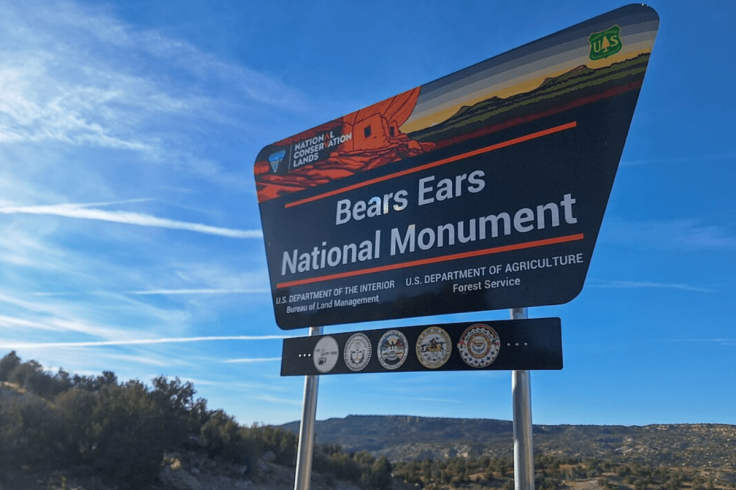
Outdoor apparel leader Patagonia has launched a renewed federal lawsuit against the Trump administration following an unprecedented 91% reduction of the Bears Ears National Monument.
Announced alongside a comparable 90% rollback of the Grand Staircase-Escalante National Monument in Utah, the executive proclamations strip national monument protections from nearly three million acres of pristine wilderness.
Patagonia chief executive Ryan Gellert condemned the sweeping executive action as a direct betrayal of Tribal sovereignty, reigniting a bitter multi-year legal conflict over executive overreach, conservation ethics, and public land management.
Joined by an alliance of Indigenous nations and conservation groups, the corporate plaintiff argues that the Antiquities Act empowers presidents to establish protected reserves but provides no legal authority to dismantle them.
As early resource-extraction claims emerge across sensitive wilderness zones, the high-stakes litigation promises to become a definitive judicial test of executive power and Indigenous co-management rights.
Trump announced the reduction on 13 July, alongside a roughly 90% cut to Grand Staircase-Escalante National Monument. Together, the changes removed national monument status from nearly 3 million acres, which Patagonia calls the largest cut to public lands protection in US history.
A Battle That Refuses To End
This fight began nearly a decade ago. President Barack Obama established Bears Ears in December 2016, reserving roughly 1.35 million acres of federal land. In December 2017, Trump reduced the monument, excluding about 1.15 million acres while adding roughly 11,200 acres elsewhere.
Patagonia joined the resulting legal challenge, becoming the first company to sue a sitting president over public land protection, according to the company.
President Joe Biden restored the previously excluded lands in October 2021, expanding Bears Ears to approximately 1.36 million acres. Now Trump has returned with a substantially larger reduction, sending Patagonia and its co-plaintiffs back to court.
For the second time since 2017, Patagonia is suing the White House for giving up millions of acres of public land for resource extraction.https://t.co/FBWv3guJvo
— GearJunkie (@TheGearJunkie) September 2, 2026
Tribal Sovereignty at the Centre
The controversy is about far more than acreage. The Bears Ears Inter-Tribal Coalition includes the Hopi Tribe, Navajo Nation, Ute Indian Tribe, Ute Mountain Ute Tribe, and Pueblo of Zuni.
Indigenous communities have longstanding cultural ties to the landscape, which contains sacred places, archaeological sites, and other resources of deep significance.
Patagonia CEO Ryan Gellert called Trump's decision a 'betrayal of Tribal sovereignty', arguing that it dismantles years of work towards Tribal co-management of the monument.
That makes Bears Ears an unusually consequential public lands dispute. The question is not simply how much land remains inside a boundary, but whether a management model built around Tribal participation can survive another presidential reversal.
What Changed on the Ground
The numbers become more tangible at Indian Creek, one of the region's best-known climbing areas. More than 80% of Indian Creek was removed from Bears Ears' national monument status. Access Fund estimates that roughly 1,200 climbing routes are now at risk from potential noise, air, and visual pollution, or loss of access associated with extraction interests.
The rollback also has an immediate resource-extraction dimension. On 14 July, one day after Trump's proclamation, Kimmerle Mining filed seven mining claims in areas removed from Bears Ears. Two additional claims were filed in August on land removed from Grand Staircase-Escalante.
There is an important legal caveat: Trump's own proclamations stated that excluded lands would not be open to mining claims until 60 days after the 13 July orders, making those early filings premature under the proclamations and potentially unable to establish rights. The filings, therefore, do not mean mining can simply begin.
Trump's Argument for the Cuts
The Trump administration says the original boundaries were too broad and argues that the revised monuments better comply with the Antiquities Act's requirement that protected areas be limited to the smallest area compatible with protecting historic or scientific objects.
The White House also points to critical minerals, including uranium, vanadium, copper, silver, lead and zinc, arguing that domestic supplies matter for economic and national security.
The administration maintains that many resources outside the reduced boundaries remain protected under other federal laws.
The Legal Fight Over the Antiquities Act
That brings the dispute to its biggest question: Can a president legally reduce a national monument created by an earlier president?
Patagonia and its co-plaintiffs argue that the Antiquities Act gives presidents authority to establish national monuments but not to dismantle them or alter their boundaries in this way.
The Trump administration takes the opposite position, asserting that the law permits the president to remove land from the monument when it is no longer necessary to protect the objects identified in the monument proclamation. That makes the lawsuit much bigger than Bears Ears.
Trump cut it. Biden restored it. Trump has now cut it again, more dramatically than before. With nearly 3 million acres affected across two Utah monuments and Tribal sovereignty, recreation, resource extraction, and presidential authority all colliding in court, the latest Patagonia lawsuit could become a defining test of who gets to decide the future of America's public lands.
© Copyright IBTimes 2026. All rights reserved.