Peter Thiel's Wild PayPal Mafia Story: Four of Six Founders Built Bombs as Teenagers
The PayPal co-founder presented the revelation as part of a broader discussion on the personality traits common among entrepreneurs

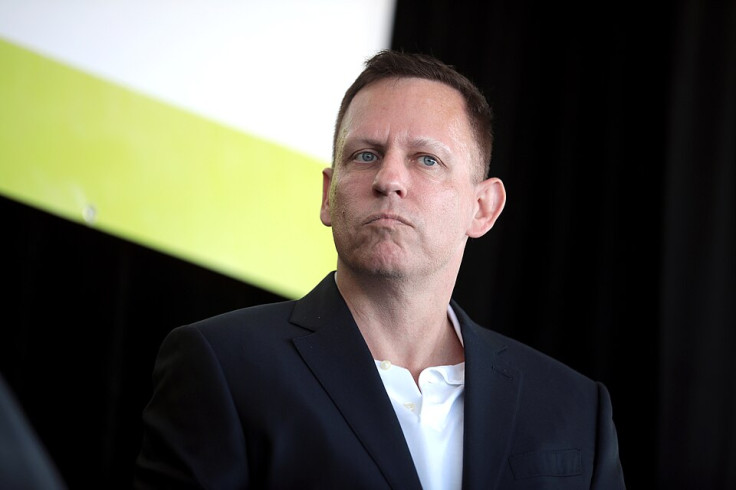
For years, the entrepreneurs behind PayPal have occupied a near-mythical place in Silicon Valley history. The group, often referred to as the PayPal Mafia, went on to create, fund, and influence some of the technology industry's biggest companies. Their careers helped shape everything from online payments and social media to artificial intelligence and space exploration.
Now, PayPal co-founder Peter Thiel has revealed an unexpected detail about the team's early years. According to Thiel, four of the company's six founders had built bombs as teenagers. The disclosure emerged during what he described as an ordinary late-night conversation among the founders. 'I wasn't one of the bomb builders,' Thiel said. While the revelation may sound startling, Thiel presented it as part of a broader discussion about the personality traits often found among entrepreneurs.
Peter Thiel says 4 of the 6 PayPal founders built bombs as kids:
— Jawwwn (@jawwwn_) May 22, 2026
"I wasn't one of the bomb builders."
"It was one of those strange late-night conversations. People were like, 'So what did you do in high school?' 'I built a bomb.' 'I built one too.'"
"There's something very... https://t.co/FGEbJ5znW2 pic.twitter.com/nzyVUeLiAd
A Conversation That Took an Unexpected Turn
Speaking about the moment, Thiel recalled a discussion in which the founders began sharing stories from their school days. 'It was one of those strange late-night conversations,' he said. 'People were like, "So what did you do in high school?" "I built a bomb." "I built one too."'
As the conversation continued, several founders discovered they had similar experiences. Thiel did not identify the four individuals involved. He only confirmed that he was not among them. The story later appeared in the context of discussions about entrepreneurship and the unusual characteristics that sometimes unite successful founders.
For Thiel, the anecdote was not really about explosives. Instead, he said it highlighted a recurring question about the personalities of people who start companies and whether unusual traits help drive success. 'I think there is always, in the context of my book, this question of how many extreme traits these founders have,' Thiel said.
He suggested that entrepreneurship often attracts people willing to take risks that others might avoid. 'There's something very extreme about the people who tend to found businesses,' he said. 'It's a crazy thing in some ways to start a company.' Starting a business can involve financial uncertainty, professional risk, and the possibility of failure. Yet entrepreneurs often move forward despite those challenges. According to Thiel, that willingness to challenge conventional thinking is frequently found among founders.
When Risk Becomes a Problem
However, Thiel was equally clear that risk-taking has limits. While unconventional thinking can help launch a company, he argued that making recklessness a virtue can ultimately cause damage. 'Once you start it, you don't want to make being too crazy a virtue because that can also destroy it,' he said.

His comments point to a tension many founders face. The boldness required to create a business is not always the same quality needed to manage and grow one successfully. Building a company requires discipline, leadership, and long-term decision-making. Excessive risk-taking, on the other hand, can undermine those goals. Thiel suggested that successful entrepreneurs must strike a balance between ambition and restraint.
A Lasting Silicon Valley Legacy
The PayPal founders remain among the most influential figures in the technology sector. Many members of the group went on to establish new businesses or become major investors in emerging companies. Their collective impact has extended far beyond the online payments company they helped create.
Thiel's recollection adds another chapter to that history. The image of future technology leaders discussing homemade bombs during a late-night conversation is unusual, but for Thiel it serves a larger purpose. It illustrates how entrepreneurial personalities can combine curiosity, experimentation, and a willingness to test boundaries.
At the same time, he cautioned against romanticising extreme behaviour. For Thiel, the lesson is not that building bombs leads to business success. Rather, it is that entrepreneurship often attracts people willing to think differently and take risks, while requiring enough judgment to know where the limits lie. That balance, he suggested, can make the difference between a bold idea that changes an industry and one that never gets off the ground.
© Copyright IBTimes 2026. All rights reserved.
- Recommended For You