

Bezos Seeks $10B for Blue Origin in First Outside Fundraising: SpaceX Is Worth Nearly 15 Times More
Blue Origin's fundraising is expected to drive fresh expectations over faster execution and stronger returns

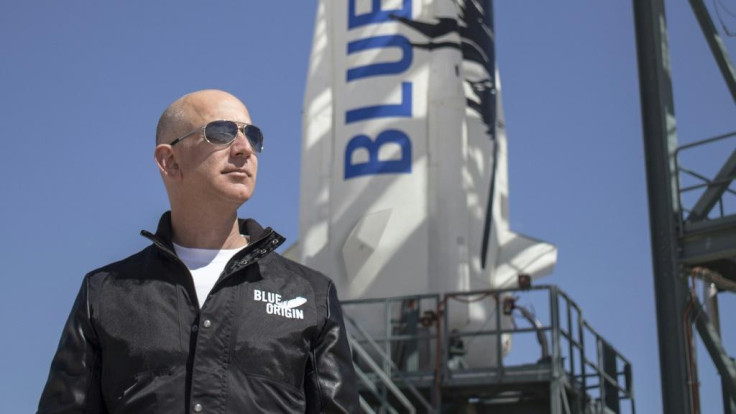
Amazon founder Jeff Bezos broke a 25-year streak by seeking its first-ever external funding round to raise $10 billion for his rocket company, Blue Origin, at a $130 billion pre-money valuation. Coatue Management is expected to lead the funding round with a $4 billion commitment, while Bezos himself plans to contribute another $2 billion.
In recent years, Bezos sold Amazon shares worth billions of dollars to bankroll his rocket company. However, the announcement of a funding round marks a major strategic shift in Blue Origin's history. It also indicates that building next-gen space infrastructure is becoming too expensive even for the wealthiest people on the planet.
The economics of the space industry are changing rapidly, with Elon Musk's SpaceX leading the sector. Musk, who is now the richest person in the world, repeatedly tapped private investors to accelerate SpaceX's growth.
At $130 billion, Blue Origin remains worth only a small fraction of SpaceX, whose valuation has surged to roughly $2 trillion following its recent US public market debut. The gap reflects more than investor enthusiasm: years of execution, reusable launch leadership, Starlink recurring revenues, and an unmatched launch record.
According to the Financial Times, citing analysts, Blue Origin could spend $5 billion this year as it ramps up launches and heavy infrastructure investments. Blue Origin has reportedly spent about $28 billion since its inception. That spending has produced cutting-edge technology, but not the launch cadence investors increasingly expect.
While SpaceX successfully completed hundreds of launches with Falcon 9, Blue Origin has only recently entered orbital launch service.
Fundraising After Major Setback in May
In May, Blue Origin suffered a significant setback after its New Glenn rocket erupted on the launch pad during an engine-fire test. The explosion engulfed Launch Complex 36 in Cape Canaveral, Florida, requiring major repairs costing over $1 billion. However, Blue Origin CEO Dave Limp expects the company to fly again before the end of 2026.
Note that Blue Origin has emerged as a key player for NASA, which selected the company to launch rovers to the Moon earlier this year. It is also a participant in the Artemis program, and will develop a lunar lander for NASA, as well as compete with SpaceX as part of the Artemis III mission for mid-2027.
The latest fundraising might not be simply about raising cash, as investors are looking for a story much bigger than rockets. Fundraising narratives in the space sector have revolved mostly around launch vehicles, but Blue Origin is positioning itself as a full-stack space infrastructure provider.
The company has ambitious plans, including Project Sunrise to deploy over 51,000 satellites designed to create orbital AI data centres, alongside the TeraWave communications network expected to combine 5,400 low-Earth-orbit satellites with 128 medium-Earth-orbit optical relay satellites to deliver multi-terabit connectivity.
These projects could require capital on a scale rarely seen outside hyperscale cloud providers, and could be the reason Blue Origin is raising money now rather than five years ago.
Furthermore, the company is competing beyond NASA launch contracts, and focusing on ownership of the infrastructure layer of the emerging space economy, which could also be the reason investors are assigning a $130 billion valuation to Blue Origin, despite operational roadblocks.
Perhaps, the most overlooked aspect of Blue Origin's fundraising is psychological rather than financial. Since the year 2000, Bezos avoided outside investors, preserving complete control over his space venture. But now that he is accepting external capital, it is most likely to drive new expectations around execution, transparency, milestones, and investor returns.
© Copyright IBTimes 2026. All rights reserved.