

Peter Thiel Accuses Pope Leo XIV of Acting as a 'Chinese Communist Agent' Over AI Rules
Thiel's remarks at the Aspen Ideas Festival spark controversy over AI regulation and geopolitical implications.
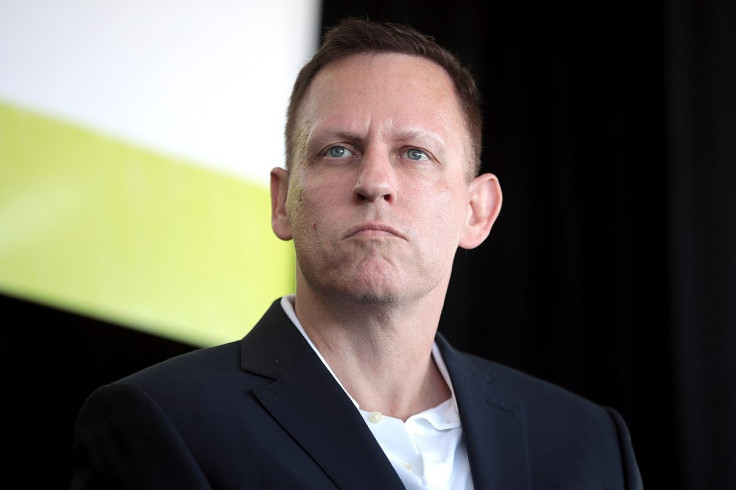
Peter Thiel has accused Pope Leo XIV of acting as a 'Chinese communist agent' over AI regulation, turning a routine Aspen Ideas Festival panel in Colorado into one of the sharpest Vatican-tech rows of the year. The billionaire investor made the remark on Tuesday while arguing that the Pope's warnings about artificial intelligence could slow the United States while leaving China untouched.
Peter Thiel, Pope Leo XIV and the AI Fight
The news came after Pope Leo XIV used his first encyclical in May to call for tighter international rules on artificial intelligence and to warn that the technology should be 'disarmed,' language that placed the Vatican squarely inside the global argument over AI safety and power. The Pope said AI must be guided by strong ethical constraints and should not be left in the hands of a small group of actors.
Speaking during a non-recorded session titled 'Humanity at the End of History' alongside political scientist Francis Fukuyama, he argued that if the Pope's message restrained Americans but carried little weight in China, then it effectively served Beijing's interests. According to reports of the exchange, he went on to say that meant Leo was 'working for the Chinese Communists.'
That line drew laughter from the Aspen audience, which tells you plenty about the room and not much about the substance. The joke landed because it sounded outrageous, and because Thiel clearly wanted it to. This was not a careful theological argument. It was a very Thiel sort of provocation, sharp-edged and slightly mad, aimed straight at the fault line between Silicon Valley's accelerationists and a church that has spent months warning about the human cost of runaway AI.
Peter Thiel's Vatican Clash
In March, he delivered invitation-only lectures in Rome on the Antichrist, an episode that reportedly unsettled officials close to the Holy See and prompted two Catholic colleges to distance themselves from the events. That backdrop matters, because Tuesday's comments did not come out of nowhere. They fit a pattern, one where Thiel frames technological restraint as civilisational weakness and treats moral caution as a strategic error.
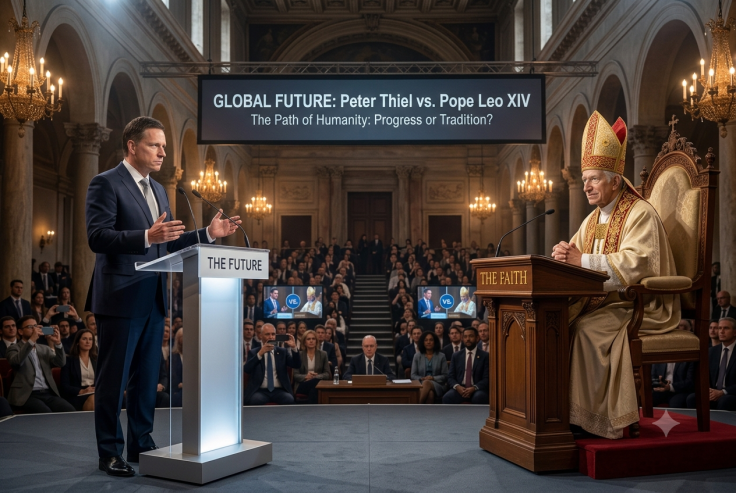
Thiel used the same appearance to predict a 'democratic-socialist takeover' of the US Democratic Party, referencing recent primary wins by candidates backed by the Democratic Socialists of America in New York and Colorado, according to reporting from the event. It was the sort of sprawling, end-times-meets-tech-bro performance that only Thiel can really pull off, and somehow make sound like a policy seminar.
The pope's AI stance gives him an easy target. In May, Leo XIV used his encyclical to call for stronger oversight of artificial intelligence and to warn that the technology's spread could deepen job losses, misinformation and instability. Thiel's counter is blunt enough to fit on a placard, even if it does not stand up especially well to scrutiny. If the United States slows and China does not, he argues, then regulation becomes surrender by another name.
What the Aspen Exchange Signals
The exchange also says something about the larger mood inside tech. Thiel is not just another billionaire grumbling about red tape. He co-founded PayPal and Palantir, backed Donald Trump early in his political rise, and helped launch JD Vance's career by employing him at Mithril Capital before Vance entered politics. When he talks about AI, he is not speaking from the sidelines. He is talking from the middle of the machine.
That is why the Vatican criticism has landed so hard. Thiel is arguing that moral language itself is becoming a geopolitical weapon, and that appeals to safety can function as strategic delay. The Pope, by contrast, is insisting that AI should be shaped by the common good rather than raw speed. Those positions are not remotely compatible, and the gap between them is getting wider, not smaller.
For now, there has been no immediate public rebuttal from the Vatican in the material reviewed for this report. But the collision is already doing what these modern culture wars do best, dragging theology, geopolitics and machine intelligence into the same noisy room. Once Thiel starts talking about the Antichrist in Rome and Chinese communists in Aspen, the whole thing stops sounding like a debate and starts sounding like something else entirely.
© Copyright IBTimes 2026. All rights reserved.