Bezos Takes On Musk With 500,000 Zoox Rides and a 2028 Mars Network
SpaceX advances in space and cargo, while Waymo leads in driverless rides; Bezos bets Zoox and Blue Origin can catch up
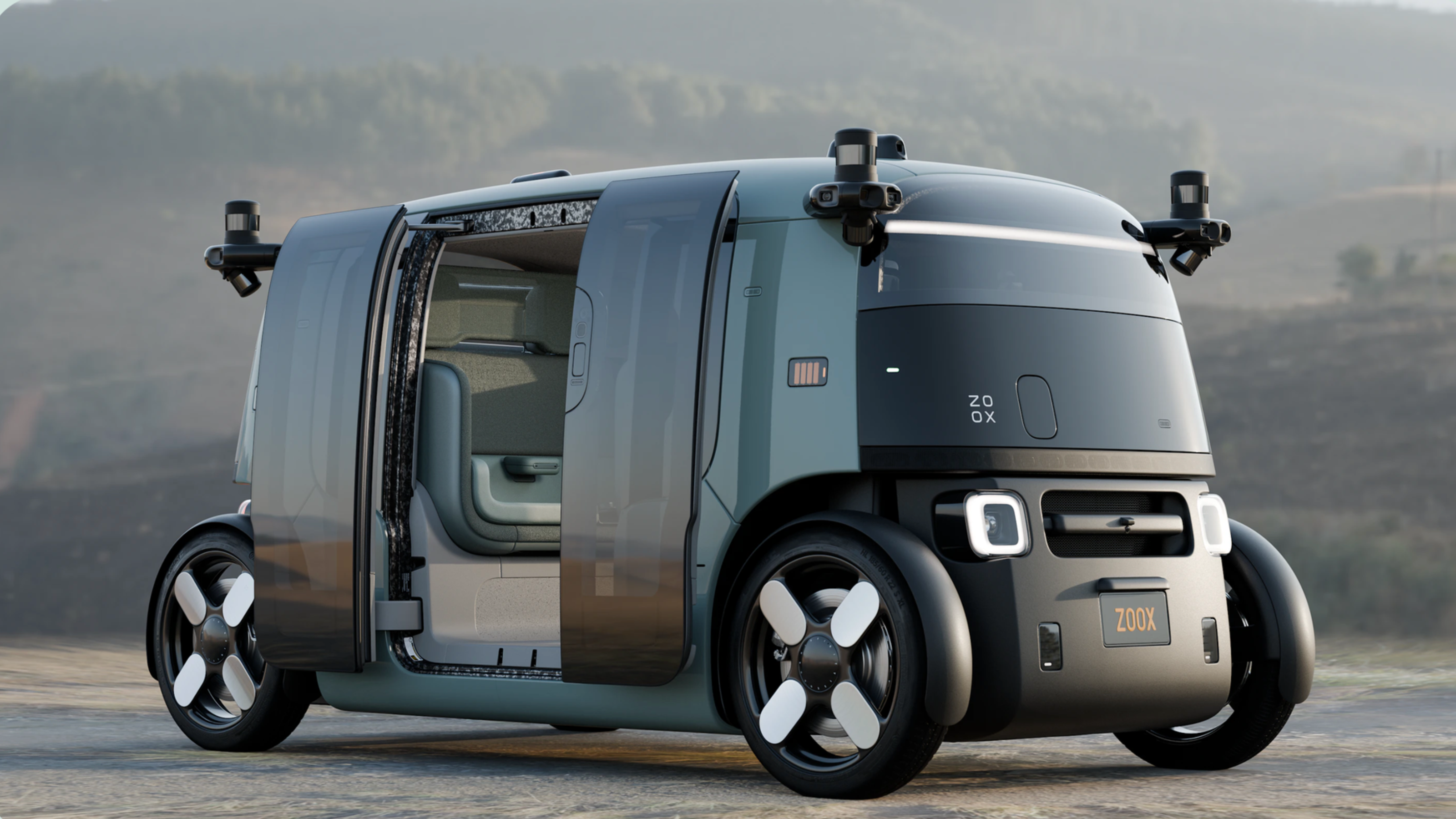
The rivalry between Jeff Bezos and Elon Musk now runs from the kerbside to deep space, and last week Bezos pressed it on both fronts.
Amazon-owned Zoox said its driverless taxis had carried more than half a million riders, while its space company, Blue Origin, kept pushing its case to build a communications orbiter at Mars for NASA by 2028.
Zoox Hits 500,000 Free Rides as Waymo Pulls Away
The Zoox news came on 24 June, when the company unveiled a production version of its purpose-built robotaxi at its Hayward, California, factory. The cube-shaped pod, nicknamed the 'toaster' by riders, gains a larger touchscreen, an upgraded two-way audio system, and reworked seating for the four passengers who sit facing each other.
The LiDAR-based self-driving system carries over unchanged, and Zoox says the plant can now turn out about 100 vehicles a week.
The figure drawing attention is the ride count. Zoox has logged more than 500,000 trips since it opened its service in Las Vegas in September 2025, with later rollouts in San Francisco, Austin, and Miami. Every one of those rides has been free. The company still cannot charge a single passenger until the National Highway Traffic Safety Administration signs off on a commercial exemption from federal vehicle safety standards, a decision under review since April.
That caveat matters when the number is set beside the market leader. Waymo, owned by Google parent Alphabet, runs across roughly 10 US cities and now handles about 500,000 paid rides every week.
In effect, Waymo turns over in a week what Zoox has built across its whole commercial life, and is targeting a million paid rides a week by the end of 2026. Tesla, the third heavyweight, has run a paid robotaxi service in Austin since January and recently drew praise from Marc Williams, executive director of the Texas Department of Transportation, who rode in its production Cybercab.
Blue Origin's 2028 Mars Pitch Meets a Grounded Rocket
Blue Origin's Mars play sits on less certain ground. The company has positioned its Mars Telecommunications Orbiter, built on its existing Blue Ring platform, to support a NASA mission in 2028 to set up a high-speed relay network between Earth and Mars. Chief executive Dave Limp has said the spacecraft can carry more than 1,000 kg of payload to Mars orbit and fly up to 500 kg of science instruments, and that the vehicles are produced at a dedicated facility in Huntsville, Alabama. NASA's revived orbiter effort was funded with about $700 million (around £529 million) under last year's budget law.
The complication is hardware. On 28 May, a New Glenn rocket, the heavy-lift launcher Blue Origin needs to fly the orbiter and its Moon landers, exploded during a static-fire test at Cape Canaveral, destroying the vehicle and badly damaging the company's only operational New Glenn pad. Bezos said the team would 'rebuild whatever needs rebuilding.' Limp has set a return to flight before the end of 2026, a target outside analysts have called aggressive.
The Mars pitch still follows weeks after NASA awarded Blue Origin a $188 million (about £142 million) contract to deliver two rovers to the lunar south pole using its Blue Moon Mark 1 lander, part of the agency's Moon Base programme. On the Moon, as at Mars, Musk's SpaceX holds the lead, with Starship chosen as NASA's lander for the crewed return in 2028.
SpaceX Answers With a Record IPO and a $25 Billion Bond
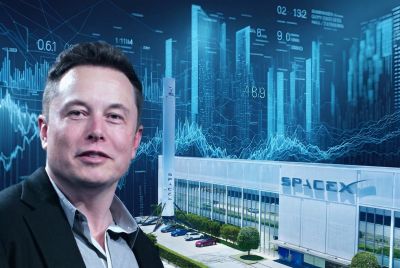
Musk's company has not stood still. On 23 June, SpaceX flew a Falcon 9 from Cape Canaveral to test Starfall, a disk-shaped uncrewed capsule built to return cargo from orbit. Days earlier, it had priced $25 billion (about £19 billion) in senior unsecured notes to clear a bridge loan, only weeks after a 12 June market debut that valued SpaceX at $1.77 trillion (around £1.34 trillion), the largest IPO on record and a listing that briefly pushed Musk's paper fortune past $1 trillion (about £756 billion).
For now, the order is clear. Waymo leads on driverless rides, and SpaceX sits ahead on both the Moon and Mars. Bezos is betting that Zoox and Blue Origin can still close the gap.
© Copyright IBTimes 2026. All rights reserved.
- Recommended For You