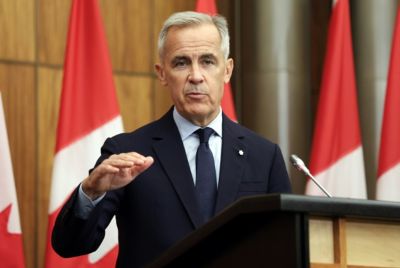
Back British Stocks or Lose Tax Breaks? Andy Burnham's Adviser Wants Pension Money To Stay in Britain
Andy Haldane wants pension tax relief to favour UK investing, but a forced home bias could reduce returns on most savers' pots

An adviser to the man likely to be Britain's next prime minister wants to tax pension savings that go overseas more heavily than money invested at home, a change that could cut into the returns on millions of retirement pots. The tax break topping up every contribution would become a lever, with the full perk depending on where the money goes.
Andy Haldane, president of the British Chambers of Commerce and the Bank of England's chief economist from 2014 to 2021, set out the idea on 25 June 2026. It carries weight because he is reported to be advising Andy Burnham, the frontrunner to succeed Keir Starmer next month.
For anyone paying into a workplace pension, this is not a remote city debate. It reaches into your retirement pot.
What Your Tax Relief Is Actually Worth
Every contribution you make is topped up at your income tax rate, so a basic-rate saver effectively gets 20p added for every 80p paid in. Higher-rate savers get more. That relief is the single biggest reason a pension beats a normal savings account.
The government extends more than £50B in pension tax relief and over £10B in ISA relief each year, according to figures Haldane set out in his BCC conference speech. As a country, he noted, Britain spends more on savings tax relief than on defence.
His argument is that the taxpayer gets a poor return when that subsidised money flows abroad. The catch for you is simple. If relief becomes conditional, the full perk may depend on your fund's holdings, not just your contributions.
Why a 'Buy British' Rule Could Cost You
Here is the part that hits the pot. Most default pension funds track global stock indices, which are dominated by US companies. Haldane wants occupational schemes to favour UK equities by default instead.
In 2000, over half of UK pension assets sat in UK shares. Today it is under 5%, a shift Haldane put at more than £2.5 trillion of divestment, roughly the value of every UK-listed company combined.
The problem is what a forced home bias does to returns. Industry experts have long warned that pushing pension funds to invest domestically concentrates risk in one economy and can deliver lower returns than a globally spread fund. British savers invest internationally precisely to spread that risk and reach industries the UK market lacks.
Savers Already Distrust the Idea
The public is wary. A YouGov survey commissioned by the Association of British Insurers, with fieldwork on 10 and 11 March 2026 across 2,127 adults, found that 72% had little or no confidence in the government making the right decisions about how their pension is invested. Just 1% had a lot.
Among over-45s, 46% thought requiring pension funds to invest in set assets would shrink their retirement savings. Only 5% expected a positive effect.
The Allowances in the Frame
The reliefs under discussion are not small. Pension contributions attract income tax relief up to an annual allowance of £60,000, and savers can normally take 25% of their pot tax-free up to £268,275, per HMRC rules. Any reform that ties relief to investment location would reshape how far those perks stretch.
Haldane has not published a detailed proposal, and stressed that his plan is about correcting a home-bias gap rather than constraining choice. A separate mandation 'backstop' already sits in the Pension Schemes Bill, threatening to compel UK allocations if voluntary efforts under the May 2025 Mansion House Accord fall short.
So nothing is law yet. The direction of travel, though, points one way: your pension's tax treatment is increasingly judged by where the money goes, not just how much you save.
For now, the sensible move is to know what your default fund holds and what relief you actually claim, before someone else decides the terms.
© Copyright IBTimes 2026. All rights reserved.
- Recommended For You