One Tax Return Mistake Could Trigger Hefty HMRC Fines Under New Rules: Millions at Risk
Understanding HMRC's proposed changes to tax error penalties
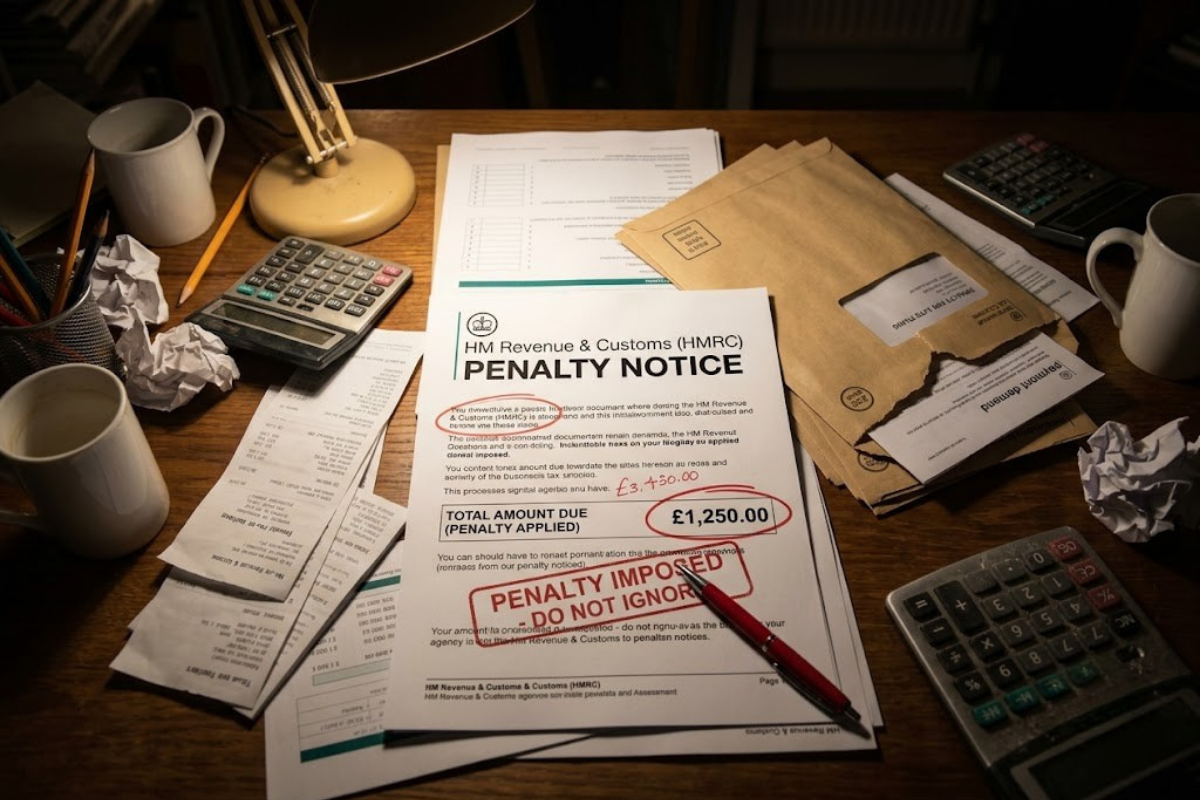
More than 12 million people file a Self Assessment tax return in Britain each year, and a single uncorrected mistake on one of them could soon be treated as a deliberate act by HM Revenue and Customs (HMRC).
Draft legislation published by HMRC on 13 July sets out a new legal 'duty to correct' errors in tax documents, together with a power for the department to issue what it calls a Customer Correction Notice. The measure sits within the Finance Bill 2026-27 and forms part of a wider plan to modernise how tax mistakes are put right.
How the Duty to Correct Changes the Rules
Under the proposal, a taxpayer who becomes aware of an inaccuracy that has led to a loss of tax must take reasonable steps to fix it, either by amending the return or by notifying HMRC. The obligation applies only while the error can still be corrected within existing statutory time limits, and it reaches individuals, businesses, and the advisers who file on their behalf.
The penalties turn on inaction. HMRC's paper states that where someone becomes aware of an inaccuracy and does not take reasonable steps to correct or notify it, the error will be 'treated as deliberate' for penalties and assessment time limits.
Big Four accountancy firm KPMG said an error first caused by simple carelessness could be upgraded to deliberate behaviour purely because the taxpayer failed to act, which brings steeper penalties and gives HMRC much longer to raise an assessment. In the most serious cases, the firm noted, the department could reach back as far as 20 years, and ignoring a known error could also carry a risk of criminal sanction.
The size of any fine is set by Schedule 24 of the Finance Act 2007, the framework the new duty builds on. A careless inaccuracy carries a penalty of up to 30% of the tax at stake. A deliberate error can reach 70%, and one that is deliberate and concealed up to 100%. That reclassification pushes a careless slip into a higher penalty band.
The second element of the reform is the Customer Correction Notice itself. HMRC will be able to issue one where it has reason to suspect that a document contains an error, requiring the recipient either to correct it by a set deadline or to explain why no correction is needed. The notices resemble the 'nudge letters' the department already sends, but with statutory force behind them.
The draft does include a limited concession. Where a person receives their first correction notice in six years and fixes the inaccuracy by the deadline, no penalty applies to that careless error, an exemption KPMG describes as a 'safe harbour'. If the deadline is missed, or the wider duty is not met, the deliberate presumption applies instead.
The change marks a shift from the current position. At present, an inaccuracy is generally treated as deliberate only where a taxpayer knowingly submits a document they know to be wrong.
The rules also stretch well beyond income tax. Kevin Elliott and Karmjit Mader of KPMG set out that the duty, built into a new Schedule 24A of the Finance Act 2007, can cover corporation tax, VAT, inheritance tax, stamp duties, excise duties, insurance premium tax, and the multinational top-up tax, subject to exceptions.
Why Tax Experts Are Warning of Steeper Penalties
The proposal has drawn criticism from tax professionals. The Society of Trust and Estate Practitioners, known as STEP, compared it to the Requirement to Correct duty introduced by the Finance (No. 2) Act 2017. That measure forced people with undeclared offshore liabilities to come forward or face penalties of up to 200% of the tax at stake, and STEP said the new duty would extend a similar principle across the entire tax system.
Law firm Eversheds Sutherland warned that treating a failure to correct as deliberate sharply raises the potential penalty, because fines are then calculated as a higher share of the lost revenue rather than at the lower rates reserved for careless behaviour.
The Government has defended the measure. HMRC's policy paper says the aim is to improve compliance by prompting people to correct errors once they are aware of them, which it says would let the department concentrate its resources on more complex cases of non-compliance. It put the cost of the necessary IT changes at £5M ($6.7M).
The plans are not yet law. The draft is open to technical consultation until 7 September 2026, and a start date has not been set. Taxpayers and advisers can expect further HMRC guidance, alongside a separate review of behavioural penalties, before the rules take effect.
© Copyright IBTimes 2026. All rights reserved.
- Recommended For You