

Psychiatrist Claims Donald Trump Exhibits Signs of Evolving Dementia and Psychiatric Illness
Henry David Abraham's warning collides with the White House's medical assessment, putting presidential fitness back under scrutiny
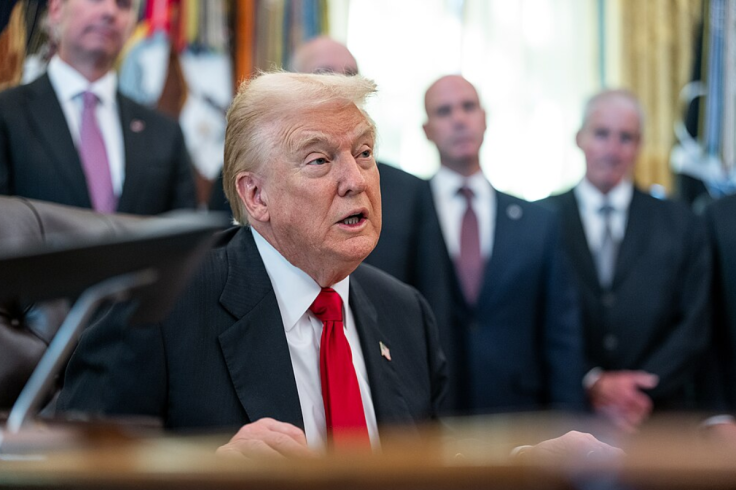
Psychiatrist Henry David Abraham has raised concerns about President Donald Trump's mental health following a campaign rally in Dubuque, Iowa, on 1 November 2026.
In remarks reported by AlterNet on Monday, 2 November, he suggested that aspects of Trump's public behaviour could be consistent with dementia. Abraham has not examined the president, and his remarks do not amount to a diagnosis.
The comments followed a critical account of the rally by Chris Lehmann, who wrote for The Nation. With the US midterm elections scheduled for 3 November, Lehmann questioned Trump's sprawling campaign message. The journalist's political observations and Abraham's medical opinions, however, are distinct, and neither establishes a neurological disorder.
Donald Trump Rally Draws Scrutiny Over His Speaking Style
Trump addressed supporters at the Five Flags Center in Dubuque, where he discussed a speaking technique he calls 'the weave'.
According to a transcript of the 1 November speech, the president explained how he introduces related stories before returning to his original argument. 'It's pure fricking genius,' he said.
Trump also acknowledged that failing to return to his initial point could reasonably be described as rambling. His explanation offers a different perspective from critics who interpret his digressions as a cause for concern. Speech patterns observed at a political rally, however, cannot independently establish a medical condition.
Lehmann described Trump's gestures, repeated grievances and personal appeals in a sharply critical dispatch. He also reported that a video titled 'God Made Trump' was shown before the president took the stage. Lehmann said the video used an AI-manipulated version of broadcaster Paul Harvey's voice to portray Trump in heroic terms.
The journalist argued that the event placed Trump's persona ahead of a compelling electoral pitch. It was an assessment of the rally's political content, rather than evidence of cognitive decline.
Abraham, a professor emeritus of psychiatry at Tufts University School of Medicine, offered a separate assessment to AlterNet. He cited what he interpreted as grandiosity, angry outbursts and rambling speech. 'It is certainly consistent with evolving dementia,' he said, while also raising the possibility of a mood disorder.
The psychiatrist acknowledged uncertainty about what might cause such behaviour. His concerns also included Trump's word choices and apparent difficulty recalling words.
White House Findings Challenge Donald Trump Dementia Claims
Abraham's concerns predate the Iowa appearance. A statement by medical professionals, including Abraham, was entered into the Congressional Record on 30 April by Democratic senators Sheldon Whitehouse and Jack Reed. It questioned Trump's fitness to serve and raised concerns about decisions involving nuclear weapons.
The signatories explicitly stated that none had examined Trump face-to-face or treated him as a patient. They also acknowledged that they were not making a formal diagnosis. That limitation is central to interpreting their warnings.
The White House has published a contrasting medical assessment. In a memorandum dated 29 May, presidential physician Sean Barbabella reported normal neurological findings from Trump's annual medical examination. The president scored 30 out of 30 on the Montreal Cognitive Assessment, a cognitive screening test.
Barbabella concluded that Trump was fit to fulfil his duties. A normal screening score does not assess every possible neurological condition, but it is relevant clinical evidence missing from Abraham's account.
The administration has also rejected Abraham's criticism. In September, White House spokesperson Davis Ingle accused him of politically motivated 'armchair diagnosis'. That statement preceded the November interview and is not a response to his latest remarks.
The American Psychiatric Association's Goldwater Rule cautions psychiatrists against offering professional opinions about public figures without examination and authorisation. The rule permits discussion of psychiatric issues generally, but distinguishes that from assessing a particular person's condition.
© Copyright IBTimes 2026. All rights reserved.