Vladimir Putin Now Warns AI Will Wipe Out Entire Professions: 'This Process Is Irreversible'
Putin warns that AI is replacing jobs at all levels, from routine tasks to potentially mid-level roles, amid global concerns over automation

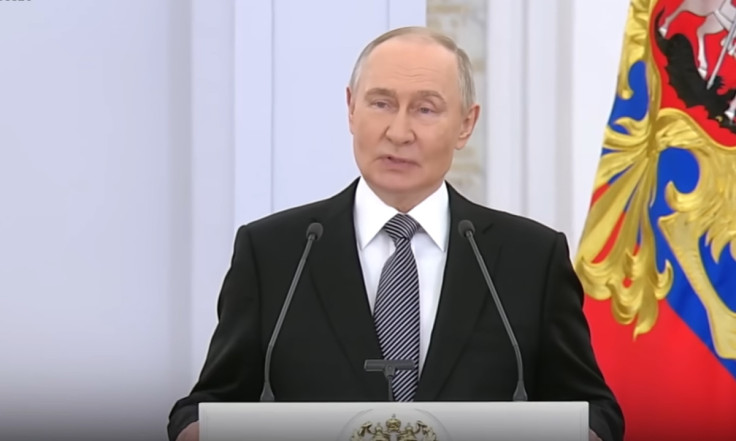
Artificial intelligence has sparked both excitement and anxiety across the world. On Thursday, Russian President Vladimir Putin delivered one of the clearest warnings yet about the technology's impact on jobs, saying millions of people could lose work as AI systems become more powerful.
Speaking during a plenary session at the Eurasian Economic Forum in Astana, Kazakhstan, Putin said entire professions may disappear as computer intelligence replaces human workers in key industries. The Russian leader described the shift as unavoidable. 'It is a very real scenario that millions of people will lose their jobs or be forced to change their occupation,' Putin said. 'Entire professions may disappear due to the fact that humans will be replaced by computer intelligence.' He added that the process was 'irreversible and inevitable'.
AI Already Replacing Junior Staff
Putin said artificial intelligence is already replacing junior-level employees in several sectors, particularly in routine administrative and technical work. He pointed to process automation, document preparation, data analysis, and software development as areas where AI systems are increasingly handling tasks once performed by people. According to Putin, the next stage could affect mid-level professionals as companies continue to adopt automation technologies.
Putin warns that AI will force millions of people out of work and entire profession will disappear as "computer intelligence" replaces humans.
— Brian McDonald (@BrianMcDonaldIE) May 28, 2026
According to the Russian leader, AI is already replacing junior staff in areas such as process automation, document preparation,... pic.twitter.com/qyLPZV48oh
The warning reflects growing global concern over the rapid rise of AI tools in the workplace. Businesses across the world are investing heavily in artificial intelligence to improve efficiency, reduce operational costs, and speed up production. In recent months, major technology firms have introduced increasingly advanced AI models capable of writing code, generating reports, and analysing large amounts of data within seconds.
For many younger workers, the changes have raised fears about shrinking entry-level opportunities. Junior positions have traditionally served as pathways into industries such as finance, media, law, and software engineering. If those roles disappear, economists have warned that career progression could become more difficult for new graduates and early-career professionals.
Putin Calls for Economic Adaptation
Despite the risks, Putin argued that governments should not resist technological change. Instead, he urged member states of the Eurasian Economic Union to prepare for the transformation and use artificial intelligence to strengthen economic growth.
'Progress does not stand still,' he said. 'We need to be prepared for the coming changes, and even better, use them as a driver of accelerated economic growth.' His comments highlighted the challenge now facing policymakers around the world. Governments are attempting to encourage innovation while also addressing concerns about unemployment, retraining and economic inequality.
Several countries have already begun discussing new AI regulations and workforce training programmes aimed at helping workers adapt to rapidly changing industries.
Russia Positions Itself in the AI Race
Putin also used the summit to promote Russia's ambitions in artificial intelligence development. He claimed Russia has strong advantages in the field, including scientific expertise, highly trained specialists, and access to large energy resources required to power AI infrastructure. 'Russia possesses the necessary personnel to solve tasks of this level,' Putin said.
He added that AI development requires enormous amounts of energy and argued that Russia's nuclear energy technologies, hydro generation capacity, and traditional energy resources provide a competitive edge.
The Russian president further stated that only a limited number of countries are capable of building sovereign AI systems independent from foreign influence. Artificial intelligence has increasingly become part of a wider geopolitical contest between global powers, with countries investing billions into computing infrastructure and advanced machine learning systems.
International AI Conference Planned
Putin also announced plans for Russia to host a major international artificial intelligence conference next year. According to the Russian leader, the event will focus on sovereign AI models, computing infrastructure, and adapting technologies to national requirements. His remarks come as governments worldwide attempt to balance the economic opportunities created by AI against the growing concerns surrounding job losses and social disruption.
For workers across multiple industries, the debate is no longer theoretical. As artificial intelligence continues to advance at extraordinary speed, many are now questioning which professions will survive the next decade and which may disappear altogether.
© Copyright IBTimes 2026. All rights reserved.
- Recommended For You